
Manga
Description
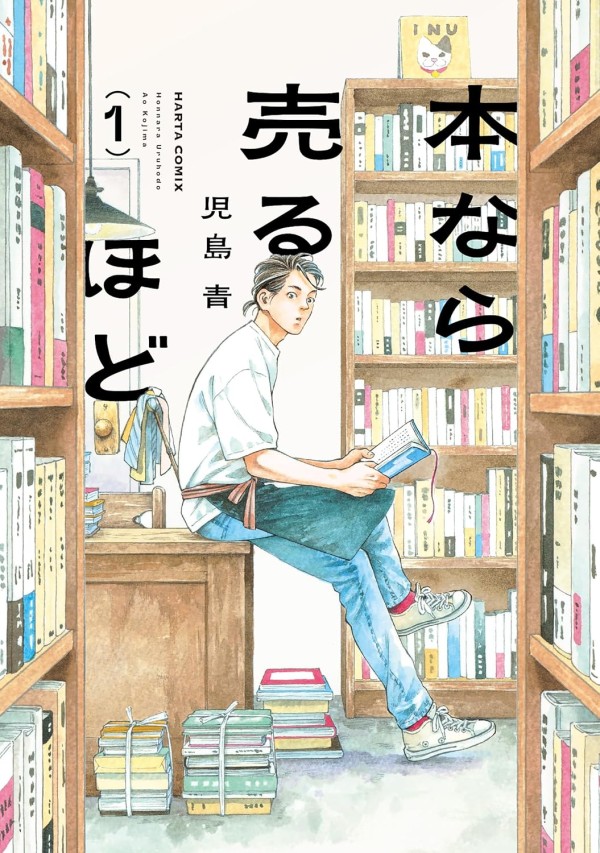
The small secondhand bookstore October House is run by a laid-back young man with a ponytail, a former salaryman who opened the shop six years ago. The store is visited by a wide range of customers: a book-loving regular, a high school girl on the cusp of adulthood browsing for something to match her changing self, a man who simply wants to dispose of unwanted books, and a widow bringing in her late husband's extensive collection. Through these encounters, the proprietor mediates not just transactions but the emotional weight that books carry as objects of memory and attachment.
The series opens with a defining episode that gives the original one-shot its title, Burying Books. The owner receives a buyout request from the home of an eighty-year-old man who was a lifelong reader. The house is filled with thousands of volumes: light novels, out-of-print manga, hobby magazines, and fiction carefully preserved in glassine paper, all marked with the owner's personal bookplate. Faced with more books than he can possibly take, the owner works frantically against a deadline, sorting and appraising as the sun sets and the power is cut off. That night he dreams of the old man and his books, a moment that crystallizes the uneasy role of the used-book dealer: someone who must bear witness to a collector's life and then decide what part of it survives.
Each subsequent chapter is a self-contained story, though recurring characters and themes create a quiet continuity. The regular customer, a thoughtful man named Komiya, observes that books nobody reads anymore have to be ended by someone, and that it is better for them to be discarded by a caring person than bought by an indifferent one. A high school girl buys a book she does not fully understand yet, trying on a more grown-up identity. A woman sells off her husband's collection only to find that a single volume she kept changes her perspective. The owner's own past is hinted at in fragments, as in an episode where a customer's perfume reminds him of his own younger days. Not every story is directly about books; one chapter offers a quiet meditation on kimono culture, reflecting on inherited objects and the lives they outlast.
The core tension running through the series is the inevitability of loss and the duty of the person left behind to handle it with care. The bookstore becomes a quiet stage where people negotiate their relationships with the printed page and with each other, and where the act of selling, buying, or discarding a book is never neutral. The owner's steady, sometimes weary presence ties these vignettes together, grounding each moment of connection in the physical reality of the shop and its shelves.
The series opens with a defining episode that gives the original one-shot its title, Burying Books. The owner receives a buyout request from the home of an eighty-year-old man who was a lifelong reader. The house is filled with thousands of volumes: light novels, out-of-print manga, hobby magazines, and fiction carefully preserved in glassine paper, all marked with the owner's personal bookplate. Faced with more books than he can possibly take, the owner works frantically against a deadline, sorting and appraising as the sun sets and the power is cut off. That night he dreams of the old man and his books, a moment that crystallizes the uneasy role of the used-book dealer: someone who must bear witness to a collector's life and then decide what part of it survives.
Each subsequent chapter is a self-contained story, though recurring characters and themes create a quiet continuity. The regular customer, a thoughtful man named Komiya, observes that books nobody reads anymore have to be ended by someone, and that it is better for them to be discarded by a caring person than bought by an indifferent one. A high school girl buys a book she does not fully understand yet, trying on a more grown-up identity. A woman sells off her husband's collection only to find that a single volume she kept changes her perspective. The owner's own past is hinted at in fragments, as in an episode where a customer's perfume reminds him of his own younger days. Not every story is directly about books; one chapter offers a quiet meditation on kimono culture, reflecting on inherited objects and the lives they outlast.
The core tension running through the series is the inevitability of loss and the duty of the person left behind to handle it with care. The bookstore becomes a quiet stage where people negotiate their relationships with the printed page and with each other, and where the act of selling, buying, or discarding a book is never neutral. The owner's steady, sometimes weary presence ties these vignettes together, grounding each moment of connection in the physical reality of the shop and its shelves.
Comment(s)
Staff
- Story & ArtAo Kojima