
Manga
Description
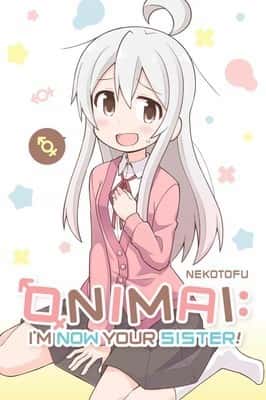
"ONIMAI: I'm Now Your Sister!" centers around Mahiro Oyama, a reclusive 20-year-old NEET (Not in Education, Employment, or Training) who has withdrawn from society, spending his days playing video games and avoiding responsibilities. His life takes an unexpected turn when his younger sister, Mihari, a brilliant scientist, returns home after a long absence. Mihari, concerned about Mahiro's unhealthy lifestyle, devises an experimental drug to help him. However, the drug has a drastic side effect: it transforms Mahiro into a teenage girl.
The narrative explores Mahiro's adjustment to his new identity and the challenges of navigating daily life as a girl. Initially resistant, Mahiro gradually begins to adapt, experiencing the world from a fresh perspective. Mihari, now acting as both a sister and a caretaker, supports Mahiro through this transition, often with a mix of humor and scientific curiosity. The story delves into themes of identity, self-discovery, and the complexities of familial relationships, as Mahiro reconnects with the world and forms new bonds.
Secondary characters, such as Mahiro's classmates and friends, add depth to the story, providing both comedic and emotional moments. The interactions between Mahiro and his peers highlight the nuances of gender dynamics and societal expectations, often with a lighthearted tone. The series balances slice-of-life elements with occasional scientific and fantastical undertones, thanks to Mihari's experiments and inventions.
As the story progresses, Mahiro's journey becomes less about the physical transformation and more about personal growth. The series examines how Mahiro's new identity influences his relationships, self-perception, and outlook on life. While the premise is rooted in a fantastical scenario, the narrative remains grounded in its exploration of human emotions and connections, making it a compelling blend of comedy, drama, and introspection.
The narrative explores Mahiro's adjustment to his new identity and the challenges of navigating daily life as a girl. Initially resistant, Mahiro gradually begins to adapt, experiencing the world from a fresh perspective. Mihari, now acting as both a sister and a caretaker, supports Mahiro through this transition, often with a mix of humor and scientific curiosity. The story delves into themes of identity, self-discovery, and the complexities of familial relationships, as Mahiro reconnects with the world and forms new bonds.
Secondary characters, such as Mahiro's classmates and friends, add depth to the story, providing both comedic and emotional moments. The interactions between Mahiro and his peers highlight the nuances of gender dynamics and societal expectations, often with a lighthearted tone. The series balances slice-of-life elements with occasional scientific and fantastical undertones, thanks to Mihari's experiments and inventions.
As the story progresses, Mahiro's journey becomes less about the physical transformation and more about personal growth. The series examines how Mahiro's new identity influences his relationships, self-perception, and outlook on life. While the premise is rooted in a fantastical scenario, the narrative remains grounded in its exploration of human emotions and connections, making it a compelling blend of comedy, drama, and introspection.
Comment(s)
Staff
- Story & Art
Relations
Anime overview
