Manga
Description
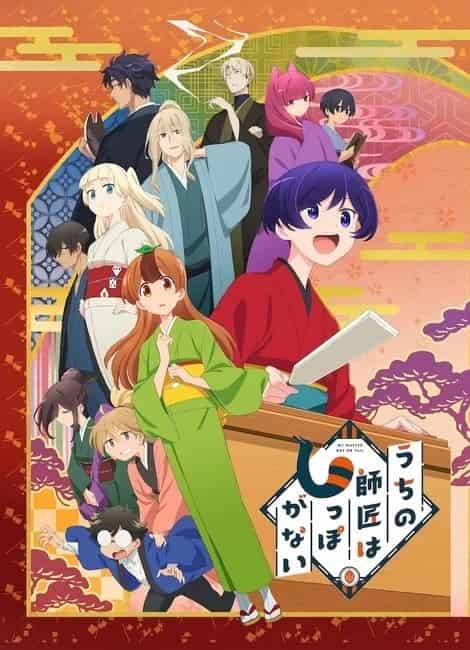
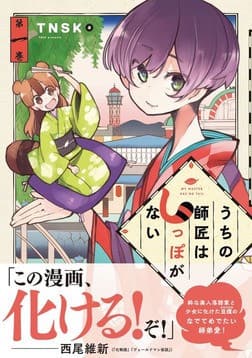
"My Master Has No Tail" is a manga series that blends elements of fantasy, comedy, and slice-of-life, set in a world where humans and supernatural beings coexist. The narrative centers on Mameda, a young tanuki (a shape-shifting raccoon dog from Japanese folklore) who aspires to become a rakugoka, a traditional Japanese storyteller. Despite her supernatural origins, Mameda is determined to master the art of rakugo, a form of verbal entertainment that relies on wit, timing, and storytelling prowess.
The story begins with Mameda encountering Bunko, a human rakugo performer who becomes her reluctant mentor. Bunko is a skilled and respected rakugoka but harbors a deep-seated disdain for supernatural beings, believing their abilities undermine the authenticity of human artistry. Mameda’s persistence and genuine passion for rakugo gradually challenge Bunko’s prejudices, leading to an unconventional master-apprentice relationship. As Mameda trains under Bunko, she faces numerous challenges, including her own insecurities, the skepticism of the rakugo community, and the inherent difficulties of mastering a human art form as a tanuki.
The series explores themes of identity, perseverance, and the clash between tradition and modernity. Mameda’s journey is not only about mastering rakugo but also about finding her place in a world that often marginalizes beings like her. Bunko, on the other hand, undergoes a transformation as well, learning to appreciate the value of diversity and the potential for growth through collaboration. The dynamic between the two characters drives much of the narrative, with their interactions ranging from comedic to heartfelt.
Supporting characters include other rakugo performers, both human and supernatural, who provide additional layers to the story. These characters often serve as foils or allies to Mameda and Bunko, highlighting different perspectives on the art of rakugo and the challenges of pursuing it. The series also incorporates elements of Japanese folklore and cultural traditions, enriching the setting and adding depth to the narrative.
The plot unfolds through a series of episodic arcs, each focusing on specific challenges or performances that test Mameda’s skills and resolve. These arcs are interspersed with moments of character development and world-building, creating a balanced narrative that blends humor, drama, and cultural exploration. The manga’s pacing allows for gradual progression, ensuring that both the characters and the art of rakugo are given ample attention.
Overall, "My Master Has No Tail" is a story that combines the charm of supernatural folklore with the intricacies of a traditional art form, offering a unique and engaging narrative. The interplay between its main characters, the exploration of cultural themes, and the blend of humor and drama make it a distinctive addition to the genre.
The story begins with Mameda encountering Bunko, a human rakugo performer who becomes her reluctant mentor. Bunko is a skilled and respected rakugoka but harbors a deep-seated disdain for supernatural beings, believing their abilities undermine the authenticity of human artistry. Mameda’s persistence and genuine passion for rakugo gradually challenge Bunko’s prejudices, leading to an unconventional master-apprentice relationship. As Mameda trains under Bunko, she faces numerous challenges, including her own insecurities, the skepticism of the rakugo community, and the inherent difficulties of mastering a human art form as a tanuki.
The series explores themes of identity, perseverance, and the clash between tradition and modernity. Mameda’s journey is not only about mastering rakugo but also about finding her place in a world that often marginalizes beings like her. Bunko, on the other hand, undergoes a transformation as well, learning to appreciate the value of diversity and the potential for growth through collaboration. The dynamic between the two characters drives much of the narrative, with their interactions ranging from comedic to heartfelt.
Supporting characters include other rakugo performers, both human and supernatural, who provide additional layers to the story. These characters often serve as foils or allies to Mameda and Bunko, highlighting different perspectives on the art of rakugo and the challenges of pursuing it. The series also incorporates elements of Japanese folklore and cultural traditions, enriching the setting and adding depth to the narrative.
The plot unfolds through a series of episodic arcs, each focusing on specific challenges or performances that test Mameda’s skills and resolve. These arcs are interspersed with moments of character development and world-building, creating a balanced narrative that blends humor, drama, and cultural exploration. The manga’s pacing allows for gradual progression, ensuring that both the characters and the art of rakugo are given ample attention.
Overall, "My Master Has No Tail" is a story that combines the charm of supernatural folklore with the intricacies of a traditional art form, offering a unique and engaging narrative. The interplay between its main characters, the exploration of cultural themes, and the blend of humor and drama make it a distinctive addition to the genre.
Comment(s)
Staff
- Story & Art
Relations
Anime overview