
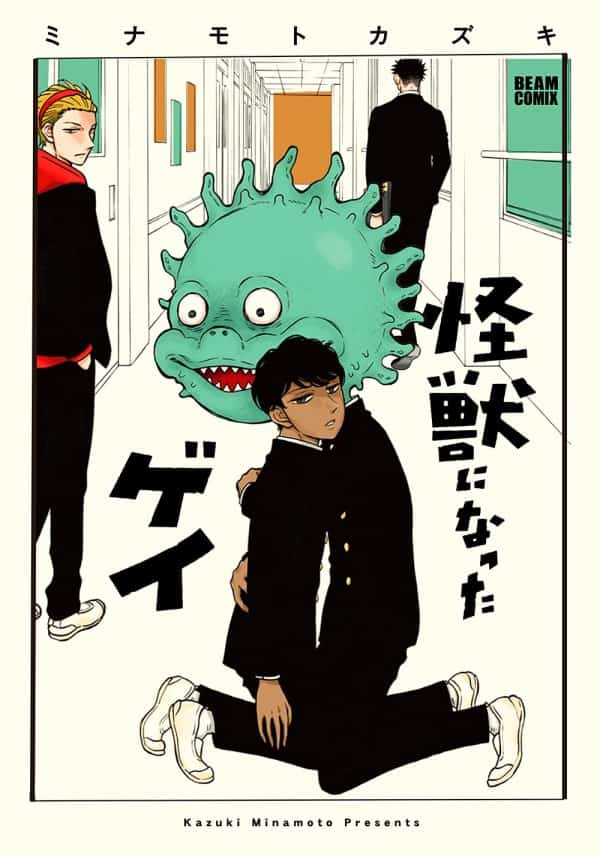
Manga
Description
"The Gay Who Turned Kaiju" is a manga series that blends elements of science fiction, LGBTQ+ themes, and kaiju mythology into a unique narrative. The story centers on Haruto, a young gay man navigating the challenges of his identity in a society that often marginalizes him. His life takes a dramatic turn when he is exposed to an experimental serum during a mysterious laboratory accident. This serum triggers a transformation, turning Haruto into a kaiju—a massive, monstrous creature with immense destructive power.
As Haruto grapples with his new form, he discovers that the transformation is not merely physical but also psychological. The kaiju serum amplifies his emotions, particularly his feelings of isolation and anger, which manifest in destructive rampages. However, Haruto retains his human consciousness, allowing him to reflect on his actions and seek a way to control his newfound abilities. His journey becomes one of self-discovery, as he learns to reconcile his human identity with his kaiju nature.
The narrative explores the societal reactions to Haruto’s transformation, ranging from fear and hostility to curiosity and admiration. Government agencies and private organizations vie to capture or control him, seeing him as both a threat and a potential weapon. Amidst this chaos, Haruto forms unexpected alliances, including with Akira, a scientist who sympathizes with his plight and seeks to help him regain his humanity. Akira’s character provides a counterbalance to the hostility Haruto faces, offering a perspective grounded in empathy and scientific inquiry.
Themes of identity, acceptance, and the struggle against societal oppression are woven throughout the story. Haruto’s kaiju form serves as a metaphor for the visibility and vulnerability of marginalized individuals, particularly those within the LGBTQ+ community. The series also delves into the ethical implications of scientific experimentation and the consequences of unchecked power, both on a personal and societal level.
As the plot progresses, Haruto encounters other individuals affected by the kaiju serum, each with their own struggles and motivations. These encounters challenge him to confront his own biases and fears, further deepening his character development. The story builds toward a climactic confrontation between Haruto and a rival kaiju, whose transformation was driven by hatred and a desire for vengeance. This conflict forces Haruto to make difficult choices about his future and the legacy he wishes to leave behind.
"The Gay Who Turned Kaiju" combines action, emotional depth, and social commentary, creating a narrative that is both engaging and thought-provoking. Its exploration of identity and transformation resonates on multiple levels, making it a standout addition to the genres it inhabits.
As Haruto grapples with his new form, he discovers that the transformation is not merely physical but also psychological. The kaiju serum amplifies his emotions, particularly his feelings of isolation and anger, which manifest in destructive rampages. However, Haruto retains his human consciousness, allowing him to reflect on his actions and seek a way to control his newfound abilities. His journey becomes one of self-discovery, as he learns to reconcile his human identity with his kaiju nature.
The narrative explores the societal reactions to Haruto’s transformation, ranging from fear and hostility to curiosity and admiration. Government agencies and private organizations vie to capture or control him, seeing him as both a threat and a potential weapon. Amidst this chaos, Haruto forms unexpected alliances, including with Akira, a scientist who sympathizes with his plight and seeks to help him regain his humanity. Akira’s character provides a counterbalance to the hostility Haruto faces, offering a perspective grounded in empathy and scientific inquiry.
Themes of identity, acceptance, and the struggle against societal oppression are woven throughout the story. Haruto’s kaiju form serves as a metaphor for the visibility and vulnerability of marginalized individuals, particularly those within the LGBTQ+ community. The series also delves into the ethical implications of scientific experimentation and the consequences of unchecked power, both on a personal and societal level.
As the plot progresses, Haruto encounters other individuals affected by the kaiju serum, each with their own struggles and motivations. These encounters challenge him to confront his own biases and fears, further deepening his character development. The story builds toward a climactic confrontation between Haruto and a rival kaiju, whose transformation was driven by hatred and a desire for vengeance. This conflict forces Haruto to make difficult choices about his future and the legacy he wishes to leave behind.
"The Gay Who Turned Kaiju" combines action, emotional depth, and social commentary, creating a narrative that is both engaging and thought-provoking. Its exploration of identity and transformation resonates on multiple levels, making it a standout addition to the genres it inhabits.
Comment(s)
Staff
- Story & ArtKazuki Minamoto