
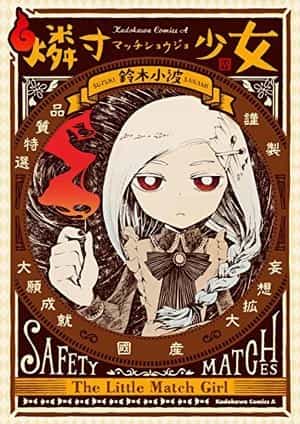
Manga
Description
"The Little Match Girl" is a manga adaptation of Hans Christian Andersen's classic fairy tale, reimagined with a focus on emotional depth and visual storytelling. The narrative centers on a young, impoverished girl who sells matches on the streets during a bitterly cold winter. Abandoned by her family and ignored by passersby, she struggles to survive in a harsh, uncaring world. As the cold intensifies, she lights matches to keep warm, each flame triggering vivid hallucinations that provide temporary solace from her grim reality.
Through these visions, the girl experiences moments of warmth and joy, imagining a feast, a cozy home, and the loving presence of her deceased grandmother. These fleeting glimpses of comfort contrast sharply with her bleak surroundings, highlighting her longing for connection and safety. The story’s emotional core lies in the tension between her dreams and the unrelenting cruelty of her circumstances. The manga amplifies the tale’s poignancy through expressive artwork, capturing the girl’s fragility and the starkness of her environment.
The main character, the match girl, is portrayed with a blend of innocence and resilience, her quiet suffering serving as a poignant critique of societal neglect. The grandmother, though only present in the girl’s visions, symbolizes unconditional love and the hope of an afterlife free from suffering. The narrative’s sparse dialogue and reliance on visual storytelling emphasize the girl’s isolation and the ephemeral nature of her dreams.
As the story progresses, the girl’s hallucinations grow more vivid, culminating in a vision of her grandmother beckoning her to a peaceful afterlife. In the final moments, the girl succumbs to the cold, her death depicted with a haunting beauty that underscores the tragedy of her short life. The manga remains faithful to the original tale’s themes of poverty, compassion, and the human capacity for hope, while expanding on its emotional resonance through the medium’s unique strengths.
Through these visions, the girl experiences moments of warmth and joy, imagining a feast, a cozy home, and the loving presence of her deceased grandmother. These fleeting glimpses of comfort contrast sharply with her bleak surroundings, highlighting her longing for connection and safety. The story’s emotional core lies in the tension between her dreams and the unrelenting cruelty of her circumstances. The manga amplifies the tale’s poignancy through expressive artwork, capturing the girl’s fragility and the starkness of her environment.
The main character, the match girl, is portrayed with a blend of innocence and resilience, her quiet suffering serving as a poignant critique of societal neglect. The grandmother, though only present in the girl’s visions, symbolizes unconditional love and the hope of an afterlife free from suffering. The narrative’s sparse dialogue and reliance on visual storytelling emphasize the girl’s isolation and the ephemeral nature of her dreams.
As the story progresses, the girl’s hallucinations grow more vivid, culminating in a vision of her grandmother beckoning her to a peaceful afterlife. In the final moments, the girl succumbs to the cold, her death depicted with a haunting beauty that underscores the tragedy of her short life. The manga remains faithful to the original tale’s themes of poverty, compassion, and the human capacity for hope, while expanding on its emotional resonance through the medium’s unique strengths.
Comment(s)
Staff
- Story & ArtSanami Suzuki