
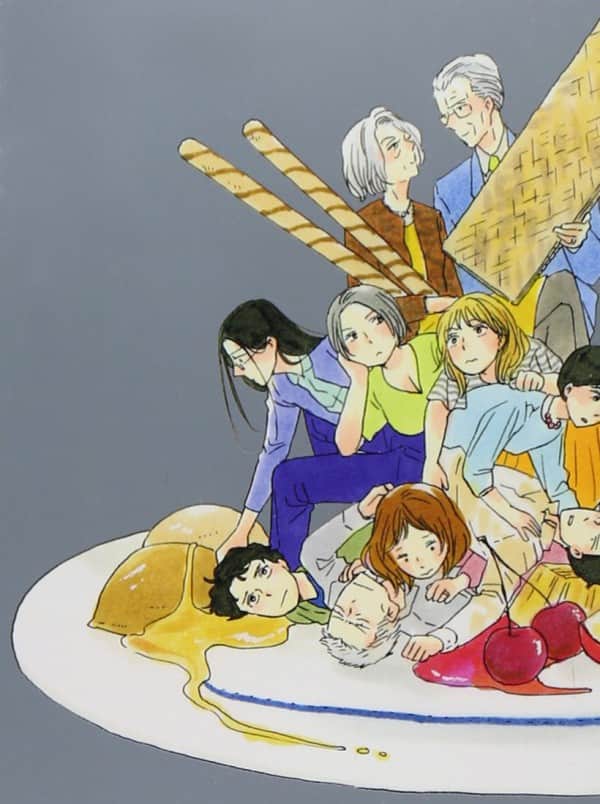
Manga
Description
"Kuu Nomu Tokoro ni Taberu Toko" is a slice-of-life manga that explores the daily lives of its characters through the lens of food and companionship. The narrative centers around a young woman named Toko, who works at a small, unassuming café. Toko’s life is marked by a quiet routine, but her interactions with customers and colleagues reveal deeper layers of her personality and the lives of those around her. The café serves as a focal point where various characters, each with their own struggles and aspirations, come together.
The story unfolds episodically, with each chapter often focusing on a specific character or a particular meal shared at the café. Through these vignettes, the manga delves into themes of loneliness, connection, and the comfort found in simple, everyday moments. Toko’s role as a listener and observer allows her to form meaningful, albeit subtle, bonds with the café’s patrons. Her quiet empathy and the warmth of the café create a space where people feel understood and accepted.
Key characters include Toko’s coworkers, who each bring their own quirks and backstories to the narrative. There is also a recurring cast of customers, ranging from office workers seeking a brief respite from their hectic lives to students grappling with personal dilemmas. The interactions between these characters are often understated, with much of the emotional weight conveyed through their shared meals and the unspoken understanding that develops over time.
The manga’s pacing is deliberate, emphasizing the slow, rhythmic nature of daily life. Food plays a central role, not just as a source of sustenance but as a medium for communication and emotional expression. The preparation and consumption of meals are depicted with care, highlighting the significance of these moments in fostering human connection.
Overall, "Kuu Nomu Tokoro ni Taberu Toko" is a reflective and intimate portrayal of ordinary lives, using the setting of a small café to explore the ways in which people find solace and meaning in their interactions with others. The narrative’s strength lies in its ability to capture the quiet beauty of everyday experiences, making it a poignant and relatable read.
The story unfolds episodically, with each chapter often focusing on a specific character or a particular meal shared at the café. Through these vignettes, the manga delves into themes of loneliness, connection, and the comfort found in simple, everyday moments. Toko’s role as a listener and observer allows her to form meaningful, albeit subtle, bonds with the café’s patrons. Her quiet empathy and the warmth of the café create a space where people feel understood and accepted.
Key characters include Toko’s coworkers, who each bring their own quirks and backstories to the narrative. There is also a recurring cast of customers, ranging from office workers seeking a brief respite from their hectic lives to students grappling with personal dilemmas. The interactions between these characters are often understated, with much of the emotional weight conveyed through their shared meals and the unspoken understanding that develops over time.
The manga’s pacing is deliberate, emphasizing the slow, rhythmic nature of daily life. Food plays a central role, not just as a source of sustenance but as a medium for communication and emotional expression. The preparation and consumption of meals are depicted with care, highlighting the significance of these moments in fostering human connection.
Overall, "Kuu Nomu Tokoro ni Taberu Toko" is a reflective and intimate portrayal of ordinary lives, using the setting of a small café to explore the ways in which people find solace and meaning in their interactions with others. The narrative’s strength lies in its ability to capture the quiet beauty of everyday experiences, making it a poignant and relatable read.
Comment(s)
Staff
- Story & Art