TV-Series
Description
In the late Muromachi period, an era of warring states and emerging ninja clans, a ten-year-old boy named Rantarou leaves his home to enroll at the Ninjutsu Academy. His family hopes he will overcome his clumsy nature and poor eyesight to become a first-class ninja. Rantarou is determined, and his motto is effort, but his path to becoming an elite ninja is filled with humorous mishaps rather than heroic triumphs.
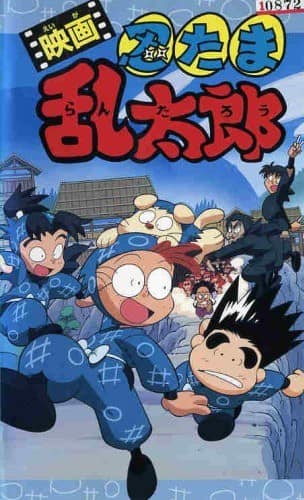
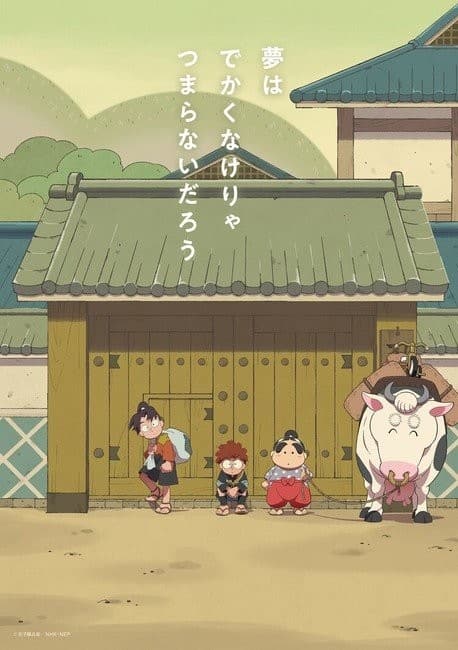
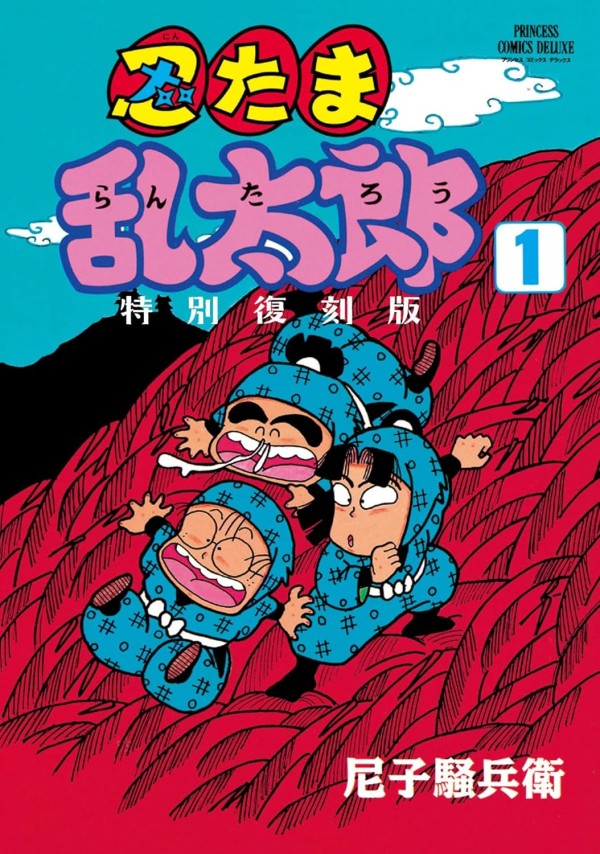
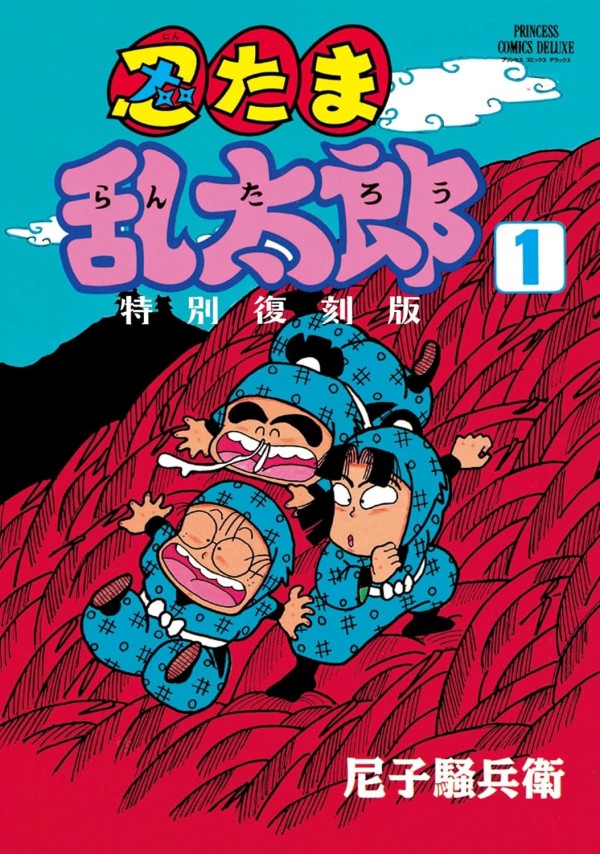
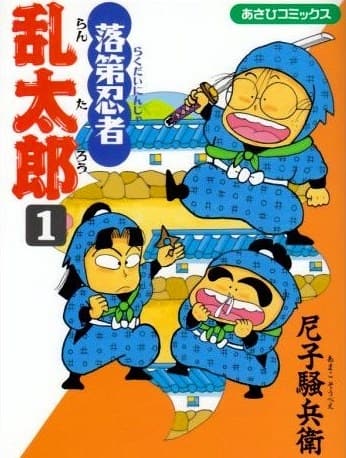
At the academy, he quickly befriends two other first-year students. Kirimaru is a pragmatic orphan who lost his parents in a war and now survives on a relentless drive to earn money through countless part-time jobs. He is shrewd, sarcastic, and can hear the clink of a dropped coin from an impossible distance. Shinbei is the cheerful and rotund son of a wealthy merchant, sent to the school to learn discipline. He is defined by a bottomless appetite, a perpetually runny nose, and surprising bursts of superhuman strength. Together, these three are known as Nintama, a combination of the words ninja and tamago (egg), signifying that they are still trainees.
The Ninjutsu Academy is a sprawling, secretive campus hidden in the mountains of the Kansai region. It is a complete educational environment with classrooms, libraries, and medical bays, but with a ninja twist. The students are organized by grade and class, with the main trio belonging to the first-year Ha class. Their homeroom teacher is the strict but caring Doi-sensei, who often ends up as the straight man to his students antics. He is joined by the cross-dressing Yamada-sensei, a master of disguise whose transformations often lead to confusion. The school is run by an eccentric, elderly principal with a peculiar fondness for a strange, slug-like creature named Hemuhemu. Adding to the chaos are the Kunoichi class, a group of mischievous and resourceful girls-in-training, and a cast of upperclassmen with their own unique quirks and specialties, from trap-making to rifle handling.
The series does not follow a single overarching plot but is instead a long-running collection of episodic, slice-of-life adventures. A typical story follows Rantarou, Kirimaru, and Shinbei as they attempt to pass a class, complete a chore, or earn some spending money. Their plans invariably go wrong, turning simple tasks like weeding a garden or delivering a message into elaborate failures. Much of the humor is derived from the contrast between their ninja aspirations and their childish, relatable flaws. Kirimaru will abandon a mission for a lost coin, Shinbei will eat the evidence, and Rantarous earnest efforts will be undermined by his poor timing and bad luck.
While the tone is predominantly comedic, several recurring narrative arcs provide structure. The primary antagonists are the Dokutake ninja corps, a rival group of comically incompetent villains who constantly scheme to steal the academy's secret scrolls or conquer local villages. Their plans are elaborate but always foiled, often by accident, thanks to the Nintama. More serious storylines occasionally emerge, often focusing on Kirimaru. Episodes that explore his status as an orphan or his fear of being abandoned by his teacher, Doi-sensei, add a layer of genuine emotion to the series. Other arcs involve dramatic rescues, festivals, and intense, sports-like competitions between classes. Despite its historical setting, the world is filled with deliberate anachronisms for comedic effect, including modern speech patterns, vending machines, and even wristwatches. The series has aired continuously for decades, amassing over 2,000 short episodes, and has also produced educational specials on topics like traffic safety and fire prevention.
At the academy, he quickly befriends two other first-year students. Kirimaru is a pragmatic orphan who lost his parents in a war and now survives on a relentless drive to earn money through countless part-time jobs. He is shrewd, sarcastic, and can hear the clink of a dropped coin from an impossible distance. Shinbei is the cheerful and rotund son of a wealthy merchant, sent to the school to learn discipline. He is defined by a bottomless appetite, a perpetually runny nose, and surprising bursts of superhuman strength. Together, these three are known as Nintama, a combination of the words ninja and tamago (egg), signifying that they are still trainees.
The Ninjutsu Academy is a sprawling, secretive campus hidden in the mountains of the Kansai region. It is a complete educational environment with classrooms, libraries, and medical bays, but with a ninja twist. The students are organized by grade and class, with the main trio belonging to the first-year Ha class. Their homeroom teacher is the strict but caring Doi-sensei, who often ends up as the straight man to his students antics. He is joined by the cross-dressing Yamada-sensei, a master of disguise whose transformations often lead to confusion. The school is run by an eccentric, elderly principal with a peculiar fondness for a strange, slug-like creature named Hemuhemu. Adding to the chaos are the Kunoichi class, a group of mischievous and resourceful girls-in-training, and a cast of upperclassmen with their own unique quirks and specialties, from trap-making to rifle handling.
The series does not follow a single overarching plot but is instead a long-running collection of episodic, slice-of-life adventures. A typical story follows Rantarou, Kirimaru, and Shinbei as they attempt to pass a class, complete a chore, or earn some spending money. Their plans invariably go wrong, turning simple tasks like weeding a garden or delivering a message into elaborate failures. Much of the humor is derived from the contrast between their ninja aspirations and their childish, relatable flaws. Kirimaru will abandon a mission for a lost coin, Shinbei will eat the evidence, and Rantarous earnest efforts will be undermined by his poor timing and bad luck.
While the tone is predominantly comedic, several recurring narrative arcs provide structure. The primary antagonists are the Dokutake ninja corps, a rival group of comically incompetent villains who constantly scheme to steal the academy's secret scrolls or conquer local villages. Their plans are elaborate but always foiled, often by accident, thanks to the Nintama. More serious storylines occasionally emerge, often focusing on Kirimaru. Episodes that explore his status as an orphan or his fear of being abandoned by his teacher, Doi-sensei, add a layer of genuine emotion to the series. Other arcs involve dramatic rescues, festivals, and intense, sports-like competitions between classes. Despite its historical setting, the world is filled with deliberate anachronisms for comedic effect, including modern speech patterns, vending machines, and even wristwatches. The series has aired continuously for decades, amassing over 2,000 short episodes, and has also produced educational specials on topics like traffic safety and fire prevention.
Comment(s)
Relations
Anime overview