TV-Series
Description
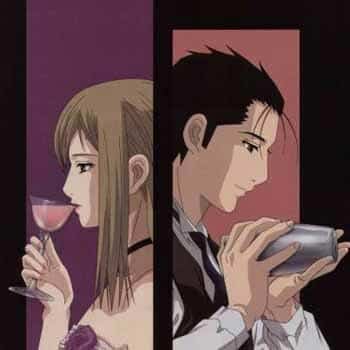
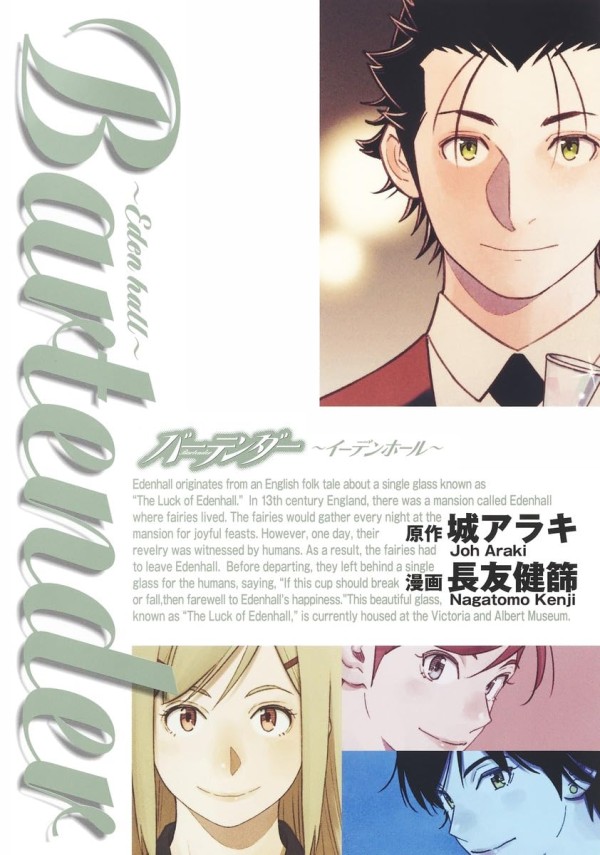
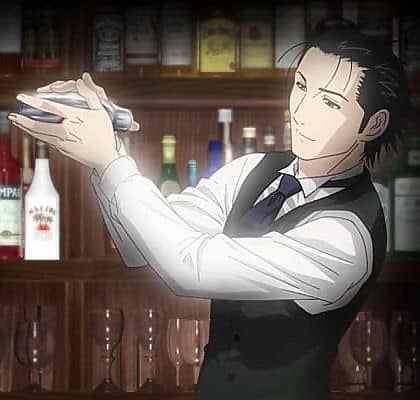
"Bartender" is a Japanese anime series that revolves around the life of Ryu Sasakura, a highly skilled bartender who works at Eden Hall, a small, exclusive bar tucked away in the Ginza district of Tokyo. Known for his exceptional talent and deep understanding of human emotions, Ryu is often referred to as the "Glass of God" for his ability to craft the perfect cocktail tailored to each customer's needs. The series is episodic, with each episode focusing on different patrons who visit Eden Hall, each carrying their own personal struggles, memories, and desires.
The narrative structure of "Bartender" is driven by the interactions between Ryu and his customers. Through these encounters, the series explores themes of regret, love, loss, and redemption. Ryu's role is not merely to serve drinks but to listen and provide solace through his cocktails, which often serve as metaphors for the patrons' emotional states. The drinks he creates are not just beverages but carefully crafted solutions that help his customers confront their inner conflicts and find clarity.
Supporting characters include Miwa Kurushima, a young woman who aspires to become a bartender and often seeks Ryu's guidance, and Ryu's mentor, the enigmatic and wise bartender known as "The Legend." These characters add depth to the story, offering insights into the art of bartending and the philosophy behind it. The series also delves into the history and cultural significance of various cocktails, blending factual information with the fictional narrative.
The setting of Eden Hall is crucial to the story, as it serves as a sanctuary where people from all walks of life can momentarily escape their troubles. The bar's intimate atmosphere and Ryu's empathetic nature create a space where patrons feel safe to open up and reflect on their lives. The series emphasizes the importance of human connection and the healing power of understanding and compassion.
"Bartender" is a contemplative series that combines elements of drama, slice of life, and culinary arts. Its focus on character-driven stories and the art of mixology offers a unique perspective on the human condition, making it a distinctive entry in the anime genre. The series is both educational and emotionally resonant, appealing to viewers interested in character development and the subtleties of interpersonal relationships.
The narrative structure of "Bartender" is driven by the interactions between Ryu and his customers. Through these encounters, the series explores themes of regret, love, loss, and redemption. Ryu's role is not merely to serve drinks but to listen and provide solace through his cocktails, which often serve as metaphors for the patrons' emotional states. The drinks he creates are not just beverages but carefully crafted solutions that help his customers confront their inner conflicts and find clarity.
Supporting characters include Miwa Kurushima, a young woman who aspires to become a bartender and often seeks Ryu's guidance, and Ryu's mentor, the enigmatic and wise bartender known as "The Legend." These characters add depth to the story, offering insights into the art of bartending and the philosophy behind it. The series also delves into the history and cultural significance of various cocktails, blending factual information with the fictional narrative.
The setting of Eden Hall is crucial to the story, as it serves as a sanctuary where people from all walks of life can momentarily escape their troubles. The bar's intimate atmosphere and Ryu's empathetic nature create a space where patrons feel safe to open up and reflect on their lives. The series emphasizes the importance of human connection and the healing power of understanding and compassion.
"Bartender" is a contemplative series that combines elements of drama, slice of life, and culinary arts. Its focus on character-driven stories and the art of mixology offers a unique perspective on the human condition, making it a distinctive entry in the anime genre. The series is both educational and emotionally resonant, appealing to viewers interested in character development and the subtleties of interpersonal relationships.
Episodes
Staffel 1
1The Glass of God
Miwa Kurushima,a member of a prominent hotelier family, searches for a bar called Eden Hall. She seeks a specific cocktail, "Glass of God," which her grandfather spoke of before his death. Ryu Sasakura, the bar's young owner and bartender, serves her a glass of water. He notes her exhaustion and insists she must eat before drinking. Miwa requests a highball, and Ryu prepares one with meticulous care, explaining his technique. The drink triggers a memory of her grandfather and brings her to tears. The next day, Miwa's family pressures her to sell their hotel to a foreign conglomerate. She resists, recalling her grandfather's passion for the business. Miwa returns to Eden Hall and asks Ryu for a cocktail that will give her strength. He presents her with a Perfect Manhattan, adjusting the ingredients to suit her taste. The cocktail solidifies her resolve. She later announces her decision to resign from the family company, choosing to honor her grandfather's legacy rather than compromise it. Ryu's calm demeanor and precise craftsmanship reveal his philosophy of serving what the customer truly needs. Miwa's encounter with Eden Hall sets her on a new, uncertain path away from her family's corporate pressures.
2The Taste of a Glass
Miwa Kurushima steps into Eden Hall and asks only for a glass of water. Ryu Sasakura serves it with quiet attention,noting her refusal to look at the liquor shelves. She admits she stopped tasting food and drink after her husband died. Ryu offers no sympathy but instead prepares a gin and tonic with a single large ice cube and a lemon twist, naming it after a legendary bartender’s signature serve. Miwa sips and abruptly recalls her husband ordering the same cocktail on their first date. The memory forces her to weep, breaking the numbness she carried for months. Ryu explains that a proper drink does not erase pain but can return a person to a moment they thought they lost. Miwa leaves Eden Hall having agreed to try eating again, carrying the small step toward accepting her grief. Later, a newspaper critic lingers outside the bar, signaling that Ryu’s methods will soon draw wider scrutiny.
3Episode 3
Keiichi Arima,a magazine editor, enters Eden Hall carrying the weight of a career-defining assignment. His editor-in-chief demands a scandalous exposé on a celebrated chef who happens to be Arima’s former classmate. Ryu Sasakura, the bartender, observes Arima’s agitation and asks about his preferred drink. Arima requests a cocktail that can give him courage. Ryu prepares a glass of the cocktail “Kindness,” a mixture of gin, dry vermouth, and a touch of maraschino. The drink’s subtle flavor prompts Arima to recall past kindnesses the chef showed him during their school days. He remembers a moment when the chef shared his own lunch with Arima, who had none. That memory shifts Arima’s resolve. Instead of writing the damaging article, he submits a piece highlighting the chef’s generosity and skill. The editor-in-chief rebukes Arima for disobeying orders, but Arima accepts the consequences, choosing integrity over advancement. Ryu later learns that the chef, moved by the article, invites Arima to a private dinner, rekindling their old friendship. The episode closes with Arima leaving Eden Hall, his burden lifted, while Ryu quietly returns to polishing glassware, ready for the next customer seeking clarity.
4Kokoro no Nokoribi
Miwa Yoshinaga,a former stage actress now working as a hospital cleaner, enters Eden Hall. She asks Ryu Sasakura for a drink that will bring back memories of her past. Ryu prepares a Blinker, a cocktail made with whiskey, grapefruit juice, and grenadine. The drink’s taste and Ryu’s questions lead Miwa to recall the theater fire that ended her career. She reveals her guilt: a dropped cigarette caused the fire, which left her colleague and close friend, the playwright Eiko, with severe burns. Miwa abandoned acting out of shame and now cleans the hospital where Eiko stays. Ryu explains that the Blinker was originally created to help a customer remember a lost love, framing it as a bridge to forgotten emotions. After leaving the bar, Miwa visits Eiko. Eiko shows no resentment and encourages Miwa to return to the stage, revealing that she still writes plays. Miwa auditions for a new production and lands a role. She returns to Eden Hall to thank Ryu, now carrying renewed purpose. In the final scene, Miwa performs on stage while Ryu watches from the audience, and a new customer arrives at Eden Hall, hinting at the next encounter.
5Things Forgotten In a Bar
Shibata,a young salesman, receives a transfer notice from his boss after his sales figures drop. He arrives at Eden Hall carrying the weight of his professional failure. Ryū Sasakura serves him a Daiquiri without asking for his order. Shibata stares at the glass, unable to articulate his frustration. Ryū recounts the life of Ernest Hemingway, focusing on the writer’s time in Cuba and his love for the Daiquiri. He then narrates the story of The Old Man and the Sea, describing how the old fisherman battles the marlin for days without catching it. The parallel between the fisherman’s struggle and Shibata’s own situation becomes clear. Shibata realizes that the transfer is not a punishment but a challenge requiring endurance. He finishes the drink, thanks Ryū, and leaves the bar with a renewed resolve to face his new assignment. The episode closes with Shibata stepping out into the night, carrying Hemingway’s lesson about perseverance.
6Turning Point
Ryu Sasakura serves a glass of water to a new customer,Shigetada Saito, a former professional baseball pitcher. Saito once dominated the league but now cannot throw a pitch. He explains his sudden loss of control after a game where he failed to strike out a specific batter. Ryu listens without judgment and prepares a Glass Slipper cocktail, a drink known for marking a turning point. Saito hesitates but eventually drinks, triggering a memory of the game that broke his confidence. He recalls the batter's stance and the moment he abandoned his signature pitch. Ryu suggests that Saito’s fear stems not from the batter but from abandoning his own trust in his abilities. Saito realizes he has been avoiding the memory instead of accepting it. He leaves Eden Hall with a plan to return to his former team as a coach. Ryu watches him go, reflecting that some glasses pour only what the drinker needs. The episode closes with Saito stepping back onto a baseball field, ready to face his past.
7Episode 7
Miwa Kurusu,a novelist unable to write for months, enters Eden Hall and orders a cocktail. She sits in silence, her frustration with her creative block visible in her tense posture. Ryu Sasakura, the bartender, observes her carefully and prepares a Sazerac without her requesting it. The drink’s sharp aroma and flavor unlock a memory of her late husband, a man who once introduced her to the same cocktail in New Orleans. She recalls how he encouraged her writing during the early years of her career, believing in her talent when she doubted herself. His sudden death left her adrift, and she abandoned the novel she had been working on. The memory reignites the emotional connection she had to her craft, reminding her why she began writing. Ryu does not offer advice or analysis; he merely serves the drink and listens, allowing her to reach her own conclusion. She leaves Eden Hall with a clear resolve to resume writing. That night, she sits at her desk and types the first words of a new manuscript. The episode closes with Ryu noting that a bartender’s duty is to preserve the past, a statement that quietly underscores the gaps in his own history.
8A Glass of Love
A middle-aged woman named Kikue,a former renowned actress, enters Eden Hall and requests a cocktail she had once long ago. Ryu Sasakura listens as she recounts leaving her acting career and her love for a playwright named Shunsuke to marry a businessman. She carries an unopened letter from Shunsuke, unable to face its contents for decades. Ryu prepares a Marguerite cocktail, a gin-based drink with a history tied to a bartender’s unrequited love. As Kikue drinks, the cocktail’s taste triggers vivid memories of her time with Shunsuke and loosens her emotional barriers. She finally opens the letter, discovering that Shunsuke had written of his enduring love, his regret for not stopping her departure, and that he had passed away years earlier. Reading the letter gives her closure, allowing her to accept the past and reconcile with the choices she made. She thanks Ryu and leaves Eden Hall with a renewed sense of peace. The episode’s final moments show Ryu watching her go, then turning to greet the next patron who steps into the bar, signaling the ongoing cycle of encounters.
9A Glass of Love
A pianist in her late twenties enters Eden Hall with visible fatigue. She confesses to bartender Ryu Sasakura that she has lost the ability to play the piano. Her fingers no longer respond to the keys,and she intends to abandon her career. Ryu listens without offering immediate advice, instead preparing a Salty Dog. The cocktail’s salted rim and grapefruit bitterness mirror the tears and disappointment she carries. As she drinks, she recalls a former lover, a novelist who wrote a story inspired by her playing. The novelist had left her, believing his own creative block was holding her back. Ryu’s choice of drink reconnects her with the memory of why she first loved music. She returns to the concert hall and performs again, rediscovering her own expression. The novelist, present in the audience, recognizes her renewed spirit. After the performance, they meet again at Eden Hall, where Ryu serves them together, allowing an unspoken reconciliation. The episode closes with the novelist beginning a new manuscript, and the next episode introduces a customer whose professional pride conflicts with personal loss.
10A Toast to the Future
Yuri,a travel agency employee, arrives at Eden Hall with visible distress before her business trip to New York. Ryu observes her ordering only water and her hands trembling. He initiates a conversation and learns that a severe turbulence experience five years earlier left her unable to board planes. Rather than directly addressing the fear, Ryu prepares an Aviation cocktail, a drink known for its clear, sky-blue color. He adds a subtle twist by using a vintage gin that her father once favored. The scent and taste trigger a memory of Yuri’s childhood: her father, a model airplane enthusiast, teaching her to build a small glider. She recalls the pride she felt when the glider flew smoothly. The memory shifts her association of flight from fear to a connection with her father. She finishes the drink and decides to take the flight. The next morning, she boards the plane with calm determination. At Eden Hall, Ryu explains to a colleague that a well-made cocktail can act as a time machine, retrieving lost emotions. The episode closes with the bar owner, Taizo, hinting that Ryu’s own unresolved past will soon demand attention.
11Episode 11
Kazuo Kuwabara,a bartender at the Hotel Pacific’s main bar, serves customers with mechanical precision but feels no connection to his work. He considers the hotel bar a place of superficial demands and doubts his choice of profession. Ryu Sasakura visits the hotel bar and orders a simple glass of water, which Kuwabara serves dismissively. Later, Kuwabara finds Ryu at Eden Hall and witnesses how Ryu listens to a customer’s unspoken troubles before crafting a cocktail. Kuwabara confronts Ryu, accusing him of relying on theatrics, and challenges him to prove the value of his methods. Ryu invites Kuwabara to observe the hotel bar through a different lens, noting how the head bartender silently supports guests without recognition. Kuwabara recognizes the same quiet dedication in his own mentor and begins to understand that a bartender’s skill lies in empathy, not flair. He returns to the hotel bar and prepares a cocktail for a lonely regular, using a recipe passed down from his mentor to offer comfort. The customer’s gratitude marks the first time Kuwabara experiences genuine purpose in his work. With renewed confidence, he decides to continue refining his craft while staying at the hotel bar. The episode closes as a rival hotel chain announces plans to open a new luxury bar nearby, threatening the established bar’s reputation and setting the stage for Kuwabara’s next trial.
Cast
- Ryuu Sasakura
Comment(s)
Staff
- DirectorMasaki Watanabe
- Screenplay
- Episode DirectorRyō YasumuraJirō FujimotoYukio OkazakiTakenori MiharaMatsuo AsamiKiichi SuzunoMasaki WatanabeMichita Shiraishi
- Original creator
- Art DirectorShigemi Ikeda
- Art designShigemi IkedaShūichi Ōkubo
- Sound DirectorSatoshi Motoyama
- Producer
- Series Composition
- StoryboardFumio KurokawaRyō YasumuraIchizō KobayashiTakenori MiharaMasaki Watanabe
- MusicKaoruko Ohtake
- Character DesignHirotaka Kinoshita
- Animation DirectorIchizō KobayashiHirotaka KinoshitaYōko KōjōKenji TojoSayuri SugitōOsamu ŌkuboKenji HattoriIkuo YamakadoJung Chul KimHong Keun ParkShū Watanabe
- 3D Animation DirectorKenta Ozaki
- Director of PhotographyNorio Matsuda
Production
- ProductionPony CanyonFuji Television NetworkFuji Creative CorporationBartender Production Team
- Animation ProductionPalm Studio
Relations
Manga overview