
TV-Series
Description
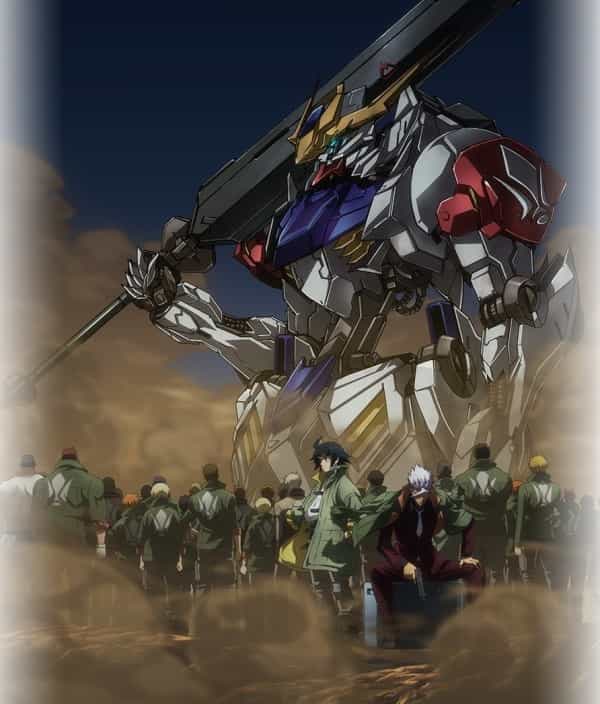
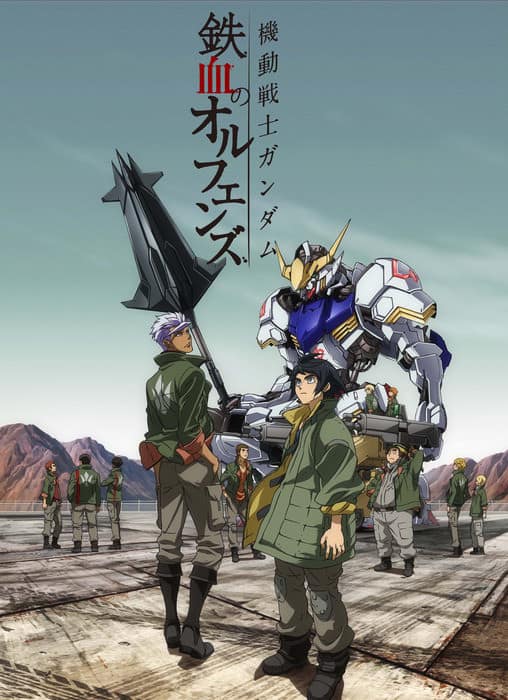
Set in the post-disaster timeline, "Mobile Suit Gundam: Iron-Blooded Orphans" explores a future where humanity has colonized Mars and other celestial bodies, but economic disparity and political corruption plague society. The story centers on Kudelia Aina Bernstein, a young Martian noblewoman advocating for independence from Earth's economic dominance, and a group of child soldiers from the private security company CGS. These children, led by Mikazuki Augus and Orga Itsuka, are exploited as expendable labor, forced to fight in dangerous missions with outdated equipment.
When a powerful Earth-based organization, Gjallarhorn, attempts to assassinate Kudelia to suppress her political influence, CGS abandons the children to face the attack. In response, the child soldiers stage a rebellion, overthrowing their adult superiors and taking control of CGS. Renaming themselves Tekkadan, meaning "Iron and Blood," they vow to protect Kudelia and secure their own future. Mikazuki, a skilled but emotionally detached pilot, becomes the primary operator of the Gundam Barbatos, a powerful and ancient mobile suit recovered from CGS's storage.
As Tekkadan escorts Kudelia to Earth to negotiate Martian independence, they face relentless opposition from Gjallarhorn, a militarized organization maintaining Earth's hegemony. The journey reveals the complexities of interplanetary politics, with factions like the Teiwaz mafia and the Brewers pirates playing significant roles. Tekkadan's rise to prominence challenges the status quo, but their lack of experience and resources forces them into increasingly precarious situations.
The narrative delves into themes of loyalty, survival, and the cost of ambition. Orga, as Tekkadan's leader, struggles with the weight of responsibility, often making morally ambiguous decisions to ensure the group's survival. Mikazuki, bound by his loyalty to Orga, becomes a symbol of Tekkadan's resolve, but his reliance on the Barbatos and its Alaya-Vijnana system—a neural interface that enhances piloting at the cost of physical strain—raises questions about the human cost of war.
Kudelia's journey evolves from a naive idealist to a determined leader, grappling with the harsh realities of political negotiation and the sacrifices required for change. Her relationship with Tekkadan grows mutually beneficial, as they provide her protection while she secures legitimacy for their cause. Meanwhile, Gjallarhorn's internal divisions, particularly between traditionalists like McGillis Fareed and reformists like Gaelio Bauduin, add layers of intrigue and conflict.
The series balances large-scale battles with intimate character moments, exploring the personal struggles of its ensemble cast. Secondary characters, such as the compassionate engineer Naze Turbine and the conflicted Gjallarhorn officer Ein Dalton, contribute to the narrative's depth. The story escalates as Tekkadan's successes attract both allies and enemies, culminating in a high-stakes confrontation that tests their unity and resolve.
"Iron-Blooded Orphans" stands out for its grounded portrayal of war and its impact on individuals, particularly the marginalized. The absence of traditional Gundam tropes like Newtypes or beam weaponry emphasizes a more brutal, close-quarters combat style, reflecting the harsh realities of its world. The series concludes with a bittersweet resolution, underscoring the sacrifices made in the pursuit of freedom and the enduring legacy of those who fought for it.
When a powerful Earth-based organization, Gjallarhorn, attempts to assassinate Kudelia to suppress her political influence, CGS abandons the children to face the attack. In response, the child soldiers stage a rebellion, overthrowing their adult superiors and taking control of CGS. Renaming themselves Tekkadan, meaning "Iron and Blood," they vow to protect Kudelia and secure their own future. Mikazuki, a skilled but emotionally detached pilot, becomes the primary operator of the Gundam Barbatos, a powerful and ancient mobile suit recovered from CGS's storage.
As Tekkadan escorts Kudelia to Earth to negotiate Martian independence, they face relentless opposition from Gjallarhorn, a militarized organization maintaining Earth's hegemony. The journey reveals the complexities of interplanetary politics, with factions like the Teiwaz mafia and the Brewers pirates playing significant roles. Tekkadan's rise to prominence challenges the status quo, but their lack of experience and resources forces them into increasingly precarious situations.
The narrative delves into themes of loyalty, survival, and the cost of ambition. Orga, as Tekkadan's leader, struggles with the weight of responsibility, often making morally ambiguous decisions to ensure the group's survival. Mikazuki, bound by his loyalty to Orga, becomes a symbol of Tekkadan's resolve, but his reliance on the Barbatos and its Alaya-Vijnana system—a neural interface that enhances piloting at the cost of physical strain—raises questions about the human cost of war.
Kudelia's journey evolves from a naive idealist to a determined leader, grappling with the harsh realities of political negotiation and the sacrifices required for change. Her relationship with Tekkadan grows mutually beneficial, as they provide her protection while she secures legitimacy for their cause. Meanwhile, Gjallarhorn's internal divisions, particularly between traditionalists like McGillis Fareed and reformists like Gaelio Bauduin, add layers of intrigue and conflict.
The series balances large-scale battles with intimate character moments, exploring the personal struggles of its ensemble cast. Secondary characters, such as the compassionate engineer Naze Turbine and the conflicted Gjallarhorn officer Ein Dalton, contribute to the narrative's depth. The story escalates as Tekkadan's successes attract both allies and enemies, culminating in a high-stakes confrontation that tests their unity and resolve.
"Iron-Blooded Orphans" stands out for its grounded portrayal of war and its impact on individuals, particularly the marginalized. The absence of traditional Gundam tropes like Newtypes or beam weaponry emphasizes a more brutal, close-quarters combat style, reflecting the harsh realities of its world. The series concludes with a bittersweet resolution, underscoring the sacrifices made in the pursuit of freedom and the enduring legacy of those who fought for it.
Comment(s)
No entries available.
Relations
Anime overview






Manga overview


![Mobile Suit Gundam Wing: The Last Outpost [G-Unit]](https://cdn.kurenai.com/infos/manga/1604/big.jpg)

Music
Opening
- ?“"RAGE OF DUST"” - SPYAIR
Ending
- ?“"Shōnen no Hate" (少年の果て)” - GRANRODEO