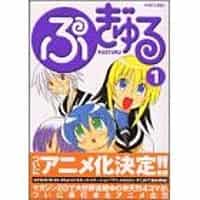
Manga
Description
"Pugyuru" is a manga series that blends elements of comedy, fantasy, and slice-of-life, centering on the whimsical and often chaotic adventures of its titular character, Pugyuru, a small, mischievous creature with a penchant for causing trouble. The narrative unfolds in a vibrant, fantastical world where humans and magical beings coexist, though not always harmoniously. Pugyuru, despite its diminutive size, possesses an insatiable curiosity and a knack for stumbling into bizarre situations, often dragging others along for the ride.
The story begins with Pugyuru’s arrival in a quaint village, where its antics quickly disrupt the daily lives of the residents. Among the key characters is a young girl named Miko, who becomes an unwitting companion to Pugyuru after it attaches itself to her. Miko, initially exasperated by Pugyuru’s unpredictable behavior, gradually develops a bond with the creature, often finding herself caught up in its schemes. Another central figure is Taro, a bumbling but well-meaning villager who frequently becomes the target of Pugyuru’s pranks. Despite his frustrations, Taro often plays a role in resolving the chaos Pugyuru creates.
The plot is episodic, with each chapter presenting a new misadventure or challenge. Pugyuru’s actions frequently lead to humorous misunderstandings, such as accidentally transforming villagers into animals or causing magical objects to malfunction. These incidents often escalate into larger problems, requiring Miko and Taro to step in and find creative solutions. The series balances its comedic tone with moments of lighthearted charm, as the characters navigate the consequences of Pugyuru’s antics while learning to appreciate its unique presence.
Throughout the series, the world-building expands to include various magical creatures and locales, each contributing to the series’ whimsical atmosphere. Pugyuru’s origins remain a mystery, adding an element of intrigue to its character. Despite its chaotic nature, Pugyuru’s actions often inadvertently bring the villagers closer together, highlighting themes of community and acceptance. The manga maintains a light, accessible tone, making it suitable for readers of all ages, while its episodic structure allows for easy entry into the story at any point.
The story begins with Pugyuru’s arrival in a quaint village, where its antics quickly disrupt the daily lives of the residents. Among the key characters is a young girl named Miko, who becomes an unwitting companion to Pugyuru after it attaches itself to her. Miko, initially exasperated by Pugyuru’s unpredictable behavior, gradually develops a bond with the creature, often finding herself caught up in its schemes. Another central figure is Taro, a bumbling but well-meaning villager who frequently becomes the target of Pugyuru’s pranks. Despite his frustrations, Taro often plays a role in resolving the chaos Pugyuru creates.
The plot is episodic, with each chapter presenting a new misadventure or challenge. Pugyuru’s actions frequently lead to humorous misunderstandings, such as accidentally transforming villagers into animals or causing magical objects to malfunction. These incidents often escalate into larger problems, requiring Miko and Taro to step in and find creative solutions. The series balances its comedic tone with moments of lighthearted charm, as the characters navigate the consequences of Pugyuru’s antics while learning to appreciate its unique presence.
Throughout the series, the world-building expands to include various magical creatures and locales, each contributing to the series’ whimsical atmosphere. Pugyuru’s origins remain a mystery, adding an element of intrigue to its character. Despite its chaotic nature, Pugyuru’s actions often inadvertently bring the villagers closer together, highlighting themes of community and acceptance. The manga maintains a light, accessible tone, making it suitable for readers of all ages, while its episodic structure allows for easy entry into the story at any point.
Comment(s)
Staff
- Story & Art
Relations
Anime overview