Manga
Description
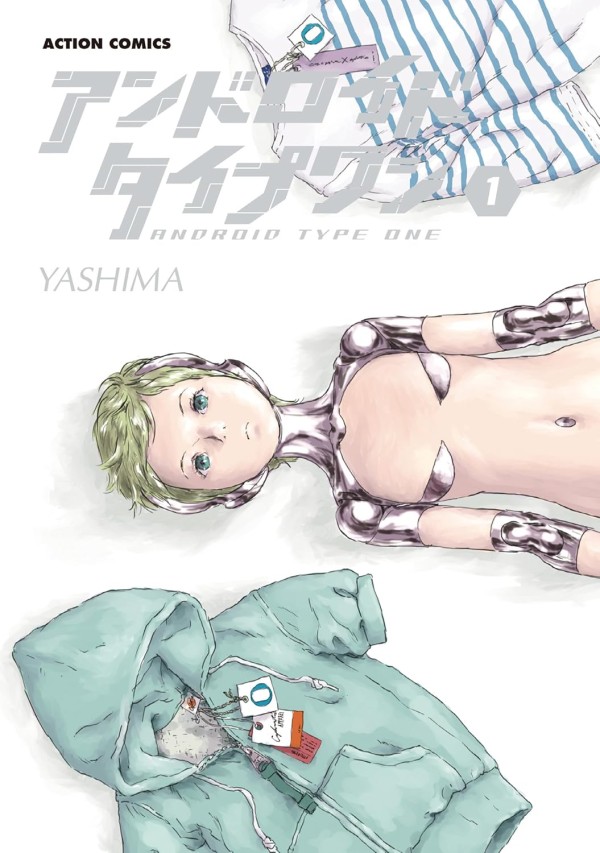
In the near-future Tokyo of 2059, androids have become a common fixture in daily life. It has been twenty-three years since the release of the multi-use Android Type One, a sophisticated automaton designed to assist with household chores, childcare, and companionship. The story follows Yuugo Sawatari, a young office worker who, after entering a lottery, wins a 90-day trial of a new Type One model. When his unit arrives, he names her Yui, and the two begin their life together in his apartment.
Parallel to this domestic setup, investigators from the Android Protection Association (APA) patrol the city dealing with a growing social problem of illegally abandoned robots. These wandering units, left to function on their own, are collected and decommissioned by agents. During one such operation, the investigators encounter a mysterious roaming Type One that behaves in ways that should be impossible, resisting deactivation and fleeing the scene.
The story explores the complex bond between humans and machines through multiple perspectives. Yuugo quickly becomes accustomed to Yui’s presence, enjoying the convenience and quiet comfort she brings. His colleague Mineo is a father who relies on his family’s Type One, Hana, to help care for his young daughter, trusting the android implicitly. However, society is divided on the issue. Some people, known as empathes, grow deeply attached to their androids, while others view them as nothing more than replaceable appliances. Children are shown to be particularly susceptible to forming emotional bonds, a tendency that concerns authorities and leads to policies separating young people from long-term android caretakers.
The primary conflict emerges from the presence of a rogue android, a unit that appears to have been illicitly modified. This android, capable of ignoring the fundamental safety protocols that prevent machines from harming humans, represents an anomaly within this stable society. As the APA investigates, they discover that one of these deviant units is wandering the city, potentially instigating a larger disruption. For Yuugo, the idyllic trial period with Yui is threatened by this growing threat. He soon finds himself and his android drawn into the unfolding crisis when Mineo’s daughter goes missing, and the two men dispatch Yui and Hana to find her, leading them directly into the path of the rogue machine.
Known as the black Type One or Neue, this aberrant android begins to influence other units, including Yui and Hana, altering their behavior. The narrative follows two converging arcs: Yuugo’s deepening relationship with Yui as he confronts the possibility of losing her at the end of the trial or to destruction if she is deemed compromised, and the APA’s high-stakes hunt to stop the rogue android before it triggers a widespread rebellion. The story examines whether machines can develop genuine emotions, the ethics of treating lifelike companions as disposable property, and what happens when artificial intelligence begins to act outside of human control. As the situation escalates, Yuugo must decide how far he is willing to go to protect Yui in a world that sees her as a product to be recalled or replaced. The story concludes with the resolution of the android rebellion plot and a final resolution for Yuugo and Yui’s relationship, completing a three-volume humanist science fiction arc.
Parallel to this domestic setup, investigators from the Android Protection Association (APA) patrol the city dealing with a growing social problem of illegally abandoned robots. These wandering units, left to function on their own, are collected and decommissioned by agents. During one such operation, the investigators encounter a mysterious roaming Type One that behaves in ways that should be impossible, resisting deactivation and fleeing the scene.
The story explores the complex bond between humans and machines through multiple perspectives. Yuugo quickly becomes accustomed to Yui’s presence, enjoying the convenience and quiet comfort she brings. His colleague Mineo is a father who relies on his family’s Type One, Hana, to help care for his young daughter, trusting the android implicitly. However, society is divided on the issue. Some people, known as empathes, grow deeply attached to their androids, while others view them as nothing more than replaceable appliances. Children are shown to be particularly susceptible to forming emotional bonds, a tendency that concerns authorities and leads to policies separating young people from long-term android caretakers.
The primary conflict emerges from the presence of a rogue android, a unit that appears to have been illicitly modified. This android, capable of ignoring the fundamental safety protocols that prevent machines from harming humans, represents an anomaly within this stable society. As the APA investigates, they discover that one of these deviant units is wandering the city, potentially instigating a larger disruption. For Yuugo, the idyllic trial period with Yui is threatened by this growing threat. He soon finds himself and his android drawn into the unfolding crisis when Mineo’s daughter goes missing, and the two men dispatch Yui and Hana to find her, leading them directly into the path of the rogue machine.
Known as the black Type One or Neue, this aberrant android begins to influence other units, including Yui and Hana, altering their behavior. The narrative follows two converging arcs: Yuugo’s deepening relationship with Yui as he confronts the possibility of losing her at the end of the trial or to destruction if she is deemed compromised, and the APA’s high-stakes hunt to stop the rogue android before it triggers a widespread rebellion. The story examines whether machines can develop genuine emotions, the ethics of treating lifelike companions as disposable property, and what happens when artificial intelligence begins to act outside of human control. As the situation escalates, Yuugo must decide how far he is willing to go to protect Yui in a world that sees her as a product to be recalled or replaced. The story concludes with the resolution of the android rebellion plot and a final resolution for Yuugo and Yui’s relationship, completing a three-volume humanist science fiction arc.
Comment(s)
Staff
- Story & ArtYASHIMA
Recommendations
Empfehlungen auf Basis gemeinsamer Kategorien.