Manga
Description
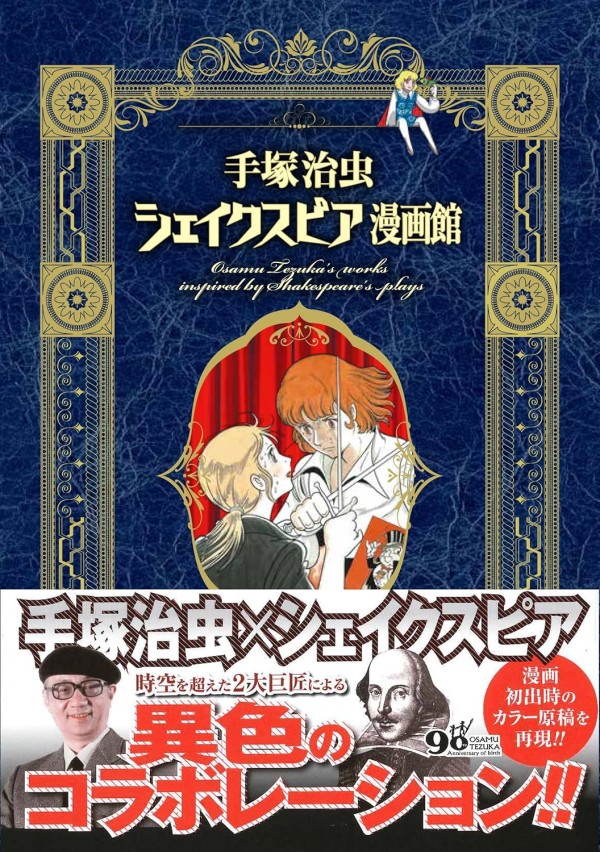
Over the course of his career, manga pioneer Osamu Tezuka repeatedly returned to the works of William Shakespeare, reimagining the plays through his own unique artistic lens. Shakespeare Manga Theater is a collection that brings together six of these adaptations, drawn from different periods of Tezuka's prolific career, into a single volume. Rather than a single continuous narrative, the book is an anthology showcasing how Tezuka remixed classic stories with his signature characters, science fiction elements, and theatrical flair.
The stories span from 1959 to 1982, beginning with a modern-dress interpretation of The Merchant of Venice and concluding with several tales featuring Tezuka's phantom thief character, Rainbow Parakeet. The collection includes The Merchant of Venice (1959), Robio and Robiette from Astro Boy (1965), an excerpt from the Vampire series titled Macbeth (1966), and three stories from the Rainbow Parakeet series: Hamlet (1981), The Taming of the Shrew (1981), and Othello (1982).
The settings shift radically between stories, reflecting the different series from which they were drawn. The Merchant of Venice is presented in a then-contemporary setting, with Tezuka casting his recurring villain character Acetylene Lamp in the role of Shylock. Robio and Robiette takes place in the futuristic world of Astro Boy, where two rival robot inventors program their creations to hate each other, only to have the robots fall in love in a parody of Romeo and Juliet that quickly escalates into absurdity involving sports car racing and a rain-making machine. The Macbeth excerpt, pulled from Tezukas Vampire series, retains only the most superficial elements of the Scottish play, chiefly the scene with the three witches.
The three Rainbow Parakeet stories share a recurring cast and premise. The protagonist is a master of disguise who works as both a stage actor and a phantom thief, pursued by a karate-kicking, gun-slinging detective. In the Hamlet-inspired chapter, the narrative revolves around a stage production of the Danish tragedy, allowing Tezuka to explore his lifelong interest in theater and the concept of plays within plays. The essays included between the manga chapters reveal that Tezukas early experiences as a performer in amateur theatrical troupes directly shaped his storytelling approach, including his star system where familiar character actors reappear in different roles across his body of work.
The adaptations are not literal or faithful retellings. Tezuka takes considerable creative license, often using Shakespearean plots as a loose framework for his own brand of anachronistic, absurdist, and metafictional storytelling. Some stories, like the Rainbow Parakeet versions of The Taming of the Shrew and Othello, borrow little more than a title and a few thematic cues from their source material. The collection thus functions not as an educational tool for learning Shakespearean plots, but as a fascinating window into how one of manga's greatest creators processed and paid homage to Western literary touchstones throughout his career. The connecting thread is Tezukas love for drama and his belief that theater, like manga, is a powerful medium for exploring human nature through heightened performance and recognizable character types.
The stories span from 1959 to 1982, beginning with a modern-dress interpretation of The Merchant of Venice and concluding with several tales featuring Tezuka's phantom thief character, Rainbow Parakeet. The collection includes The Merchant of Venice (1959), Robio and Robiette from Astro Boy (1965), an excerpt from the Vampire series titled Macbeth (1966), and three stories from the Rainbow Parakeet series: Hamlet (1981), The Taming of the Shrew (1981), and Othello (1982).
The settings shift radically between stories, reflecting the different series from which they were drawn. The Merchant of Venice is presented in a then-contemporary setting, with Tezuka casting his recurring villain character Acetylene Lamp in the role of Shylock. Robio and Robiette takes place in the futuristic world of Astro Boy, where two rival robot inventors program their creations to hate each other, only to have the robots fall in love in a parody of Romeo and Juliet that quickly escalates into absurdity involving sports car racing and a rain-making machine. The Macbeth excerpt, pulled from Tezukas Vampire series, retains only the most superficial elements of the Scottish play, chiefly the scene with the three witches.
The three Rainbow Parakeet stories share a recurring cast and premise. The protagonist is a master of disguise who works as both a stage actor and a phantom thief, pursued by a karate-kicking, gun-slinging detective. In the Hamlet-inspired chapter, the narrative revolves around a stage production of the Danish tragedy, allowing Tezuka to explore his lifelong interest in theater and the concept of plays within plays. The essays included between the manga chapters reveal that Tezukas early experiences as a performer in amateur theatrical troupes directly shaped his storytelling approach, including his star system where familiar character actors reappear in different roles across his body of work.
The adaptations are not literal or faithful retellings. Tezuka takes considerable creative license, often using Shakespearean plots as a loose framework for his own brand of anachronistic, absurdist, and metafictional storytelling. Some stories, like the Rainbow Parakeet versions of The Taming of the Shrew and Othello, borrow little more than a title and a few thematic cues from their source material. The collection thus functions not as an educational tool for learning Shakespearean plots, but as a fascinating window into how one of manga's greatest creators processed and paid homage to Western literary touchstones throughout his career. The connecting thread is Tezukas love for drama and his belief that theater, like manga, is a powerful medium for exploring human nature through heightened performance and recognizable character types.
Comment(s)
Staff
- Story & Art
Recommendations
Empfehlungen auf Basis gemeinsamer Kategorien.