Manga
Description
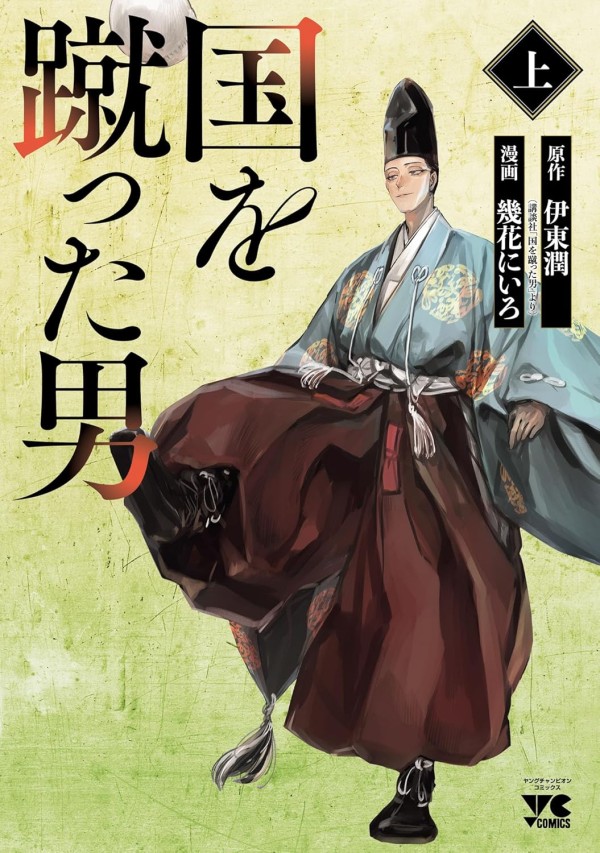
In the Warring States period, a master kemari ball maker named Gosuke is let go from his Kyoto workshop when the owner passes it to an incompetent son born to a concubine. Through a merchant named Soubei, Gosuke secures a position as a ball maker for Imagawa Ujizane, the lord of Suruga. At first dismissed by his own household, Ujizane reveals an extraordinary gift for kemari, the refined court kickball, and Gosuke is deeply moved watching him play. The two form a profound bond through the sport, and even after Ujizane loses his domain to invading forces, he keeps Gosuke close.
Ujizane and his family take shelter under Tokugawa Ieyasu, but in 1575 Oda Nobunaga orders him to Kyoto to perform kemari. Soubei reappears and pressures Gosuke into a plot: his wife and children are being held hostage at the Ishiyama Hongan-ji temple. Soubei demands that Gosuke help assassinate Nobunaga using a kemari ball packed with explosives, betting that only Ujizane possesses the skill to kick the heavy ball.
At a kemari gathering at Shokoku-ji temple, Ujizane displays his virtuosity, drawing praise even from the renowned Asukai family. Nobunaga himself joins the game alongside Hashiba Hideyoshi, Ieyasu, and Ujizane. When Gosuke passes him the rigged ball, Ujizane kicks it high, but Nobunaga staggers under its weight and falls. The ball is found to contain barley rather than explosives. Faced with the choice, Gosuke had decided to save Ujizane rather than carry out the assassination, gambling that Soubei, as a fellow Ikko sect follower, would not kill his family. The plan unravels, and Gosuke vanishes into the night to bear the consequences alone. Ujizane survives and lives until 1614, the year of the Winter Siege of Osaka.
The story centers on Gosuke and Imagawa Ujizane, with supporting roles from Oda Nobunaga, Tokugawa Ieyasu, Hashiba Hideyoshi, and the merchant Soubei. The narrative unfolds across Suruga, the domains of the Tokugawa, and Kyoto, with key dramatic weight falling on the assassination attempt at Shokoku-ji temple and Gosuke's agonizing decision. Rather than glorifying famous victors, the manga focuses on a historical loser—a daimyo remembered more for his poetry and kemari than for his military prowess—and on the artisan who chooses loyalty over ambition.
Ujizane and his family take shelter under Tokugawa Ieyasu, but in 1575 Oda Nobunaga orders him to Kyoto to perform kemari. Soubei reappears and pressures Gosuke into a plot: his wife and children are being held hostage at the Ishiyama Hongan-ji temple. Soubei demands that Gosuke help assassinate Nobunaga using a kemari ball packed with explosives, betting that only Ujizane possesses the skill to kick the heavy ball.
At a kemari gathering at Shokoku-ji temple, Ujizane displays his virtuosity, drawing praise even from the renowned Asukai family. Nobunaga himself joins the game alongside Hashiba Hideyoshi, Ieyasu, and Ujizane. When Gosuke passes him the rigged ball, Ujizane kicks it high, but Nobunaga staggers under its weight and falls. The ball is found to contain barley rather than explosives. Faced with the choice, Gosuke had decided to save Ujizane rather than carry out the assassination, gambling that Soubei, as a fellow Ikko sect follower, would not kill his family. The plan unravels, and Gosuke vanishes into the night to bear the consequences alone. Ujizane survives and lives until 1614, the year of the Winter Siege of Osaka.
The story centers on Gosuke and Imagawa Ujizane, with supporting roles from Oda Nobunaga, Tokugawa Ieyasu, Hashiba Hideyoshi, and the merchant Soubei. The narrative unfolds across Suruga, the domains of the Tokugawa, and Kyoto, with key dramatic weight falling on the assassination attempt at Shokoku-ji temple and Gosuke's agonizing decision. Rather than glorifying famous victors, the manga focuses on a historical loser—a daimyo remembered more for his poetry and kemari than for his military prowess—and on the artisan who chooses loyalty over ambition.
Comment(s)
Staff
- Original storyJun Itō
- ArtNiiro Ikuhana
Recommendations
Empfehlungen auf Basis gemeinsamer Kategorien.