Manga
Description
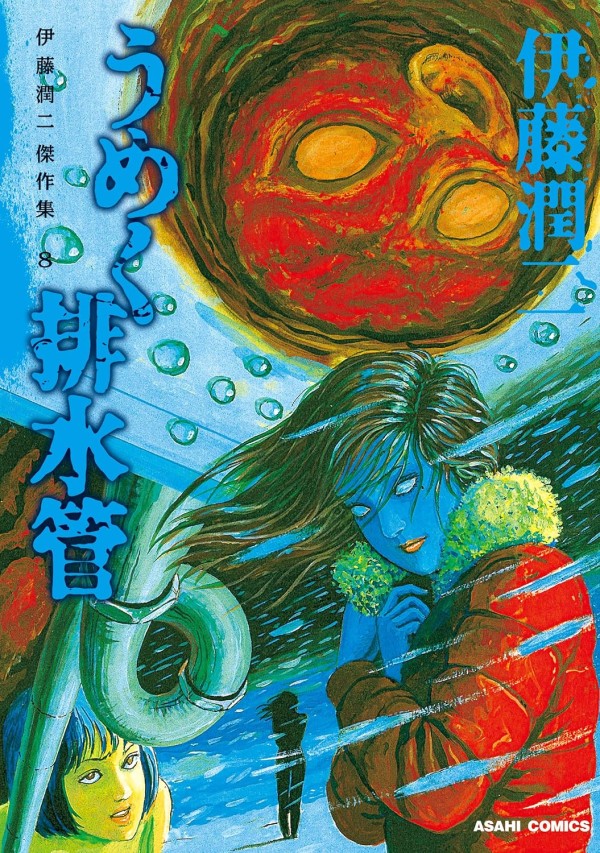
Moan: Junji Ito Story Collection, the eighth volume in Ito’s collected works, opens not with a single narrative but a gallery of dread, each tale anchored by the mundane becoming monstrous. The titular story, The Moan of the Drain, sets the tone in a cramped urban apartment, where a young woman named Yoko begins to hear a wet, rhythmic groaning from her kitchen sink. The sound intensifies at night, and soon a viscous, foul-smelling sludge bubbles up from the drain. As she investigates, she discovers her neighbor, a reclusive plumber, has been conducting gruesome experiments with the building’s pipes, using the plumbing as a circulatory system for a patchwork creature he has assembled from discarded body parts. The moan is the creature’s hunger, and the pipes begin to writhe like intestines, reaching out to pull Yoko into the dank, organic labyrinth beneath her home. The setting is claustrophobic—cramped kitchens, narrow hallways, and the suffocating darkness of underground waterworks—where the boundary between domestic safety and subterranean hell dissolves.
The collection then shifts to other standalone nightmares, often featuring protagonists who are ordinary students, housewives, or office workers. In The Long Dream, a hospital patient named Tetsuro Mukoda suffers from a condition where his dreams last for progressively longer subjective periods—months, decades, then millennia—while only minutes pass in reality. His face ages grotesquely with each waking moment, and a curious doctor, Dr. Kuroda, records his ravings, only to become infected by the fear that Mukoda’s dreams are real alternate existences. The narrative arc follows Kuroda’s descent from scientific observer to terrified participant, as Mukoda eventually dreams an eternity and dissolves into cosmic dust, leaving Kuroda to question the nature of consciousness and time. Another arc, The Whispering Woman, centers on a high school girl, Sayoko, whose classmate Rimi has a deformed ear that can hear the secret thoughts of others, whispered as a constant, maddening static. Rimi’s ability isolates her, and when she hears a collective, murderous intent from her peers, she flees, only to have her ear torn off in a violent confrontation. The story traces the fallout as Sayoko inherits the severed ear and begins to hear the same whispers, realizing that the true horror is not the supernatural ability but the ugliness of human nature she can no longer unhear.
Throughout the collection, recurring motifs include bodily decay, water as a conduit for corruption, and the fragile line between sanity and madness. The setting is often contemporary Japan—drab suburbs, schools, and hospitals—but Ito twists these familiar backdrops with surreal, biological horror. The narrative arcs are episodic, each story a self-contained descent, but they share a thematic throughline: the helplessness of characters against forces that are both external (monsters, curses) and internal (their own obsessions, fears, and guilty consciences). In The Groaning Drain, the plumbing becomes a parasitic organism; in The Long Dream, the mind becomes a prison of endless time; in The Whispering Woman, sound itself becomes a weapon. No protagonist finds salvation; instead, they are consumed, transformed, or left to live with a new, terrible knowledge. The collection closes with The Earthbound, a tale of a family whose ancestral home is built over a mass grave, and the dead begin to pull the living down into the soil, feet first, until they are buried alive up to their necks, forced to watch the sky forever. This final arc crystallizes the collection’s grim ethos: that horror lies not in the sudden shock, but in the slow, inescapable realization that the ground beneath you, the water you drink, and the very air you breathe are already teeming with the moaning remnants of things that should have stayed dead.
The collection then shifts to other standalone nightmares, often featuring protagonists who are ordinary students, housewives, or office workers. In The Long Dream, a hospital patient named Tetsuro Mukoda suffers from a condition where his dreams last for progressively longer subjective periods—months, decades, then millennia—while only minutes pass in reality. His face ages grotesquely with each waking moment, and a curious doctor, Dr. Kuroda, records his ravings, only to become infected by the fear that Mukoda’s dreams are real alternate existences. The narrative arc follows Kuroda’s descent from scientific observer to terrified participant, as Mukoda eventually dreams an eternity and dissolves into cosmic dust, leaving Kuroda to question the nature of consciousness and time. Another arc, The Whispering Woman, centers on a high school girl, Sayoko, whose classmate Rimi has a deformed ear that can hear the secret thoughts of others, whispered as a constant, maddening static. Rimi’s ability isolates her, and when she hears a collective, murderous intent from her peers, she flees, only to have her ear torn off in a violent confrontation. The story traces the fallout as Sayoko inherits the severed ear and begins to hear the same whispers, realizing that the true horror is not the supernatural ability but the ugliness of human nature she can no longer unhear.
Throughout the collection, recurring motifs include bodily decay, water as a conduit for corruption, and the fragile line between sanity and madness. The setting is often contemporary Japan—drab suburbs, schools, and hospitals—but Ito twists these familiar backdrops with surreal, biological horror. The narrative arcs are episodic, each story a self-contained descent, but they share a thematic throughline: the helplessness of characters against forces that are both external (monsters, curses) and internal (their own obsessions, fears, and guilty consciences). In The Groaning Drain, the plumbing becomes a parasitic organism; in The Long Dream, the mind becomes a prison of endless time; in The Whispering Woman, sound itself becomes a weapon. No protagonist finds salvation; instead, they are consumed, transformed, or left to live with a new, terrible knowledge. The collection closes with The Earthbound, a tale of a family whose ancestral home is built over a mass grave, and the dead begin to pull the living down into the soil, feet first, until they are buried alive up to their necks, forced to watch the sky forever. This final arc crystallizes the collection’s grim ethos: that horror lies not in the sudden shock, but in the slow, inescapable realization that the ground beneath you, the water you drink, and the very air you breathe are already teeming with the moaning remnants of things that should have stayed dead.
Comment(s)
Staff
- Story & Art
Recommendations
Empfehlungen auf Basis gemeinsamer Kategorien.