Manga
Description
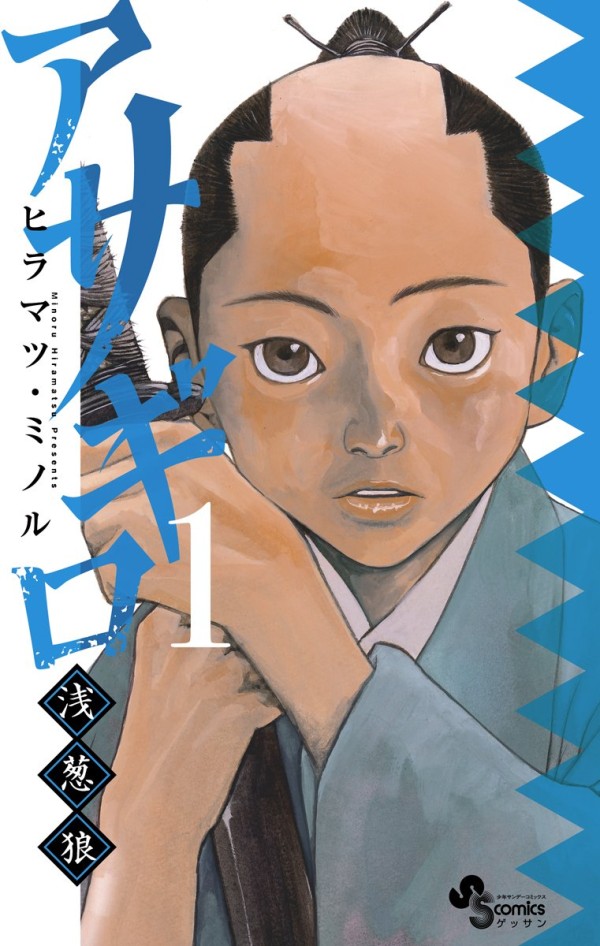
In 1854 in Edo, a twelve-year-old boy named Okita Soujirou, a prodigy of the Tennen Rishin style of swordsmanship, defeats the veteran fencing instructor Murakami in an official bout held before the local lord. Humiliated by the loss, Murakami is ordered to commit seppuku. He entrusts his sword to Soujirou and asks the boy to serve as his second. Soujirou, more interested in the sword than the gravity of the moment, agrees, but in his inexperience he decapitates Murakami before the man has even cut his own belly. This blunder lands Soujirou in prison, where he is tortured. His elder brother disciple, Shimazaki Katsu—who will later become known as Kondo Isami—arrives and, through persistence, secures Soujirou’s release and brings him to the Shieikan, a small, struggling dojo in the outskirts of Edo.
Soujirou is a pure genius with a sword but utterly naive about the world, politics, and human relationships. At the Shieikan, he begins to train seriously under Kondo and meets a cast of men who will shape the coming storm: Hijikata Toshizo, a former medicine salesman with a ruthless streak; Yamanami Keisuke, a masterless samurai from Sendai who has abandoned his own dojo; Nagakura Shinpachi, a wandering swordsman from the Matsumae domain; and Todo Heisuke, a student of the Itou school who is secretly sent to spy on the Shieikan but soon becomes a loyal member. The daily life of the dojo—poverty, rigorous practice, and camaraderie—forms the foundation of their bond.
As political tensions rise following the arrival of Commodore Perry, Kiyokawa Hachiro organizes the Roushigumi, a band of unemployed samurai to serve as the shogun’s escort to Kyoto. The Shieikan members join, but once in Kyoto, Kiyokawa’s pro-Imperial designs become clear. Kondo and his followers break away, and with the backing of the Aizu domain, they are officially recognized as the Shinsengumi—a special police force to patrol Kyoto wearing their distinctive pale blue (asagi) haori.
The early Shinsengumi period is marked by violent internal power struggles. Serizawa Kamo, a drunken and brutal faction leader, clashes repeatedly with Kondo’s group. Soujirou—now calling himself Okita Souji—becomes the captain of the First Unit, celebrated for his blindingly fast three-step thrust. After the purge of Serizawa, the Shinsengumi stabilize under Kondo and Hijikata’s iron rule.
The Ikedaya Incident of 1864 is the story’s climactic battle. Acting on a tip about radical loyalists meeting at the Ikedaya inn, the Shinsengumi launch a night raid. Souji fights through the narrow corridors, his technique at its peak even as the first signs of tuberculosis begin to shadow him. The victory cements the Shinsengumi’s fearsome reputation, and they become known as the “wolves of Asagi” as they patrol Kyoto’s streets.
Subsequent arcs follow Shinsengumi’s changing fortunes: the deepening divisions with the Itou faction, Souji’s worsening health, the decline of the Tokugawa shogunate, and the final chaotic years of the Boshin War. The story remains ongoing, exploring the personal cost of loyalty and the transformation of an innocent boy into a legendary—and tragic—historical figure.
Soujirou is a pure genius with a sword but utterly naive about the world, politics, and human relationships. At the Shieikan, he begins to train seriously under Kondo and meets a cast of men who will shape the coming storm: Hijikata Toshizo, a former medicine salesman with a ruthless streak; Yamanami Keisuke, a masterless samurai from Sendai who has abandoned his own dojo; Nagakura Shinpachi, a wandering swordsman from the Matsumae domain; and Todo Heisuke, a student of the Itou school who is secretly sent to spy on the Shieikan but soon becomes a loyal member. The daily life of the dojo—poverty, rigorous practice, and camaraderie—forms the foundation of their bond.
As political tensions rise following the arrival of Commodore Perry, Kiyokawa Hachiro organizes the Roushigumi, a band of unemployed samurai to serve as the shogun’s escort to Kyoto. The Shieikan members join, but once in Kyoto, Kiyokawa’s pro-Imperial designs become clear. Kondo and his followers break away, and with the backing of the Aizu domain, they are officially recognized as the Shinsengumi—a special police force to patrol Kyoto wearing their distinctive pale blue (asagi) haori.
The early Shinsengumi period is marked by violent internal power struggles. Serizawa Kamo, a drunken and brutal faction leader, clashes repeatedly with Kondo’s group. Soujirou—now calling himself Okita Souji—becomes the captain of the First Unit, celebrated for his blindingly fast three-step thrust. After the purge of Serizawa, the Shinsengumi stabilize under Kondo and Hijikata’s iron rule.
The Ikedaya Incident of 1864 is the story’s climactic battle. Acting on a tip about radical loyalists meeting at the Ikedaya inn, the Shinsengumi launch a night raid. Souji fights through the narrow corridors, his technique at its peak even as the first signs of tuberculosis begin to shadow him. The victory cements the Shinsengumi’s fearsome reputation, and they become known as the “wolves of Asagi” as they patrol Kyoto’s streets.
Subsequent arcs follow Shinsengumi’s changing fortunes: the deepening divisions with the Itou faction, Souji’s worsening health, the decline of the Tokugawa shogunate, and the final chaotic years of the Boshin War. The story remains ongoing, exploring the personal cost of loyalty and the transformation of an innocent boy into a legendary—and tragic—historical figure.
Comment(s)
Staff
- Story & ArtMinoru Hiramatsu
Recommendations
Empfehlungen auf Basis gemeinsamer Kategorien.