Manga
Description
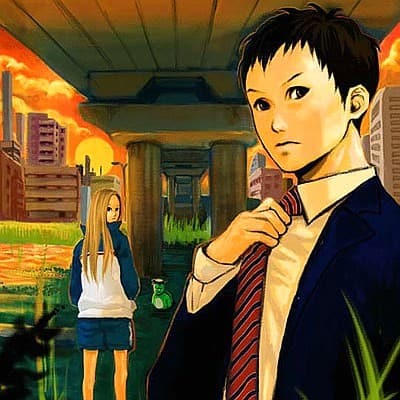
"Arakawa Under the Bridge" is a surreal romantic comedy manga series set beneath the Arakawa Bridge in Tokyo, where an eclectic group of homeless individuals and misfits form a makeshift community. The protagonist, Kou Ichinomiya, is a wealthy and prideful young man raised with the strict principle of never owing anyone anything. After an incident where he is rescued from drowning by a mysterious girl named Nino, Kou insists on repaying his debt to her. Nino, who claims to be from Venus, lives under the bridge and asks Kou to become her boyfriend as repayment. Despite his initial reluctance, Kou moves under the bridge to fulfill his obligation, marking the beginning of his life among the bridge's eccentric residents.
The bridge community is populated by a colorful cast of characters, each with their own quirks and backstories. Nino, the enigmatic girl who saved Kou, is quiet and detached, often speaking in cryptic phrases and claiming to be an alien. The self-proclaimed village chief, known simply as "Chief," wears a kappa costume and insists he is a real kappa. Other notable residents include Sister, a towering, muscular man who dresses as a nun and wields a guitar; Hoshi, a former musician who wears a star-shaped mask and harbors unrequited feelings for Nino; and Maria, a stoic and sharp-tongued woman who runs a makeshift bar. The group's dynamic is chaotic yet endearing, with each member contributing to the absurdity and charm of life under the bridge.
As Kou adapts to his new life, he gradually sheds his rigid upbringing and begins to form genuine connections with the bridge's inhabitants. His relationship with Nino evolves from a transactional arrangement to a deeper emotional bond, though their interactions remain unconventional and often humorous. The series explores themes of identity, belonging, and the meaning of family, as Kou learns to navigate the unpredictability of life under the bridge while confronting his own insecurities and preconceptions.
The narrative is episodic, blending slice-of-life moments with surreal humor and occasional dramatic undertones. The bridge community frequently encounters bizarre situations, from battling rival groups to hosting festivals, all while maintaining their unique way of life. Kou's interactions with the residents challenge his worldview, and his growth is central to the story. Despite its comedic tone, the series occasionally delves into the characters' pasts, revealing the circumstances that led them to live under the bridge and adding depth to their personalities.
"Arakawa Under the Bridge" balances absurdity with heartfelt moments, creating a distinctive narrative that captures the eccentricities of its characters and the unconventional world they inhabit. The series thrives on its ability to juxtapose the mundane with the fantastical, offering a whimsical yet grounded exploration of human connections and the search for meaning in unexpected places.
The bridge community is populated by a colorful cast of characters, each with their own quirks and backstories. Nino, the enigmatic girl who saved Kou, is quiet and detached, often speaking in cryptic phrases and claiming to be an alien. The self-proclaimed village chief, known simply as "Chief," wears a kappa costume and insists he is a real kappa. Other notable residents include Sister, a towering, muscular man who dresses as a nun and wields a guitar; Hoshi, a former musician who wears a star-shaped mask and harbors unrequited feelings for Nino; and Maria, a stoic and sharp-tongued woman who runs a makeshift bar. The group's dynamic is chaotic yet endearing, with each member contributing to the absurdity and charm of life under the bridge.
As Kou adapts to his new life, he gradually sheds his rigid upbringing and begins to form genuine connections with the bridge's inhabitants. His relationship with Nino evolves from a transactional arrangement to a deeper emotional bond, though their interactions remain unconventional and often humorous. The series explores themes of identity, belonging, and the meaning of family, as Kou learns to navigate the unpredictability of life under the bridge while confronting his own insecurities and preconceptions.
The narrative is episodic, blending slice-of-life moments with surreal humor and occasional dramatic undertones. The bridge community frequently encounters bizarre situations, from battling rival groups to hosting festivals, all while maintaining their unique way of life. Kou's interactions with the residents challenge his worldview, and his growth is central to the story. Despite its comedic tone, the series occasionally delves into the characters' pasts, revealing the circumstances that led them to live under the bridge and adding depth to their personalities.
"Arakawa Under the Bridge" balances absurdity with heartfelt moments, creating a distinctive narrative that captures the eccentricities of its characters and the unconventional world they inhabit. The series thrives on its ability to juxtapose the mundane with the fantastical, offering a whimsical yet grounded exploration of human connections and the search for meaning in unexpected places.
Comment(s)
Staff
- Story & Art
Recommendations
Empfehlungen auf Basis gemeinsamer Kategorien.