Manga
Description
"The Push Man and Other Stories" is a collection of short manga stories by Yoshihiro Tatsumi, originally published in 1969. The anthology explores themes of alienation, urban isolation, and the darker aspects of human nature, set against the backdrop of post-war Japan. Each story is self-contained, offering a glimpse into the lives of ordinary individuals grappling with societal pressures, personal despair, and moral ambiguity.
The titular story, "The Push Man," centers on a man who works as a pusher on Tokyo's overcrowded subway trains. His job involves physically shoving passengers into trains to ensure the doors close, a task that reflects the dehumanizing nature of urban life. The protagonist's mundane existence is punctuated by a growing sense of detachment and frustration, culminating in a shocking act of violence that underscores his emotional unraveling.
Other stories in the collection include "Abandon the Old in Tokyo," which follows an elderly man neglected by his family, and "Make-Up," where a woman's obsession with her appearance leads to tragic consequences. "Bedridden" examines the strained relationship between a bedridden man and his caretaker, while "Telescope" delves into the voyeuristic tendencies of a young boy and the consequences of his actions.
The characters in these stories are often ordinary people caught in extraordinary or morally complex situations. Their struggles are rooted in the socio-economic realities of post-war Japan, where rapid urbanization and industrialization created a sense of dislocation and anonymity. The narratives frequently highlight the tension between societal expectations and individual desires, often resulting in bleak or unsettling outcomes.
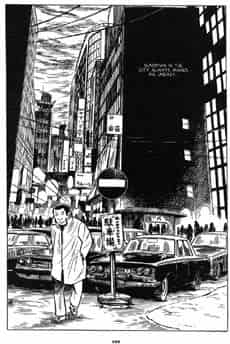
Tatsumi's storytelling is characterized by its stark realism and unflinching portrayal of human frailty. The artwork complements the tone, with detailed, expressive linework that captures the grit and melancholy of urban life. The stories are concise yet impactful, offering a poignant critique of modernity and its effects on the human condition. "The Push Man and Other Stories" remains a significant work in the gekiga genre, known for its mature themes and psychological depth.
The titular story, "The Push Man," centers on a man who works as a pusher on Tokyo's overcrowded subway trains. His job involves physically shoving passengers into trains to ensure the doors close, a task that reflects the dehumanizing nature of urban life. The protagonist's mundane existence is punctuated by a growing sense of detachment and frustration, culminating in a shocking act of violence that underscores his emotional unraveling.
Other stories in the collection include "Abandon the Old in Tokyo," which follows an elderly man neglected by his family, and "Make-Up," where a woman's obsession with her appearance leads to tragic consequences. "Bedridden" examines the strained relationship between a bedridden man and his caretaker, while "Telescope" delves into the voyeuristic tendencies of a young boy and the consequences of his actions.
The characters in these stories are often ordinary people caught in extraordinary or morally complex situations. Their struggles are rooted in the socio-economic realities of post-war Japan, where rapid urbanization and industrialization created a sense of dislocation and anonymity. The narratives frequently highlight the tension between societal expectations and individual desires, often resulting in bleak or unsettling outcomes.
Tatsumi's storytelling is characterized by its stark realism and unflinching portrayal of human frailty. The artwork complements the tone, with detailed, expressive linework that captures the grit and melancholy of urban life. The stories are concise yet impactful, offering a poignant critique of modernity and its effects on the human condition. "The Push Man and Other Stories" remains a significant work in the gekiga genre, known for its mature themes and psychological depth.
Comment(s)
Staff
- Story & Art
Recommendations
Empfehlungen auf Basis gemeinsamer Kategorien.