Manga
Description
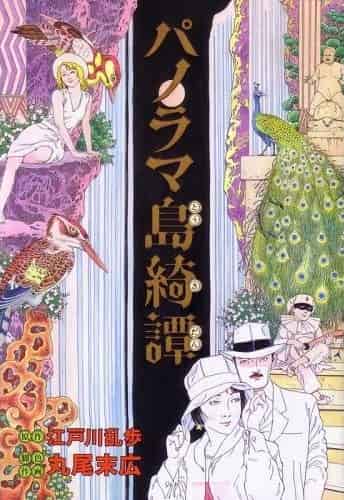
"The Strange Tale of Panorama Island" is a manga adaptation of Edogawa Rampo's 1926 novel, reimagined by Suehiro Maruo. The story centers on Hitomi Hirosuke, a struggling artist who bears an uncanny resemblance to his wealthy childhood friend, Genzaburō Komoda. Upon learning of Komoda's death, Hirosuke seizes the opportunity to assume his identity, inheriting his vast fortune and luxurious estate. This act of deception sets the stage for a surreal and psychologically intense narrative.
Hirosuke, now living as Komoda, becomes obsessed with creating a grand, fantastical amusement park called Panorama Island, a project that reflects his artistic vision and desire for escapism. The island is designed as a utopian paradise, filled with elaborate illusions and dreamlike landscapes, but it also serves as a manifestation of Hirosuke's inner turmoil and ambition. As he delves deeper into the project, his grip on reality begins to unravel, blurring the lines between his fabricated identity and his true self.
The narrative explores themes of identity, duality, and the corrupting influence of power. Hirosuke's relationships with those around him, including Komoda's wife, Chiyoko, and his former lover, Tamao, become increasingly strained as his deception grows more elaborate. Chiyoko, in particular, becomes a pivotal figure, as her suspicions about Hirosuke's true identity threaten to unravel his carefully constructed facade. The tension escalates as Hirosuke's obsession with Panorama Island consumes him, leading to a series of morally ambiguous decisions and tragic consequences.
The manga's visual style complements its dark and surreal tone, with intricate artwork that captures the eerie beauty of Hirosuke's creations and the psychological depth of the characters. The story builds toward a climactic resolution that underscores the destructive consequences of Hirosuke's ambition and the fragility of his constructed reality. "The Strange Tale of Panorama Island" is a compelling exploration of human desire, identity, and the lengths to which one may go to achieve their dreams.
Hirosuke, now living as Komoda, becomes obsessed with creating a grand, fantastical amusement park called Panorama Island, a project that reflects his artistic vision and desire for escapism. The island is designed as a utopian paradise, filled with elaborate illusions and dreamlike landscapes, but it also serves as a manifestation of Hirosuke's inner turmoil and ambition. As he delves deeper into the project, his grip on reality begins to unravel, blurring the lines between his fabricated identity and his true self.
The narrative explores themes of identity, duality, and the corrupting influence of power. Hirosuke's relationships with those around him, including Komoda's wife, Chiyoko, and his former lover, Tamao, become increasingly strained as his deception grows more elaborate. Chiyoko, in particular, becomes a pivotal figure, as her suspicions about Hirosuke's true identity threaten to unravel his carefully constructed facade. The tension escalates as Hirosuke's obsession with Panorama Island consumes him, leading to a series of morally ambiguous decisions and tragic consequences.
The manga's visual style complements its dark and surreal tone, with intricate artwork that captures the eerie beauty of Hirosuke's creations and the psychological depth of the characters. The story builds toward a climactic resolution that underscores the destructive consequences of Hirosuke's ambition and the fragility of his constructed reality. "The Strange Tale of Panorama Island" is a compelling exploration of human desire, identity, and the lengths to which one may go to achieve their dreams.
Comment(s)
Staff
- Story & ArtSuehiro Maruo
- Original creator
Recommendations
Empfehlungen auf Basis gemeinsamer Kategorien.