Manga
Description
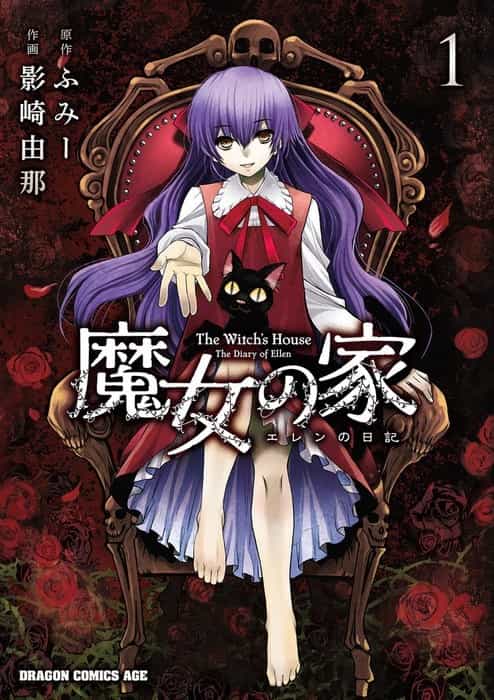
"The Witch's House - The Diary of Ellen" is a manga adaptation of the popular horror game "The Witch's House," written and illustrated by Fummy. The story centers on Viola, a young girl who awakens in a mysterious forest and stumbles upon an eerie, isolated house. Drawn by curiosity, she enters the house, only to find herself trapped in a nightmarish labyrinth filled with deadly traps, grotesque creatures, and cryptic puzzles. As Viola navigates the house, she encounters Ellen, a frail, wheelchair-bound girl who claims to be the house's resident. Ellen offers cryptic warnings and guidance, but her true intentions remain ambiguous.
The narrative unfolds through Viola's perspective as she struggles to survive the house's horrors. Each room presents a new challenge, often requiring her to solve puzzles or confront terrifying entities. The house itself seems alive, shifting and changing to thwart her progress. As Viola delves deeper, she uncovers fragments of Ellen's diary, which reveal a tragic backstory involving betrayal, loss, and a desperate pact with dark forces. These diary entries provide insight into Ellen's transformation from an innocent girl into the malevolent figure she has become.
The relationship between Viola and Ellen becomes increasingly complex as the story progresses. Viola's determination to escape contrasts with Ellen's apparent desire to keep her trapped. The tension builds as Viola uncovers the truth about the house's curse and Ellen's role in perpetuating it. The climax reveals a shocking twist that recontextualizes the events of the story, tying Viola's fate inextricably to Ellen's past.
The manga retains the atmospheric tension and psychological horror of the original game, emphasizing themes of isolation, despair, and the consequences of one's choices. Viola's resilience and resourcefulness make her a compelling protagonist, while Ellen's tragic descent into darkness adds emotional depth to the narrative. The house itself serves as a character, its malevolent design and shifting layout heightening the sense of dread. The story concludes with a haunting resolution that leaves lingering questions about morality, redemption, and the nature of evil.
The narrative unfolds through Viola's perspective as she struggles to survive the house's horrors. Each room presents a new challenge, often requiring her to solve puzzles or confront terrifying entities. The house itself seems alive, shifting and changing to thwart her progress. As Viola delves deeper, she uncovers fragments of Ellen's diary, which reveal a tragic backstory involving betrayal, loss, and a desperate pact with dark forces. These diary entries provide insight into Ellen's transformation from an innocent girl into the malevolent figure she has become.
The relationship between Viola and Ellen becomes increasingly complex as the story progresses. Viola's determination to escape contrasts with Ellen's apparent desire to keep her trapped. The tension builds as Viola uncovers the truth about the house's curse and Ellen's role in perpetuating it. The climax reveals a shocking twist that recontextualizes the events of the story, tying Viola's fate inextricably to Ellen's past.
The manga retains the atmospheric tension and psychological horror of the original game, emphasizing themes of isolation, despair, and the consequences of one's choices. Viola's resilience and resourcefulness make her a compelling protagonist, while Ellen's tragic descent into darkness adds emotional depth to the narrative. The house itself serves as a character, its malevolent design and shifting layout heightening the sense of dread. The story concludes with a haunting resolution that leaves lingering questions about morality, redemption, and the nature of evil.
Comment(s)
Staff
- Story & Art
- Original creator
Recommendations
Empfehlungen auf Basis gemeinsamer Kategorien.