TV-Series
Description
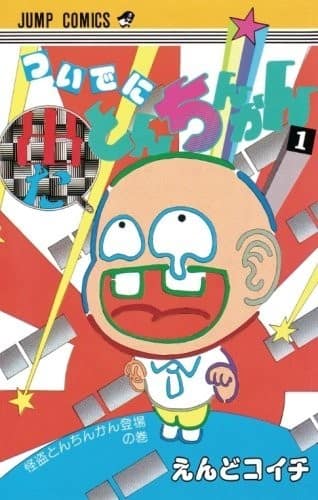
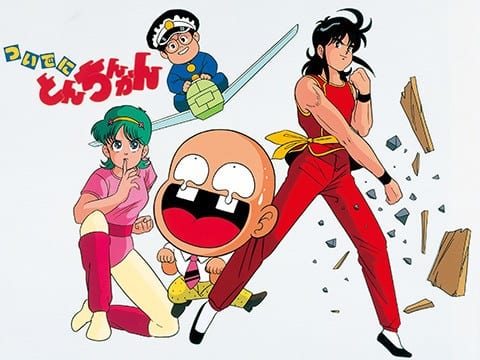
"Tsuide ni Tonchinkan" is a comedic anime series that revolves around the eccentric and chaotic lives of the residents of the Tonchinkan apartment building. The narrative primarily focuses on the interactions and misadventures of its quirky inhabitants, blending slapstick humor with absurd situations. The central figure is Tonkichi, a perpetually unlucky and bumbling man whose attempts to navigate daily life often spiral into comedic disasters. His antics frequently involve his neighbors, including the sharp-tongued and domineering landlady, Ogin, who often finds herself entangled in Tonkichi’s schemes or misfortunes.
The series is episodic, with each episode presenting self-contained stories that highlight the peculiar dynamics of the apartment’s residents. Tonkichi’s interactions with other characters, such as the naive and kind-hearted Chie, the mischievous and unpredictable Gonta, and the enigmatic and aloof Kuma-san, drive much of the humor. The plotlines often revolve around mundane situations—such as Tonkichi trying to find a job, dealing with financial troubles, or attempting to impress others—that escalate into exaggerated and surreal comedic scenarios. The humor is rooted in the characters’ exaggerated personalities and their inability to handle even the simplest tasks without causing chaos.
Tonkichi’s perpetual misfortune serves as a recurring theme, with his failures often leading to unintended consequences for himself and those around him. Despite his flaws, Tonkichi’s persistence and occasional moments of sincerity make him a sympathetic, if hapless, protagonist. The series also explores the relationships between the residents, showcasing their camaraderie, rivalries, and occasional acts of kindness amidst the constant absurdity. The humor is often physical and over-the-top, with a focus on visual gags and rapid-fire comedic timing.
The setting of the Tonchinkan apartment building itself becomes a character of sorts, with its cramped, run-down environment serving as the backdrop for the characters’ antics. The series does not delve deeply into dramatic or emotional arcs, instead prioritizing lighthearted entertainment and comedic escapades. The episodic nature allows for a variety of comedic scenarios, ranging from misunderstandings and pranks to surreal and fantastical elements that defy logic. Through its exaggerated characters and absurd situations, "Tsuide ni Tonchinkan" offers a humorous and chaotic portrayal of everyday life, emphasizing the unpredictability and absurdity of human interactions.
The series is episodic, with each episode presenting self-contained stories that highlight the peculiar dynamics of the apartment’s residents. Tonkichi’s interactions with other characters, such as the naive and kind-hearted Chie, the mischievous and unpredictable Gonta, and the enigmatic and aloof Kuma-san, drive much of the humor. The plotlines often revolve around mundane situations—such as Tonkichi trying to find a job, dealing with financial troubles, or attempting to impress others—that escalate into exaggerated and surreal comedic scenarios. The humor is rooted in the characters’ exaggerated personalities and their inability to handle even the simplest tasks without causing chaos.
Tonkichi’s perpetual misfortune serves as a recurring theme, with his failures often leading to unintended consequences for himself and those around him. Despite his flaws, Tonkichi’s persistence and occasional moments of sincerity make him a sympathetic, if hapless, protagonist. The series also explores the relationships between the residents, showcasing their camaraderie, rivalries, and occasional acts of kindness amidst the constant absurdity. The humor is often physical and over-the-top, with a focus on visual gags and rapid-fire comedic timing.
The setting of the Tonchinkan apartment building itself becomes a character of sorts, with its cramped, run-down environment serving as the backdrop for the characters’ antics. The series does not delve deeply into dramatic or emotional arcs, instead prioritizing lighthearted entertainment and comedic escapades. The episodic nature allows for a variety of comedic scenarios, ranging from misunderstandings and pranks to surreal and fantastical elements that defy logic. Through its exaggerated characters and absurd situations, "Tsuide ni Tonchinkan" offers a humorous and chaotic portrayal of everyday life, emphasizing the unpredictability and absurdity of human interactions.
Cast
- Tong-feng Chung
- Ibarakishi
- Akuzō Dokuoni
- Andy Jones
- Naizō Nawamada
Comment(s)
Staff
- ScriptTakao KoyamaHiroyuki KawasakiTakashi YamadaHideki MitsuiKatsuyuki Sumisawa
- Episode DirectorYoshitaka KoyamaShin MisawaHisaya TakabayashiTomomasa YamazakiShigeru FujikawaFumio MaezonoYūzō Yamada
- Character DesignHiroshi Kanazawa
- Animation DirectorToshiko SasakiTakahisa IchikawaHiroshi KanazawaMitsuru Nasukawa
- Director of PhotographySeiichi Morishita
- Chief DirectorYūzō Yamada
- StoryboardHiroyuki YokoyamaYoshitaka KoyamaMasayuki KojimaShin MisawaHisaya TakabayashiRoku IwataShigeru FujikawaFumio MaezonoHiroyuki SasakiYūzō Yamada
- MusicShunsuke Kikuchi
- Art DirectorJiro Kawano
- Sound DirectorHiro YamazakiHiroshi Yamazaki
- ProducerHiromichi MogakiYoshirō Kataoka
- Original creator
Production
- ProductionNAS
Relations
Manga overview