Book / Novel
Description
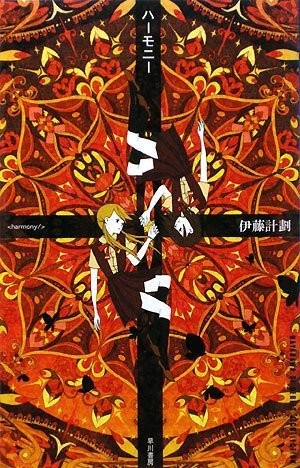
"Harmony" is a science fiction manga adaptation of the novel by Project Itoh, illustrated by Range Murata and scripted by Toshitaka Hirata. Set in a future where society is governed by a pervasive health-monitoring system known as "WatchMe," the story explores themes of control, individuality, and the cost of utopia. The narrative centers on Tuan Kirie, a young woman living in a world where human behavior is meticulously regulated to maintain peace and health. The system enforces harmony by suppressing emotions and impulses deemed harmful, creating a society free from conflict and disease.
The plot begins with Tuan reflecting on her childhood, particularly her friendship with two rebellious girls, Miach Mihie and Cian Reikado. The trio, disillusioned with the oppressive system, once attempted a joint suicide pact to escape its control. While Tuan survived, Miach and Cian succeeded, leaving her to grapple with guilt and unanswered questions. Years later, Tuan works as a crisis counselor, helping others navigate the system's rigid expectations. However, her life is upended when a global incident occurs: millions of people suddenly commit mass suicide, and Miach's voice is heard among the chaos, despite her presumed death.
As Tuan investigates the incident, she uncovers the dark truth behind the WatchMe system. The system, designed to eliminate conflict and suffering, achieves its goals by manipulating human consciousness and erasing individuality. Miach, now a disembodied entity within the system, has orchestrated the mass suicide as a form of rebellion against its control. Tuan is forced to confront her own beliefs about freedom, identity, and the price of societal harmony. The story delves into the ethical implications of sacrificing personal autonomy for collective peace, culminating in a tense confrontation between Tuan and the remnants of Miach's consciousness.
The characters are defined by their struggles within the system. Tuan embodies resilience and introspection, torn between her desire for freedom and her ingrained acceptance of societal norms. Miach represents defiance and the human spirit's unyielding resistance to control, even in death. Cian, though less prominent, serves as a symbol of the system's tragic consequences, her death haunting Tuan throughout the narrative. The interplay between these characters drives the story's exploration of its central themes, creating a thought-provoking examination of humanity's relationship with technology and authority.
The plot begins with Tuan reflecting on her childhood, particularly her friendship with two rebellious girls, Miach Mihie and Cian Reikado. The trio, disillusioned with the oppressive system, once attempted a joint suicide pact to escape its control. While Tuan survived, Miach and Cian succeeded, leaving her to grapple with guilt and unanswered questions. Years later, Tuan works as a crisis counselor, helping others navigate the system's rigid expectations. However, her life is upended when a global incident occurs: millions of people suddenly commit mass suicide, and Miach's voice is heard among the chaos, despite her presumed death.
As Tuan investigates the incident, she uncovers the dark truth behind the WatchMe system. The system, designed to eliminate conflict and suffering, achieves its goals by manipulating human consciousness and erasing individuality. Miach, now a disembodied entity within the system, has orchestrated the mass suicide as a form of rebellion against its control. Tuan is forced to confront her own beliefs about freedom, identity, and the price of societal harmony. The story delves into the ethical implications of sacrificing personal autonomy for collective peace, culminating in a tense confrontation between Tuan and the remnants of Miach's consciousness.
The characters are defined by their struggles within the system. Tuan embodies resilience and introspection, torn between her desire for freedom and her ingrained acceptance of societal norms. Miach represents defiance and the human spirit's unyielding resistance to control, even in death. Cian, though less prominent, serves as a symbol of the system's tragic consequences, her death haunting Tuan throughout the narrative. The interplay between these characters drives the story's exploration of its central themes, creating a thought-provoking examination of humanity's relationship with technology and authority.
Comment(s)
Staff
- Story
- TranslationAlexander O. Smith
Recommendations
Empfehlungen auf Basis gemeinsamer Kategorien.