Manga
Description
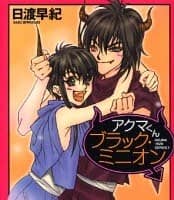
"Akuma-kun Black Minion" is a manga series that expands on the universe of Shigeru Mizuki's "Akuma-kun," focusing on themes of supernatural conflict, morality, and the coexistence of humans and demons. The narrative centers on Ichirou Umoregi, a young boy with a deep fascination for demons and the occult. Ichirou possesses a unique ability to summon and communicate with demons, which he uses to pursue his ultimate goal: creating a utopia where humans and demons can live in harmony. This ambition sets him apart from traditional demonologists, who often seek to control or eradicate demons.
The story begins with Ichirou summoning Mephisto II, a powerful demon who becomes his primary ally and mentor. Together, they navigate a world filled with supernatural threats, including rogue demons, malevolent spirits, and other occult forces. Ichirou’s journey is not just a battle against external enemies but also an internal struggle to reconcile his idealistic vision with the harsh realities of the demon world. His interactions with Mephisto II and other demons reveal the complexities of their nature, challenging simplistic notions of good and evil.
Supporting characters include Ichirou’s classmates and allies, who often find themselves drawn into his supernatural endeavors. These characters provide a human perspective on the events, highlighting the tension between Ichirou’s lofty goals and the everyday concerns of ordinary people. The series also introduces antagonists who oppose Ichirou’s vision, either out of self-interest or a belief that humans and demons should remain separate. These conflicts drive the plot forward, creating a dynamic interplay of alliances and rivalries.
The manga explores themes of power, responsibility, and the ethical implications of wielding supernatural abilities. Ichirou’s journey is marked by moments of triumph and failure, as he learns to navigate the moral ambiguities of his mission. The series balances action-packed sequences with introspective moments, offering a nuanced portrayal of its characters and their motivations. By blending elements of horror, fantasy, and philosophical inquiry, "Akuma-kun Black Minion" presents a compelling narrative that delves into the complexities of human-demon relationships and the pursuit of an idealistic vision in a flawed world.
The story begins with Ichirou summoning Mephisto II, a powerful demon who becomes his primary ally and mentor. Together, they navigate a world filled with supernatural threats, including rogue demons, malevolent spirits, and other occult forces. Ichirou’s journey is not just a battle against external enemies but also an internal struggle to reconcile his idealistic vision with the harsh realities of the demon world. His interactions with Mephisto II and other demons reveal the complexities of their nature, challenging simplistic notions of good and evil.
Supporting characters include Ichirou’s classmates and allies, who often find themselves drawn into his supernatural endeavors. These characters provide a human perspective on the events, highlighting the tension between Ichirou’s lofty goals and the everyday concerns of ordinary people. The series also introduces antagonists who oppose Ichirou’s vision, either out of self-interest or a belief that humans and demons should remain separate. These conflicts drive the plot forward, creating a dynamic interplay of alliances and rivalries.
The manga explores themes of power, responsibility, and the ethical implications of wielding supernatural abilities. Ichirou’s journey is marked by moments of triumph and failure, as he learns to navigate the moral ambiguities of his mission. The series balances action-packed sequences with introspective moments, offering a nuanced portrayal of its characters and their motivations. By blending elements of horror, fantasy, and philosophical inquiry, "Akuma-kun Black Minion" presents a compelling narrative that delves into the complexities of human-demon relationships and the pursuit of an idealistic vision in a flawed world.
Comment(s)
Staff
- Story & ArtSaki Hiwatari
Recommendations
Empfehlungen auf Basis gemeinsamer Kategorien.