Manga
Description
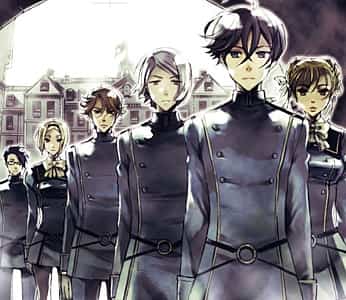
"Afterschool Charisma" is set in a prestigious academy where students are not ordinary individuals but clones of historical figures. The St. Kleio Academy is a specialized institution designed to educate and train these clones, who are exact genetic replicas of famous personalities such as Napoleon Bonaparte, Florence Nightingale, Sigmund Freud, and Adolf Hitler. The clones are created with the purpose of advancing humanity by leveraging the talents and intellect of their originals.
The narrative centers on Shiro Kamiya, the only non-clone student at the academy. Shiro’s presence is a mystery, as he lacks the extraordinary background of his peers. His ordinary status creates tension and curiosity among the clones, who grapple with their identities and the expectations placed upon them. The story explores themes of individuality, free will, and the ethical implications of cloning, as the clones struggle to reconcile their predetermined destinies with their personal desires.
The clones are subjected to rigorous training and psychological conditioning to fulfill their roles as successors to their originals. However, as they grow more self-aware, some begin to question their purpose and resist the academy’s control. Conflicts arise between those who embrace their roles and those who seek to forge their own paths. The clones’ relationships with one another are complex, marked by rivalry, camaraderie, and existential angst.
Key characters include Marie Curie, a brilliant but emotionally distant clone who struggles with her identity; Freud, who uses his psychological insight to manipulate others; and Hitler, whose presence creates unease and conflict among the students. Shiro’s interactions with the clones serve as a catalyst for their introspection, as his ordinary perspective challenges their perceptions of themselves and their purpose.
The plot intensifies as external forces, including shadowy organizations and political interests, seek to exploit the clones for their own agendas. The academy’s true motives are gradually revealed, raising questions about the morality of cloning and the manipulation of human life. The clones must navigate these external threats while confronting their internal struggles, leading to dramatic confrontations and moral dilemmas.
"Afterschool Charisma" blends science fiction, psychological drama, and philosophical inquiry, presenting a thought-provoking exploration of identity, legacy, and the consequences of playing god. The series delves into the ethical and emotional complexities of cloning, offering a nuanced portrayal of its characters as they grapple with their existence and the weight of their origins.
The narrative centers on Shiro Kamiya, the only non-clone student at the academy. Shiro’s presence is a mystery, as he lacks the extraordinary background of his peers. His ordinary status creates tension and curiosity among the clones, who grapple with their identities and the expectations placed upon them. The story explores themes of individuality, free will, and the ethical implications of cloning, as the clones struggle to reconcile their predetermined destinies with their personal desires.
The clones are subjected to rigorous training and psychological conditioning to fulfill their roles as successors to their originals. However, as they grow more self-aware, some begin to question their purpose and resist the academy’s control. Conflicts arise between those who embrace their roles and those who seek to forge their own paths. The clones’ relationships with one another are complex, marked by rivalry, camaraderie, and existential angst.
Key characters include Marie Curie, a brilliant but emotionally distant clone who struggles with her identity; Freud, who uses his psychological insight to manipulate others; and Hitler, whose presence creates unease and conflict among the students. Shiro’s interactions with the clones serve as a catalyst for their introspection, as his ordinary perspective challenges their perceptions of themselves and their purpose.
The plot intensifies as external forces, including shadowy organizations and political interests, seek to exploit the clones for their own agendas. The academy’s true motives are gradually revealed, raising questions about the morality of cloning and the manipulation of human life. The clones must navigate these external threats while confronting their internal struggles, leading to dramatic confrontations and moral dilemmas.
"Afterschool Charisma" blends science fiction, psychological drama, and philosophical inquiry, presenting a thought-provoking exploration of identity, legacy, and the consequences of playing god. The series delves into the ethical and emotional complexities of cloning, offering a nuanced portrayal of its characters as they grapple with their existence and the weight of their origins.
Comment(s)
Staff
- Story & ArtKumiko Suekane
Recommendations
Empfehlungen auf Basis gemeinsamer Kategorien.