Manga
Description
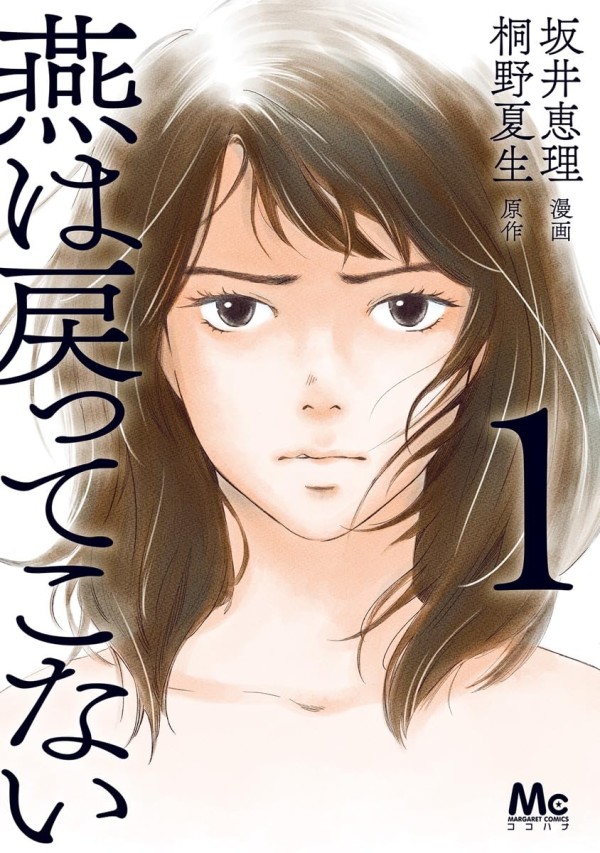
A 29-year-old single woman named Riki has left her caregiving job in Hokkaido and moved to Tokyo, only to find herself trapped in exhausting, irregular hospital work that leaves her perpetually short on money. Living in a rundown apartment and watching her savings disappear despite a frugal lifestyle, she learns from a coworker named Teru about a high-paying side gig at a fertility clinic. Expecting to earn 500,000 yen through egg donation, Riki instead is offered a much larger sum of 10 million yen to become a surrogate mother for a wealthy stranger. The couple seeking her services is Motoki Kusaoka, a former top ballet dancer determined to have a child carrying his own DNA, and his wife Yuko, who has endured years of failed fertility treatments and miscarriages. Riki agrees to carry Motoki’s biological child, created using his sperm and her own eggs, in an arrangement that exists in a legal gray area in Japan.
The story unfolds across the economic divide between Riki’s precarious existence in Tokyo and the comfortable world of the Kusaokas, who can afford to pay a surrogate despite the illegality of commercial surrogacy in the country. As the pregnancy progresses, the narrative shifts between the perspectives of Riki, Yuko, and Motoki, blurring easy distinctions between victim and villain. Riki has a history of a previous abortion, adding another layer to her complex relationship with her own body and reproduction. Yuko, who has given up on carrying a pregnancy to term, struggles with feelings of inadequacy and resentment as another woman bears her husband’s child. Motoki’s insistence on passing on his genetic legacy drives the arrangement forward, revealing how reproductive desires intersect with class, gender, and personal ambition. A key narrative arc follows Riki’s transformation from a woman with no money and no dreams into someone whose body becomes the site of intense emotional and financial negotiation, while another arc traces Yuko’s increasingly fraught relationship with the surrogate who is doing what she cannot. Rather than offering clear moral judgments, the story presents a slow-burning exploration of how economic desperation and the longing for a family can lead ordinary people into extraordinary and morally ambiguous arrangements.
The story unfolds across the economic divide between Riki’s precarious existence in Tokyo and the comfortable world of the Kusaokas, who can afford to pay a surrogate despite the illegality of commercial surrogacy in the country. As the pregnancy progresses, the narrative shifts between the perspectives of Riki, Yuko, and Motoki, blurring easy distinctions between victim and villain. Riki has a history of a previous abortion, adding another layer to her complex relationship with her own body and reproduction. Yuko, who has given up on carrying a pregnancy to term, struggles with feelings of inadequacy and resentment as another woman bears her husband’s child. Motoki’s insistence on passing on his genetic legacy drives the arrangement forward, revealing how reproductive desires intersect with class, gender, and personal ambition. A key narrative arc follows Riki’s transformation from a woman with no money and no dreams into someone whose body becomes the site of intense emotional and financial negotiation, while another arc traces Yuko’s increasingly fraught relationship with the surrogate who is doing what she cannot. Rather than offering clear moral judgments, the story presents a slow-burning exploration of how economic desperation and the longing for a family can lead ordinary people into extraordinary and morally ambiguous arrangements.
Comment(s)
Staff
- Original storyNatsuo Kirino
- ArtEri Sakai
Recommendations
Empfehlungen auf Basis gemeinsamer Kategorien.