Manga
Description
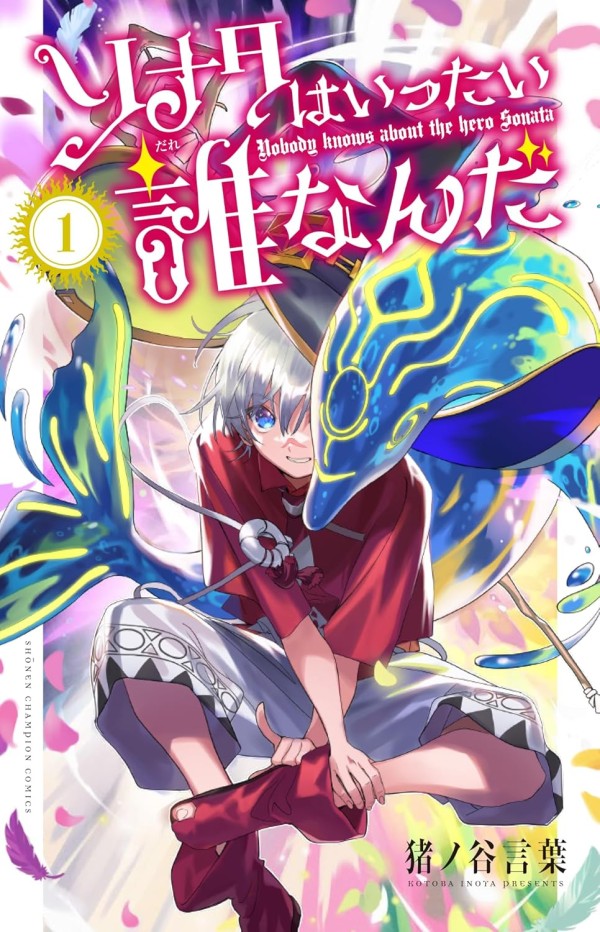
The world has just witnessed the defeat of the Demon King, an act of salvation accomplished by a single, unknown boy. Yet the celebration of peace is immediately complicated by a strange and unexpected twist: the hero himself has lost all of his memories. He awakens as a blank slate, with no recollection of his identity, his past, or the legendary battle he just won. Before he can make sense of his situation, two individuals appear before him, each making the same startling claim. Both assert that they are his family, throwing his search for truth into a web of mystery and potential deception.
The central conflict of Sonata wa Ittai Dare Nanda is an internal and external quest for identity. The protagonist, a boy who remembers nothing, must navigate a world that sees him as a savior while he feels like a stranger to himself. His journey is driven by the need to uncover his true origins, with the two claimants representing two possible, and possibly competing, pasts. One of them might be telling the truth, while the other could be an impostor with hidden motives related to the hero's newfound fame or the power he wields.
The setting is a fantasy realm recovering from the shadow of the Demon King's reign. It is a world where the recent conflict has ended, but the political and social landscape remains fragile. The hero's amnesia creates a power vacuum of knowledge, making his personal history a matter of public intrigue and a potential weapon for those who wish to control the narrative of his victory.
The narrative follows a dramatic and introspective arc. Rather than focusing on training for a future battle, the storyline is dedicated to the reconstruction of a single person's past. Early chapters establish the core premise: the hero's awakening, the world's reaction, and the shocking arrival of the two claimants. As the story progresses, the protagonist interacts with each person claiming to be family, searching for clues and emotional resonance that might trigger his memories. The tension escalates as inconsistencies in their stories arise and as external forces who seek to exploit the hero for their own ends come into play. The mystery deepens over who the hero truly was before his heroic act and what secrets his lost memory might contain. The plot accelerates toward a decisive climax where the hero must confront these dueling versions of his history, leading to a final revelation about his true identity and the nature of the bond he shares with the people who have come to find him.
The central conflict of Sonata wa Ittai Dare Nanda is an internal and external quest for identity. The protagonist, a boy who remembers nothing, must navigate a world that sees him as a savior while he feels like a stranger to himself. His journey is driven by the need to uncover his true origins, with the two claimants representing two possible, and possibly competing, pasts. One of them might be telling the truth, while the other could be an impostor with hidden motives related to the hero's newfound fame or the power he wields.
The setting is a fantasy realm recovering from the shadow of the Demon King's reign. It is a world where the recent conflict has ended, but the political and social landscape remains fragile. The hero's amnesia creates a power vacuum of knowledge, making his personal history a matter of public intrigue and a potential weapon for those who wish to control the narrative of his victory.
The narrative follows a dramatic and introspective arc. Rather than focusing on training for a future battle, the storyline is dedicated to the reconstruction of a single person's past. Early chapters establish the core premise: the hero's awakening, the world's reaction, and the shocking arrival of the two claimants. As the story progresses, the protagonist interacts with each person claiming to be family, searching for clues and emotional resonance that might trigger his memories. The tension escalates as inconsistencies in their stories arise and as external forces who seek to exploit the hero for their own ends come into play. The mystery deepens over who the hero truly was before his heroic act and what secrets his lost memory might contain. The plot accelerates toward a decisive climax where the hero must confront these dueling versions of his history, leading to a final revelation about his true identity and the nature of the bond he shares with the people who have come to find him.
Comment(s)
Staff
- Story & Art
Recommendations
Empfehlungen auf Basis gemeinsamer Kategorien.