Manga
Description
Suzu Hoshino, a young woman who dreamed of becoming a hairstylist in Tokyo, returns to her hometown completely drained after years of cutthroat competition. At the high-end salon where she worked as an assistant, she was pushed into betraying a colleague to secure her own promotion, and the guilt and self-loathing that followed broke her both mentally and physically. Back home and lost, she reluctantly visits an animal rescue site as a favor to her parents. What she finds there is a nightmare: a hoarding situation gone catastrophically wrong, with dozens of cats living in filth, sickness, and starvation, some already dead. Amid the chaos, one man stands out—Kuga, a solitary animal rescue activist who works silently and tirelessly, pulling one animal after another out of the wreckage without asking for anything in return.
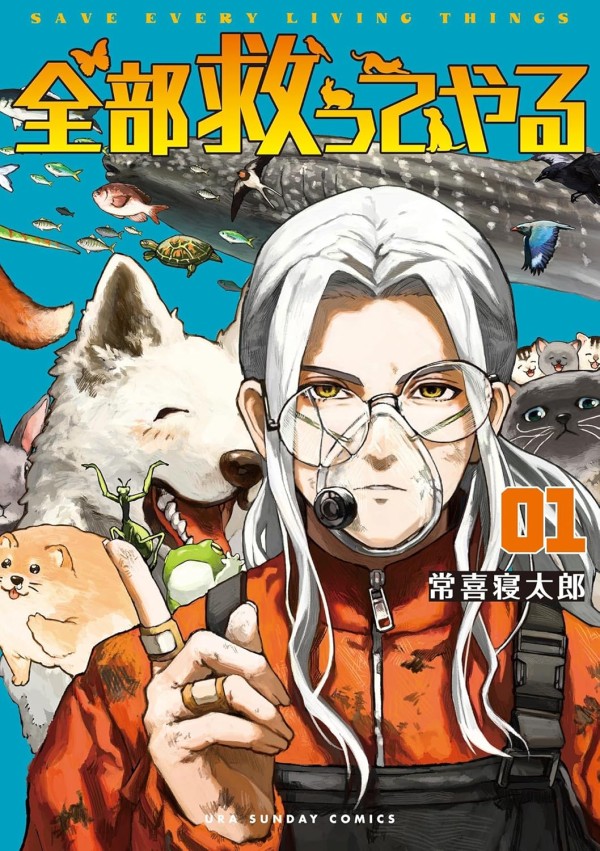
Kuga is gaunt, bespectacled, and socially awkward, yet he pours every ounce of his energy and money into saving animals. He works multiple part-time jobs—delivery driver, nude art model—just to pay for food and veterinary care, and he refuses to collect donations. His commitment stems from a childhood trauma: his father, who suffered from schizophrenia, abandoned the family dog Mugi in the mountains, and Kuga has never stopped searching for a trace of that lost animal. Driven by the conviction that he must save every life in front of him, he operates on sheer will, though he is far from a perfect hero—he is reckless, emotionally closed-off, and neglects his own health.
Suzu is initially overwhelmed by the brutality of the rescue world. But watching Kuga work awakens something in her. She decides to abandon her old dream and becomes his partner, using her hairstyling skills to help with animal care and later taking on the roles of social media outreach and adoption coordination. Through the rescue work, she begins to confront her own past—the bullying she endured in high school, the career ambitions that hollowed her out—and slowly rebuilds her sense of worth.
The series follows the pair through a series of harrowing rescue cases: a massive hoarding of 86 dogs and cats in a single filthy house, where they must triage the sickest animals and navigate the owner's denial; a dog kennel fire that forces a confrontation with a large, polished rescue organization called DEFEND, led by the principled but rigid Kurumi Kuroda, who questions Kuga's solo approach; the exploitation of animals by a con artist who uses aliases like Suzuki and Ono, running fake donation schemes and dumping animals from collapsed breeding operations; a segment on rabbits used in school education programs, raising questions about how children learn to treat living creatures; and an arc involving the fate of retired racehorses, where Kuga meets a young man named Rikuto who has abandoned his own jockey dreams. Later volumes also tackle the dark side of the pet industry, including fraudulent rescue groups like Perfect Life that line their pockets while animals suffer.
The setting moves between rural hometowns, rescue shelters, veterinary clinics, animal control centers, and the gray zones of the pet trade. The narrative does not idealize rescue work. It shows the financial ruin, the emotional burnout, the impossible choices—saving one animal often means not saving another. Kuga himself remains a deeply conflicted figure: idealistic yet fragile, stubborn yet barely holding himself together. His younger brother Rikuto worries about him constantly and occasionally helps, but fears Kuga is destroying himself. Suzu grows from a passive, self-hating observer into a proactive rescuer, and her relationship with Kuga becomes a quiet, unspoken anchor for both of them.
Central to the story is the question of what it really means to save. The title, meaning I'll Save Them All, is not a triumphant promise but a desperate, unfinished sentence. The manga insists that rescue does not end when an animal is pulled from a bad place—it ends only when that animal has found a genuine, lasting home and the rescuer has seen it through to the end. Along the way, it examines the complex motivations of everyone involved: the hoarders who started with good intentions, the activists who clash over methods, the scammers who prey on sympathy, and the ordinary people who must decide what responsibility they bear. The tone is stark and unsentimental, yet it finds moments of warmth in small recoveries and hard-won adoptions.
Kuga is gaunt, bespectacled, and socially awkward, yet he pours every ounce of his energy and money into saving animals. He works multiple part-time jobs—delivery driver, nude art model—just to pay for food and veterinary care, and he refuses to collect donations. His commitment stems from a childhood trauma: his father, who suffered from schizophrenia, abandoned the family dog Mugi in the mountains, and Kuga has never stopped searching for a trace of that lost animal. Driven by the conviction that he must save every life in front of him, he operates on sheer will, though he is far from a perfect hero—he is reckless, emotionally closed-off, and neglects his own health.
Suzu is initially overwhelmed by the brutality of the rescue world. But watching Kuga work awakens something in her. She decides to abandon her old dream and becomes his partner, using her hairstyling skills to help with animal care and later taking on the roles of social media outreach and adoption coordination. Through the rescue work, she begins to confront her own past—the bullying she endured in high school, the career ambitions that hollowed her out—and slowly rebuilds her sense of worth.
The series follows the pair through a series of harrowing rescue cases: a massive hoarding of 86 dogs and cats in a single filthy house, where they must triage the sickest animals and navigate the owner's denial; a dog kennel fire that forces a confrontation with a large, polished rescue organization called DEFEND, led by the principled but rigid Kurumi Kuroda, who questions Kuga's solo approach; the exploitation of animals by a con artist who uses aliases like Suzuki and Ono, running fake donation schemes and dumping animals from collapsed breeding operations; a segment on rabbits used in school education programs, raising questions about how children learn to treat living creatures; and an arc involving the fate of retired racehorses, where Kuga meets a young man named Rikuto who has abandoned his own jockey dreams. Later volumes also tackle the dark side of the pet industry, including fraudulent rescue groups like Perfect Life that line their pockets while animals suffer.
The setting moves between rural hometowns, rescue shelters, veterinary clinics, animal control centers, and the gray zones of the pet trade. The narrative does not idealize rescue work. It shows the financial ruin, the emotional burnout, the impossible choices—saving one animal often means not saving another. Kuga himself remains a deeply conflicted figure: idealistic yet fragile, stubborn yet barely holding himself together. His younger brother Rikuto worries about him constantly and occasionally helps, but fears Kuga is destroying himself. Suzu grows from a passive, self-hating observer into a proactive rescuer, and her relationship with Kuga becomes a quiet, unspoken anchor for both of them.
Central to the story is the question of what it really means to save. The title, meaning I'll Save Them All, is not a triumphant promise but a desperate, unfinished sentence. The manga insists that rescue does not end when an animal is pulled from a bad place—it ends only when that animal has found a genuine, lasting home and the rescuer has seen it through to the end. Along the way, it examines the complex motivations of everyone involved: the hoarders who started with good intentions, the activists who clash over methods, the scammers who prey on sympathy, and the ordinary people who must decide what responsibility they bear. The tone is stark and unsentimental, yet it finds moments of warmth in small recoveries and hard-won adoptions.
Comment(s)
Staff
- Story & ArtNetarō Tsuneki
Recommendations
Empfehlungen auf Basis gemeinsamer Kategorien.