Manga
Description
In the wake of Japan's prolonged economic stagnation following the collapse of the bubble economy, the leaders of the world's advanced nations fear that the country's deepening recession could trigger a global financial crisis. To avert this, they compel Japan to enact the Public Power Misappropriation Law, a drastic emergency measure that skirts the edge of constitutionality. This law establishes the Public Power Misappropriation Control Office, an independent investigative agency placed directly under the Cabinet Secretariat. Its mandate is to hunt down individuals who abuse public authority for personal enrichment. Those convicted face a minimum of five years' imprisonment and the wholesale confiscation of their assets. The agency's investigators are not civil servants; instead, they are effectively modern-day bounty hunters, entitled to one-tenth of any illicit funds they recover as personal compensation. They are also granted extraordinary privileges, including the authority to use firearms, engage in plea bargaining, mobilize witness protection, and even summon the Special Assault Team or the Self-Defense Forces with a single phone call.
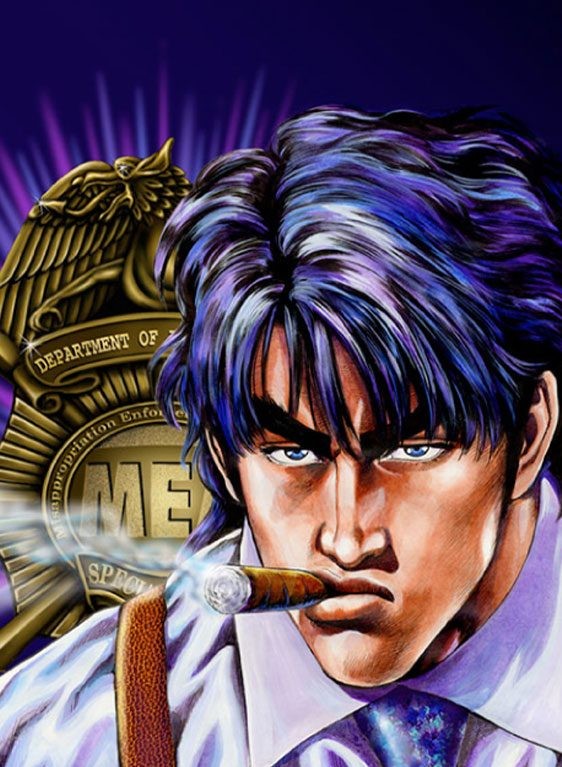
The story follows one of these investigators, Nakabo Rintaro. A brash, cigar-smoking man who operates on his own ruthless code of justice, Nakabo cuts through bureaucratic red tape with violent, confrontational, and often theatrical methods. His signature line, "What does that have to do with their families?!" reflects his belief that the sins of corrupt officials should be visited upon them alone, regardless of their connections. He is assigned to investigate the massive Tozai Bank, a sprawling megabank formed by the merger of Toyo and Seibu banks. Once a sound institution, Tozai has been hollowed out by executives parachuted in from the Ministry of Finance and the Bank of Japan, who now use the bank as a slush fund for politicians and crony corporations. To infiltrate the bank's headquarters, Nakabo assumes the guise of a meek, bespectacled salaryman named Hayashi Taro, transferred from a branch office. In secret, he methodically unravels the web of kickbacks, shady loans, and hidden accounts that tie the bank's leadership to the political and criminal underworld.
The narrative arcs unfold as Nakabo closes in on the inner circle of Tozai Bank, forcing confrontations with the bank's corrupt executives and the politicians who protect them. As he digs deeper, he traces the flow of illicit money into the hands of yakuza syndicates and discovers the involvement of a shadow company that absorbed all of the bank's bad debt during the merger, acting as a deliberate garbage dump to shield the leadership. The story escalates from a financial thriller into a full-blown clash with organized crime, culminating in a final assault on the true masterminds behind the corruption. Although the series was cut short when its magazine ceased publication, the narrative reaches a definitive conclusion, with Nakabo bringing the weight of the law—and his own brand of rough justice—down upon the entrenched powers that have looted the nation.
The story follows one of these investigators, Nakabo Rintaro. A brash, cigar-smoking man who operates on his own ruthless code of justice, Nakabo cuts through bureaucratic red tape with violent, confrontational, and often theatrical methods. His signature line, "What does that have to do with their families?!" reflects his belief that the sins of corrupt officials should be visited upon them alone, regardless of their connections. He is assigned to investigate the massive Tozai Bank, a sprawling megabank formed by the merger of Toyo and Seibu banks. Once a sound institution, Tozai has been hollowed out by executives parachuted in from the Ministry of Finance and the Bank of Japan, who now use the bank as a slush fund for politicians and crony corporations. To infiltrate the bank's headquarters, Nakabo assumes the guise of a meek, bespectacled salaryman named Hayashi Taro, transferred from a branch office. In secret, he methodically unravels the web of kickbacks, shady loans, and hidden accounts that tie the bank's leadership to the political and criminal underworld.
The narrative arcs unfold as Nakabo closes in on the inner circle of Tozai Bank, forcing confrontations with the bank's corrupt executives and the politicians who protect them. As he digs deeper, he traces the flow of illicit money into the hands of yakuza syndicates and discovers the involvement of a shadow company that absorbed all of the bank's bad debt during the merger, acting as a deliberate garbage dump to shield the leadership. The story escalates from a financial thriller into a full-blown clash with organized crime, culminating in a final assault on the true masterminds behind the corruption. Although the series was cut short when its magazine ceased publication, the narrative reaches a definitive conclusion, with Nakabo bringing the weight of the law—and his own brand of rough justice—down upon the entrenched powers that have looted the nation.
Comment(s)
Staff
- Story & Art
Recommendations
Empfehlungen auf Basis gemeinsamer Kategorien.
Anime overview





Manga overview