Manga
Description
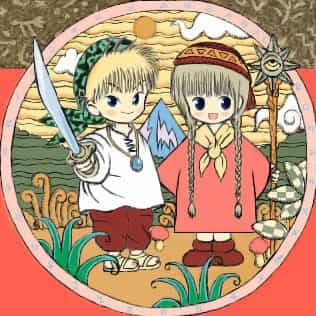
"Mahōjin Guru Guru" is a comedic fantasy manga series that parodies traditional role-playing games, particularly the "Dragon Quest" series. The narrative centers on Nike, a young boy who is chosen to become the hero destined to defeat the Demon King. Despite his reluctance, Nike is thrust into this role by his village elder and sets out on his journey. Along the way, he encounters Kukuri, a cheerful and naive girl training to be a magician of the ancient Guru Guru magic. Together, they form an unlikely duo, embarking on a quest filled with humor, absurdity, and lighthearted adventure.
The story unfolds in a world heavily inspired by RPG mechanics, where characters frequently encounter monsters, treasure chests, and magical items. Nike and Kukuri’s journey is marked by their interactions with a colorful cast of characters, including eccentric villains, quirky allies, and bizarre creatures. Kukuri’s Guru Guru magic, which involves spinning in circles to cast spells, becomes a recurring source of both comedy and utility, often leading to unpredictable outcomes. Nike, on the other hand, relies on his wits and a basic sword, though his lack of enthusiasm for the hero role often contrasts with the grand expectations placed upon him.
The series balances episodic adventures with an overarching plotline involving the Demon King and the prophecy surrounding Nike’s destiny. However, the narrative frequently subverts traditional fantasy tropes, opting for comedic twists and satirical takes on RPG conventions. The dynamic between Nike and Kukuri drives much of the story, with their contrasting personalities—Nike’s pragmatic skepticism and Kukuri’s boundless optimism—creating a humorous and endearing partnership.
As the story progresses, the duo faces increasingly absurd challenges, from battling sentient mushrooms to navigating convoluted dungeons. The manga’s humor often stems from its self-awareness, with characters breaking the fourth wall or commenting on the absurdity of their quest. Despite its comedic tone, the series occasionally delves into moments of sincerity, particularly in exploring the bond between Nike and Kukuri and their growth as individuals.
The world-building in "Mahōjin Guru Guru" is intentionally simplistic, reflecting its RPG parody roots. Towns, forests, and dungeons are depicted in a manner reminiscent of classic video games, complete with random encounters and leveling systems. This playful approach to world-building enhances the series’ comedic appeal while maintaining a sense of familiarity for fans of the genre.
Overall, "Mahōjin Guru Guru" is a lighthearted and whimsical take on the fantasy adventure genre, blending parody, humor, and charm into a narrative that celebrates and pokes fun at the conventions of RPGs. Its focus on character-driven comedy and episodic storytelling makes it an accessible and entertaining read for fans of both fantasy and comedy manga.
The story unfolds in a world heavily inspired by RPG mechanics, where characters frequently encounter monsters, treasure chests, and magical items. Nike and Kukuri’s journey is marked by their interactions with a colorful cast of characters, including eccentric villains, quirky allies, and bizarre creatures. Kukuri’s Guru Guru magic, which involves spinning in circles to cast spells, becomes a recurring source of both comedy and utility, often leading to unpredictable outcomes. Nike, on the other hand, relies on his wits and a basic sword, though his lack of enthusiasm for the hero role often contrasts with the grand expectations placed upon him.
The series balances episodic adventures with an overarching plotline involving the Demon King and the prophecy surrounding Nike’s destiny. However, the narrative frequently subverts traditional fantasy tropes, opting for comedic twists and satirical takes on RPG conventions. The dynamic between Nike and Kukuri drives much of the story, with their contrasting personalities—Nike’s pragmatic skepticism and Kukuri’s boundless optimism—creating a humorous and endearing partnership.
As the story progresses, the duo faces increasingly absurd challenges, from battling sentient mushrooms to navigating convoluted dungeons. The manga’s humor often stems from its self-awareness, with characters breaking the fourth wall or commenting on the absurdity of their quest. Despite its comedic tone, the series occasionally delves into moments of sincerity, particularly in exploring the bond between Nike and Kukuri and their growth as individuals.
The world-building in "Mahōjin Guru Guru" is intentionally simplistic, reflecting its RPG parody roots. Towns, forests, and dungeons are depicted in a manner reminiscent of classic video games, complete with random encounters and leveling systems. This playful approach to world-building enhances the series’ comedic appeal while maintaining a sense of familiarity for fans of the genre.
Overall, "Mahōjin Guru Guru" is a lighthearted and whimsical take on the fantasy adventure genre, blending parody, humor, and charm into a narrative that celebrates and pokes fun at the conventions of RPGs. Its focus on character-driven comedy and episodic storytelling makes it an accessible and entertaining read for fans of both fantasy and comedy manga.
Comment(s)
Staff
- Story & Art
Company
- Tokyopop · 1
Recommendations
Empfehlungen auf Basis gemeinsamer Kategorien.