Manga
Description
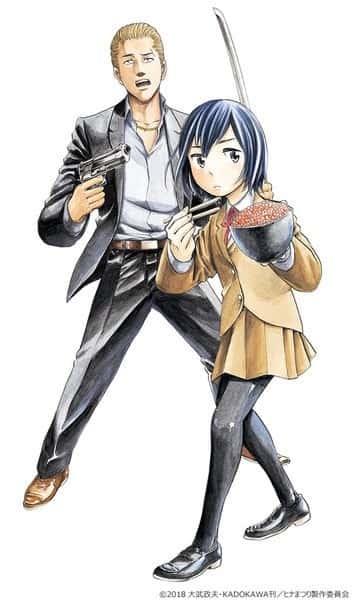
"Hinamatsuri" is a comedic and heartwarming manga series that blends elements of science fiction, slice-of-life, and family dynamics. The narrative centers around Yoshifumi Nitta, a yakuza member who leads a relatively mundane life until a mysterious girl named Hina suddenly appears in his apartment. Hina possesses telekinetic powers, which she uses to subdue Nitta when he initially reacts with hostility. Despite her extraordinary abilities, Hina is emotionally detached and socially inept, often displaying a childlike demeanor. Nitta reluctantly takes her in, and their unconventional father-daughter relationship forms the core of the story.
As the series progresses, Hina’s presence disrupts Nitta’s life in both comedic and unexpected ways. Her powers, while impressive, often lead to chaotic situations, forcing Nitta to navigate the challenges of raising a superpowered child while maintaining his yakuza responsibilities. Hina’s integration into Nitta’s life also introduces her to other characters, including Hitomi Mishima, a classmate who becomes a key figure in Hina’s social development. Hitomi’s pragmatic and hardworking nature contrasts with Hina’s laid-back attitude, creating a dynamic and often humorous friendship.
The story expands to explore the origins of Hina’s powers and the mysterious organization that created her. Other characters with similar abilities, such as Anzu, another telekinetic girl, are introduced, adding depth to the narrative. Anzu’s journey, in particular, highlights themes of resilience and independence as she struggles to survive on her own after being abandoned by the organization. Her interactions with a kindhearted homeless community provide a poignant counterpoint to the series’ comedic tone.
Throughout the series, the relationships between the characters evolve, blending humor with moments of genuine emotional depth. Nitta’s growth as a surrogate father figure is a recurring theme, as he learns to balance his criminal lifestyle with the responsibilities of caring for Hina. The manga also delves into the lives of secondary characters, such as Mao, another telekinetic girl, and Utako, a bartender who becomes a maternal figure to Hina. These interactions enrich the narrative, creating a tapestry of interconnected stories that explore themes of family, friendship, and belonging.
The series maintains a lighthearted tone while occasionally addressing more serious topics, such as societal expectations and the struggles of marginalized individuals. The juxtaposition of Hina’s supernatural abilities with the mundane challenges of everyday life creates a unique blend of comedy and drama. The manga’s episodic structure allows for a variety of scenarios, from slapstick humor to heartfelt moments, ensuring a dynamic and engaging reading experience.
As the series progresses, Hina’s presence disrupts Nitta’s life in both comedic and unexpected ways. Her powers, while impressive, often lead to chaotic situations, forcing Nitta to navigate the challenges of raising a superpowered child while maintaining his yakuza responsibilities. Hina’s integration into Nitta’s life also introduces her to other characters, including Hitomi Mishima, a classmate who becomes a key figure in Hina’s social development. Hitomi’s pragmatic and hardworking nature contrasts with Hina’s laid-back attitude, creating a dynamic and often humorous friendship.
The story expands to explore the origins of Hina’s powers and the mysterious organization that created her. Other characters with similar abilities, such as Anzu, another telekinetic girl, are introduced, adding depth to the narrative. Anzu’s journey, in particular, highlights themes of resilience and independence as she struggles to survive on her own after being abandoned by the organization. Her interactions with a kindhearted homeless community provide a poignant counterpoint to the series’ comedic tone.
Throughout the series, the relationships between the characters evolve, blending humor with moments of genuine emotional depth. Nitta’s growth as a surrogate father figure is a recurring theme, as he learns to balance his criminal lifestyle with the responsibilities of caring for Hina. The manga also delves into the lives of secondary characters, such as Mao, another telekinetic girl, and Utako, a bartender who becomes a maternal figure to Hina. These interactions enrich the narrative, creating a tapestry of interconnected stories that explore themes of family, friendship, and belonging.
The series maintains a lighthearted tone while occasionally addressing more serious topics, such as societal expectations and the struggles of marginalized individuals. The juxtaposition of Hina’s supernatural abilities with the mundane challenges of everyday life creates a unique blend of comedy and drama. The manga’s episodic structure allows for a variety of scenarios, from slapstick humor to heartfelt moments, ensuring a dynamic and engaging reading experience.
Comment(s)
Staff
- Story & Art
Recommendations
Empfehlungen auf Basis gemeinsamer Kategorien.