Manga
Description
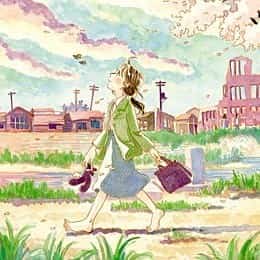
"Town of Evening Calm, Country of Cherry Blossoms" is a poignant manga that explores the lingering effects of the Hiroshima atomic bombing through interconnected narratives set in post-war Japan. The story is divided into two parts, each focusing on different characters and time periods, yet tied together by themes of loss, resilience, and the passage of time.
The first part, "Town of Evening Calm," is set in 1955 and centers on Minami Hirano, a young woman living in Hiroshima a decade after the bombing. Minami struggles with the physical and emotional scars of the event, as well as the societal stigma faced by survivors. Her daily life is marked by a quiet determination to move forward, despite the pervasive sense of loss and the lingering health issues caused by radiation exposure. The narrative captures her interactions with family, friends, and neighbors, highlighting the collective trauma of the community while also emphasizing moments of hope and human connection.
The second part, "Country of Cherry Blossoms," shifts to Tokyo in 1987 and follows Nanami Ishikawa, the daughter of a Hiroshima survivor. Nanami’s story delves into the intergenerational impact of the bombing, as she grapples with her mother’s unresolved trauma and her own sense of identity. Through her perspective, the manga examines how the legacy of Hiroshima continues to shape the lives of those who were not directly affected but are nonetheless connected to its history. Nanami’s journey is one of understanding and reconciliation, as she seeks to comprehend the weight of her family’s past while navigating her present.
The characters in both narratives are deeply human, their experiences reflecting the broader societal challenges of post-war Japan. Minami’s resilience and Nanami’s introspection serve as focal points for exploring themes of memory, survival, and the enduring impact of historical events. The manga’s structure, alternating between the two timelines, creates a layered narrative that underscores the continuity of trauma and the ways in which it reverberates across generations.
Through its restrained yet evocative storytelling, "Town of Evening Calm, Country of Cherry Blossoms" offers a nuanced portrayal of life in the aftermath of tragedy, capturing both the fragility and strength of the human spirit. The manga’s focus on personal and collective histories provides a compelling exploration of how individuals and communities navigate the complexities of recovery and remembrance.
The first part, "Town of Evening Calm," is set in 1955 and centers on Minami Hirano, a young woman living in Hiroshima a decade after the bombing. Minami struggles with the physical and emotional scars of the event, as well as the societal stigma faced by survivors. Her daily life is marked by a quiet determination to move forward, despite the pervasive sense of loss and the lingering health issues caused by radiation exposure. The narrative captures her interactions with family, friends, and neighbors, highlighting the collective trauma of the community while also emphasizing moments of hope and human connection.
The second part, "Country of Cherry Blossoms," shifts to Tokyo in 1987 and follows Nanami Ishikawa, the daughter of a Hiroshima survivor. Nanami’s story delves into the intergenerational impact of the bombing, as she grapples with her mother’s unresolved trauma and her own sense of identity. Through her perspective, the manga examines how the legacy of Hiroshima continues to shape the lives of those who were not directly affected but are nonetheless connected to its history. Nanami’s journey is one of understanding and reconciliation, as she seeks to comprehend the weight of her family’s past while navigating her present.
The characters in both narratives are deeply human, their experiences reflecting the broader societal challenges of post-war Japan. Minami’s resilience and Nanami’s introspection serve as focal points for exploring themes of memory, survival, and the enduring impact of historical events. The manga’s structure, alternating between the two timelines, creates a layered narrative that underscores the continuity of trauma and the ways in which it reverberates across generations.
Through its restrained yet evocative storytelling, "Town of Evening Calm, Country of Cherry Blossoms" offers a nuanced portrayal of life in the aftermath of tragedy, capturing both the fragility and strength of the human spirit. The manga’s focus on personal and collective histories provides a compelling exploration of how individuals and communities navigate the complexities of recovery and remembrance.
Comment(s)
Staff
- Story & Art
Recommendations
Empfehlungen auf Basis gemeinsamer Kategorien.