
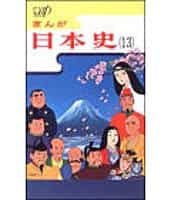
TV-Series
Description
"Manga Nihonshi" is an educational anime series that presents the history of Japan in a narrative format, blending historical events with engaging storytelling. The series spans from ancient times to the modern era, chronicling key moments, figures, and cultural shifts that have shaped Japan's development. Each episode focuses on a specific period or event, offering a concise yet comprehensive overview of its significance.
The narrative begins with the mythological origins of Japan, exploring the creation myths involving deities like Izanagi and Izanami, and the establishment of the imperial line with Emperor Jimmu. It then transitions into the early historical periods, such as the Yayoi and Kofun eras, highlighting the emergence of agriculture, social structures, and the influence of neighboring cultures like China and Korea.
As the series progresses, it delves into the Heian period, emphasizing the cultural flourishing under the aristocracy and the rise of literature, such as "The Tale of Genji." The political intrigue and power struggles of the samurai class during the Kamakura and Muromachi periods are also covered, including the establishment of the shogunate and the impact of the Mongol invasions.
The Sengoku period is a major focus, depicting the chaotic wars between feudal lords and the eventual unification of Japan under figures like Oda Nobunaga, Toyotomi Hideyoshi, and Tokugawa Ieyasu. The Edo period is explored in depth, showcasing the stability and isolationist policies of the Tokugawa shogunate, as well as the cultural developments in art, theater, and urban life.
The series then addresses the Meiji Restoration, highlighting the rapid modernization and Westernization of Japan, the abolition of the samurai class, and the country's emergence as a global power. The Taisho and Showa periods are examined, covering Japan's involvement in World War I, the rise of militarism, and the devastating impact of World War II, including the atomic bombings of Hiroshima and Nagasaki.
Post-war Japan is also a significant part of the narrative, focusing on the country's economic recovery, democratic reforms, and cultural resurgence. The series concludes with a look at contemporary Japan, reflecting on its technological advancements, global influence, and ongoing challenges.
Throughout the series, historical figures are portrayed with a focus on their roles and contributions, providing a human element to the broader historical context. The storytelling is designed to be accessible, making complex historical events understandable for a wide audience. By combining factual accuracy with engaging narratives, "Manga Nihonshi" serves as both an educational tool and an entertaining exploration of Japan's rich history.
The narrative begins with the mythological origins of Japan, exploring the creation myths involving deities like Izanagi and Izanami, and the establishment of the imperial line with Emperor Jimmu. It then transitions into the early historical periods, such as the Yayoi and Kofun eras, highlighting the emergence of agriculture, social structures, and the influence of neighboring cultures like China and Korea.
As the series progresses, it delves into the Heian period, emphasizing the cultural flourishing under the aristocracy and the rise of literature, such as "The Tale of Genji." The political intrigue and power struggles of the samurai class during the Kamakura and Muromachi periods are also covered, including the establishment of the shogunate and the impact of the Mongol invasions.
The Sengoku period is a major focus, depicting the chaotic wars between feudal lords and the eventual unification of Japan under figures like Oda Nobunaga, Toyotomi Hideyoshi, and Tokugawa Ieyasu. The Edo period is explored in depth, showcasing the stability and isolationist policies of the Tokugawa shogunate, as well as the cultural developments in art, theater, and urban life.
The series then addresses the Meiji Restoration, highlighting the rapid modernization and Westernization of Japan, the abolition of the samurai class, and the country's emergence as a global power. The Taisho and Showa periods are examined, covering Japan's involvement in World War I, the rise of militarism, and the devastating impact of World War II, including the atomic bombings of Hiroshima and Nagasaki.
Post-war Japan is also a significant part of the narrative, focusing on the country's economic recovery, democratic reforms, and cultural resurgence. The series concludes with a look at contemporary Japan, reflecting on its technological advancements, global influence, and ongoing challenges.
Throughout the series, historical figures are portrayed with a focus on their roles and contributions, providing a human element to the broader historical context. The storytelling is designed to be accessible, making complex historical events understandable for a wide audience. By combining factual accuracy with engaging narratives, "Manga Nihonshi" serves as both an educational tool and an entertaining exploration of Japan's rich history.
Cast
- Fujiwara no Korechika
- Kusunoki
- Ōshio Heihachirō
- Empress Jitō
- Girl Ai
- Sei Shōnagon
- Emperor Seiwa
- Hōjō Tokimune
- Prince Shōtoku
- Narrator
- Empress Suiko
- Boy Ryota
- Ike no zenni
Comment(s)
Staff
- ScriptJunji Tashiro
- Episode DirectorKazuyoshi YokotaKiyoshi FukumotoTatsuya Okamoto
- Art Director
- Sound DirectorHiroshi Yamazaki
- ProducerHiromichi Mogaki
- Character DesignYūji Yatabe
- StoryboardNorio YazawaTetsuo YasumiTameo KohanawaTetsuo HakataKiyoshi OtaKiyomu FukudaKenzō KoizumiEisuke Kondō
- MusicKen Satō
- Animation DirectorAkira KawashimaNobuhiro OkasakoKenzō KoizumiYūji Yatabe
- Director of PhotographyHitoshi Kaneko
- Chief DirectorEisuke Kondō
Production
- ProductionTsuchida Production