
TV-Series
Description
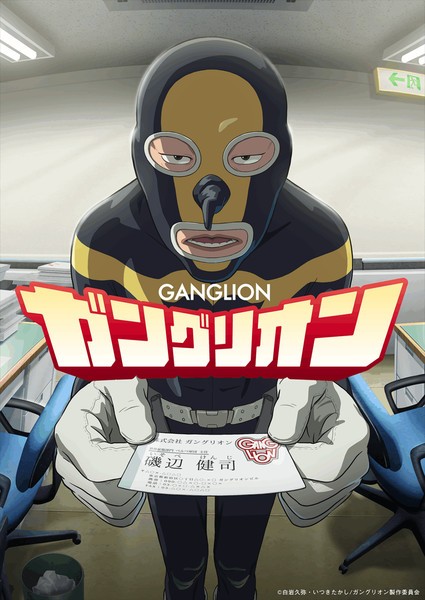
Kenji Isobe works for Ganglion Co. Ltd., a corporation whose stated goal is world domination. As a mid-level combatant who fights under the name Belve, his daily assignments involve carrying out operations such as the Tokyo Cedar Pollen Operation or the Mount Fuji Demolition Plan. Every single time, however, his efforts are easily thwarted by Hopeman, a superhero dedicated to justice. The series is set in Tokyo during the early 2000s, treating the work of a villainous organization as a mundane and soul-crushing office job. Kenji must file reports after each defeat, endure unreasonable demands from his superiors, and maintain a professional demeanor despite repeated humiliation on the battlefield. His work-life balance is further complicated by the requirement to keep his identity secret, forcing him to commute home on public trains and visit his favorite food stall while still wearing his full battle costume.
The central character is Kenji Isobe, a beleaguered office worker and fighter whose existence is defined by quiet desperation and a sense of duty to provide for his family. He is voiced by Yoji Ueda. His immediate superior is Colonel Shadow, also known as Jin Kageyama (voiced by Fumihiko Tachiki), who leads the Belve Corps and often issues irrational orders. Their nemesis is Hopeman (voiced by Tomokazu Sugita), a hero whose interventions are framed as a professional hazard rather than a moral crusade. At home, Kenji is supported by his kind and caring wife, Setsuko (voiced by Aoi Koga), and his young son, Takashi (voiced by Yoshino Aoyama), who remains unaware of the full nature of his father's job. Other key figures include Yumiko (voiced by Hikaru Tono) and the sympathetic owner of the food stall Kenji frequents after work (voiced by Itsuji Itao).
The narrative unfolds through several distinct operations that parody real-world corporate projects. The early episodes focus on the Tokyo Cedar Pollen Operation, establishing the show's satirical tone as Kenji is defeated and then goes home to watch news coverage of his own failure. Subsequent arcs include the Tokyo Submersion Operation, where Kenji receives a homemade 100-Megaton Punch glove from his son for Father's Day, and the Tokyo CO2 Spread Strategy, which explores the unlikely social relationship between Kenji and Hopeman. A major turning point occurs during the Tokyo Tower Demolition Operation, where Kenji achieves an unexpected personal victory, leading to recognition from the company and a sudden personnel transfer for Colonel Shadow to the accounting department. The final episodes cover the Golf Course Bunker Strategy, dealing with Colonel Shadows return and conflicts with a rebellious new recruit named Osogabe, concluding the first chapter of the story. Throughout these arcs, the series uses its short format to build a workplace comedy that reflects the absurdities of corporate loyalty, the monotony of repetitive tasks, and the struggle to maintain dignity in a system that views workers as disposable cogs.
The central character is Kenji Isobe, a beleaguered office worker and fighter whose existence is defined by quiet desperation and a sense of duty to provide for his family. He is voiced by Yoji Ueda. His immediate superior is Colonel Shadow, also known as Jin Kageyama (voiced by Fumihiko Tachiki), who leads the Belve Corps and often issues irrational orders. Their nemesis is Hopeman (voiced by Tomokazu Sugita), a hero whose interventions are framed as a professional hazard rather than a moral crusade. At home, Kenji is supported by his kind and caring wife, Setsuko (voiced by Aoi Koga), and his young son, Takashi (voiced by Yoshino Aoyama), who remains unaware of the full nature of his father's job. Other key figures include Yumiko (voiced by Hikaru Tono) and the sympathetic owner of the food stall Kenji frequents after work (voiced by Itsuji Itao).
The narrative unfolds through several distinct operations that parody real-world corporate projects. The early episodes focus on the Tokyo Cedar Pollen Operation, establishing the show's satirical tone as Kenji is defeated and then goes home to watch news coverage of his own failure. Subsequent arcs include the Tokyo Submersion Operation, where Kenji receives a homemade 100-Megaton Punch glove from his son for Father's Day, and the Tokyo CO2 Spread Strategy, which explores the unlikely social relationship between Kenji and Hopeman. A major turning point occurs during the Tokyo Tower Demolition Operation, where Kenji achieves an unexpected personal victory, leading to recognition from the company and a sudden personnel transfer for Colonel Shadow to the accounting department. The final episodes cover the Golf Course Bunker Strategy, dealing with Colonel Shadows return and conflicts with a rebellious new recruit named Osogabe, concluding the first chapter of the story. Throughout these arcs, the series uses its short format to build a workplace comedy that reflects the absurdities of corporate loyalty, the monotony of repetitive tasks, and the struggle to maintain dignity in a system that views workers as disposable cogs.
Cast
- Old Man at the Food StallItsuji Itao
- Yumiko
- Colonel Shadow / Minoru Kageyama
Comment(s)
Staff
- DirectorAyumu Watanabe
- ScriptHarise
- Unit DirectorShinya Ōhira
- Original creator
- Art DirectorYoshihiro Nakamura
- Sound DirectorKisuke Koizumi
- Director of PhotographyKentarō WakiTomoya Yokoyama
- Series CompositionTomoaki Shiono
- StoryboardShinya ŌhiraMasayuki MiyajiHyūga YamamuraShin'ichirō UshijimaTakuji MiyamotoYujiro AbeMegumi SogaRyōsuke Tanaka
- MusicTakeo Asami
- Character DesignShigeru Fujita
- Chief Animation DirectorShigeru Fujita
- Cgi DirectorTakumi Mukai
Production
- Animation Productionstudio maf