Live action TV
Description
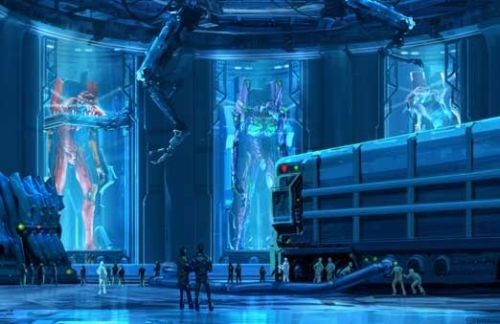
Fifteen years after a catastrophic global event known as the Second Impact decimated the planet and shifted the Earth's axis, the world remains in a fragile state of recovery. The latest threat to humanity comes in the form of the Angels, colossal, monstrous beings of unknown origin that descend upon the heavily fortified city of Tokyo-3 with terrifying regularity. Conventional military forces are useless against their impenetrable force fields, known as Absolute Terror (AT) Fields. Mankind's last hope rests with the paramilitary organization NERV and its ultimate weapon: the Evangelions. These are enormous, biomechanical humanoids, the only weapons capable of matching the Angels power for power.
However, piloting an Evangelion comes with a unique and terrible condition. The neural link required to control the giant machine creates a powerful psychological feedback loop, making it possible only for a select few children born shortly after the Second Impact. The narrative centers on Shinji Ikari, a deeply introverted and emotionally withdrawn fourteen-year-old boy who is summoned to Tokyo-3 by his estranged and coldly manipulative father, Gendo Ikari, NERV’s supreme commander. Abandoned by his father for years and haunted by the loss of his mother, Shinji is thrust into the cockpit of Evangelion Unit-01 and ordered to defend the city against the first Angel attack. Terrified of rejection but desperate for any form of approval, he reluctantly agrees, beginning his harrowing journey as the Third Child.
Shinji is not alone in his burden. He lives with Misato Katsuragi, a brilliant and free-spirited NERV operations director who acts as his guardian, using a façade of casual cheerfulness to hide her own deep-seated trauma from the Second Impact. In battle, his fellow pilots are the First Child, Rei Ayanami, a mysterious, seemingly emotionless girl who is utterly devoted to Gendo and whose true nature is one of the organization’s darkest secrets, and the Second Child, Asuka Langley Soryu, a fiery and prodigiously skilled pilot from Germany who hides her profound insecurity and childhood abandonment behind a mask of arrogant pride.
As the series progresses, the pattern of Angel attacks becomes increasingly desperate and psychologically devastating. The narrative arcs move beyond a simple monster-of-the-week structure to a deep character study of broken individuals. Shinji struggles with self-worth and the fear of human connection, believing that to know others is to be hurt by them. Asuka’s ego is shattered when her synch ratio drops and she is defeated by an Angel, leading to a complete mental collapse. Rei begins to question her own identity and programmed loyalty as she develops fragile, unprecedented bonds with Shinji. The action intensifies as NERV introduces a new pilot, Toji Suzuhara, a classmate of Shinji’s, with disastrous results, and later when the angelic being Kaworu Nagisa infiltrates the organization, forming a deep, tragic bond with Shinji before revealing his true, horrifying purpose.
Beneath the surface war, a conspiracy brews. NERV is revealed to be more than just a defense force. Commander Ikari is secretly pursuing the Human Instrumentality Project, a plan to forcibly evolve humanity by breaking down the psychological barriers between individuals—the metaphysical AT Fields—and merging all human souls into a single, god-like entity. This scheme, orchestrated by the secret society SEELE, involves the manipulation of the Angels, the Evangelions (which are revealed to be cloned giants of the first Angel, Adam), and the being known as Lilith, crucified in the depths of NERV headquarters. The final narrative arc sees SEELE turn against NERV, launching a full-scale military invasion to seize control of Instrumentality. Shinji, Asuka, and Rei are caught at the center of the apocalyptic Third Impact, leading to a surreal, introspective finale where Shinji is forced to confront his own deepest fears, the nature of his reality, and the ultimate choice between the pain of individuality and the peace of oblivion.
However, piloting an Evangelion comes with a unique and terrible condition. The neural link required to control the giant machine creates a powerful psychological feedback loop, making it possible only for a select few children born shortly after the Second Impact. The narrative centers on Shinji Ikari, a deeply introverted and emotionally withdrawn fourteen-year-old boy who is summoned to Tokyo-3 by his estranged and coldly manipulative father, Gendo Ikari, NERV’s supreme commander. Abandoned by his father for years and haunted by the loss of his mother, Shinji is thrust into the cockpit of Evangelion Unit-01 and ordered to defend the city against the first Angel attack. Terrified of rejection but desperate for any form of approval, he reluctantly agrees, beginning his harrowing journey as the Third Child.
Shinji is not alone in his burden. He lives with Misato Katsuragi, a brilliant and free-spirited NERV operations director who acts as his guardian, using a façade of casual cheerfulness to hide her own deep-seated trauma from the Second Impact. In battle, his fellow pilots are the First Child, Rei Ayanami, a mysterious, seemingly emotionless girl who is utterly devoted to Gendo and whose true nature is one of the organization’s darkest secrets, and the Second Child, Asuka Langley Soryu, a fiery and prodigiously skilled pilot from Germany who hides her profound insecurity and childhood abandonment behind a mask of arrogant pride.
As the series progresses, the pattern of Angel attacks becomes increasingly desperate and psychologically devastating. The narrative arcs move beyond a simple monster-of-the-week structure to a deep character study of broken individuals. Shinji struggles with self-worth and the fear of human connection, believing that to know others is to be hurt by them. Asuka’s ego is shattered when her synch ratio drops and she is defeated by an Angel, leading to a complete mental collapse. Rei begins to question her own identity and programmed loyalty as she develops fragile, unprecedented bonds with Shinji. The action intensifies as NERV introduces a new pilot, Toji Suzuhara, a classmate of Shinji’s, with disastrous results, and later when the angelic being Kaworu Nagisa infiltrates the organization, forming a deep, tragic bond with Shinji before revealing his true, horrifying purpose.
Beneath the surface war, a conspiracy brews. NERV is revealed to be more than just a defense force. Commander Ikari is secretly pursuing the Human Instrumentality Project, a plan to forcibly evolve humanity by breaking down the psychological barriers between individuals—the metaphysical AT Fields—and merging all human souls into a single, god-like entity. This scheme, orchestrated by the secret society SEELE, involves the manipulation of the Angels, the Evangelions (which are revealed to be cloned giants of the first Angel, Adam), and the being known as Lilith, crucified in the depths of NERV headquarters. The final narrative arc sees SEELE turn against NERV, launching a full-scale military invasion to seize control of Instrumentality. Shinji, Asuka, and Rei are caught at the center of the apocalyptic Third Impact, leading to a surreal, introspective finale where Shinji is forced to confront his own deepest fears, the nature of his reality, and the ultimate choice between the pain of individuality and the peace of oblivion.
Comment(s)
Staff
- Original creator
- Original Mechanical DesignIkuto Yamashita
- ProducerJoseph Chou
- Original Costume DesignYoshiyuki Sadamoto
- Executive producerJohn LedfordMark Williams
Production
- Original ConceptGAINAX
- ProductionADV FilmsWeta Workshop
- Licensed byADV Films
Relations
Anime overview


![Evangelion: 3.0 [-46h]](https://cdn.kurenai.com/infos/anime/5804/big.jpg)