Movie
Description
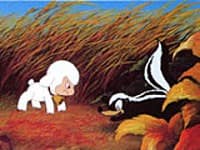
"Ringing Bell," also known as "Chirin no Suzu," is a 1978 anime film directed by Masami Hata and produced by Sanrio. The story centers on Chirin, a cheerful and innocent lamb living on a peaceful farm with his mother. Chirin's life is idyllic, filled with the warmth of maternal love and the safety of his surroundings. However, this tranquility is shattered when a wolf attacks the farm one night, killing Chirin's mother. This traumatic event marks a turning point in Chirin's life, as he becomes consumed by a desire for revenge.
Driven by grief and anger, Chirin leaves the farm to seek out the wolf, determined to avenge his mother's death. He eventually finds the wolf, a fearsome and solitary predator named Woe. Instead of killing Chirin, Woe takes the lamb under his wing, teaching him the harsh realities of survival in the wild. Over time, Chirin undergoes a profound transformation, both physically and emotionally. He grows stronger, adopting the wolf's predatory instincts and abandoning his former innocence. The once-soft lamb becomes a hardened, ruthless creature, mirroring the very being he sought to destroy.
As the years pass, Chirin's connection to his past life fades, and he fully embraces the wolf's way of life. However, this transformation comes at a cost. Chirin's journey is marked by loss, isolation, and the erosion of his original identity. The story explores themes of vengeance, the cycle of violence, and the consequences of abandoning one's inherent nature. The narrative culminates in a poignant and tragic resolution, underscoring the futility of Chirin's quest and the irreversible changes he undergoes.
The characters are central to the story's emotional impact. Chirin's evolution from a gentle lamb to a hardened predator is depicted with striking clarity, highlighting the psychological toll of his choices. Woe, the wolf, serves as both a mentor and a symbol of the brutal world Chirin enters. His cold, pragmatic demeanor contrasts sharply with Chirin's initial innocence, emphasizing the moral ambiguity of their relationship. The film's narrative structure and character development create a compelling exploration of its central themes, making "Ringing Bell" a memorable and thought-provoking work in the anime genre.
Driven by grief and anger, Chirin leaves the farm to seek out the wolf, determined to avenge his mother's death. He eventually finds the wolf, a fearsome and solitary predator named Woe. Instead of killing Chirin, Woe takes the lamb under his wing, teaching him the harsh realities of survival in the wild. Over time, Chirin undergoes a profound transformation, both physically and emotionally. He grows stronger, adopting the wolf's predatory instincts and abandoning his former innocence. The once-soft lamb becomes a hardened, ruthless creature, mirroring the very being he sought to destroy.
As the years pass, Chirin's connection to his past life fades, and he fully embraces the wolf's way of life. However, this transformation comes at a cost. Chirin's journey is marked by loss, isolation, and the erosion of his original identity. The story explores themes of vengeance, the cycle of violence, and the consequences of abandoning one's inherent nature. The narrative culminates in a poignant and tragic resolution, underscoring the futility of Chirin's quest and the irreversible changes he undergoes.
The characters are central to the story's emotional impact. Chirin's evolution from a gentle lamb to a hardened predator is depicted with striking clarity, highlighting the psychological toll of his choices. Woe, the wolf, serves as both a mentor and a symbol of the brutal world Chirin enters. His cold, pragmatic demeanor contrasts sharply with Chirin's initial innocence, emphasizing the moral ambiguity of their relationship. The film's narrative structure and character development create a compelling exploration of its central themes, making "Ringing Bell" a memorable and thought-provoking work in the anime genre.
Cast
Comment(s)
Staff
- DirectorMasami Hata
- Original story
- Director of PhotographyIwao Yamaki
- MusicTaku Izumi
- ArtYukio Abe
- ProducerTsunemasa HatanoShintarō Tsuji
Production
- ProductionSanrio
Relations
Recommendations based on shared tags.