Manga
Description
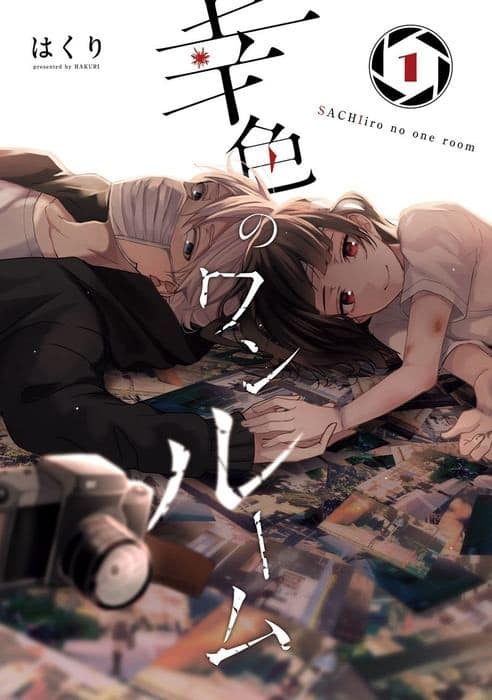
"One Room of Happiness" is a psychological drama manga that explores themes of despair, hope, and human connection. The story centers around Niko, a young man living in a bleak, dystopian world where society has collapsed, and survival is a daily struggle. Niko’s life takes a dramatic turn when he encounters a mysterious girl named Futaba, who claims to be an angel sent to grant him happiness. However, her presence is not as benevolent as it initially seems, and her true intentions remain shrouded in ambiguity.
Niko, burdened by guilt and trauma from his past, is initially skeptical of Futaba’s claims. As their relationship develops, it becomes clear that Futaba’s mission is tied to Niko’s deepest regrets and unresolved pain. The narrative delves into Niko’s backstory, revealing the tragic events that led to his current state of despair, including the loss of loved ones and his own moral failings. Futaba’s role oscillates between savior and tormentor, as she forces Niko to confront his inner demons while offering glimpses of redemption.
The story is structured around a series of emotional and psychological challenges that Niko must face, often blurring the line between reality and illusion. Futaba’s enigmatic nature and the surreal, dreamlike sequences add layers of complexity to the narrative, keeping the reader questioning her true purpose. Supporting characters, such as Niko’s estranged sister and other survivors, provide additional context to the world and its moral decay, highlighting the broader societal collapse that serves as the backdrop for Niko’s personal journey.
As the plot progresses, the relationship between Niko and Futaba becomes increasingly fraught, with moments of tenderness juxtaposed against acts of cruelty. The manga explores the duality of human nature, the weight of guilt, and the possibility of finding meaning in a seemingly meaningless world. The ending leaves much open to interpretation, with the ultimate resolution of Niko’s quest for happiness remaining ambiguous, reflecting the series’ overarching themes of existential uncertainty and the search for redemption.
Niko, burdened by guilt and trauma from his past, is initially skeptical of Futaba’s claims. As their relationship develops, it becomes clear that Futaba’s mission is tied to Niko’s deepest regrets and unresolved pain. The narrative delves into Niko’s backstory, revealing the tragic events that led to his current state of despair, including the loss of loved ones and his own moral failings. Futaba’s role oscillates between savior and tormentor, as she forces Niko to confront his inner demons while offering glimpses of redemption.
The story is structured around a series of emotional and psychological challenges that Niko must face, often blurring the line between reality and illusion. Futaba’s enigmatic nature and the surreal, dreamlike sequences add layers of complexity to the narrative, keeping the reader questioning her true purpose. Supporting characters, such as Niko’s estranged sister and other survivors, provide additional context to the world and its moral decay, highlighting the broader societal collapse that serves as the backdrop for Niko’s personal journey.
As the plot progresses, the relationship between Niko and Futaba becomes increasingly fraught, with moments of tenderness juxtaposed against acts of cruelty. The manga explores the duality of human nature, the weight of guilt, and the possibility of finding meaning in a seemingly meaningless world. The ending leaves much open to interpretation, with the ultimate resolution of Niko’s quest for happiness remaining ambiguous, reflecting the series’ overarching themes of existential uncertainty and the search for redemption.
Comment(s)
Staff
- Story & ArtHakuri
Recommendations
Empfehlungen auf Basis gemeinsamer Kategorien.