Manga
Description
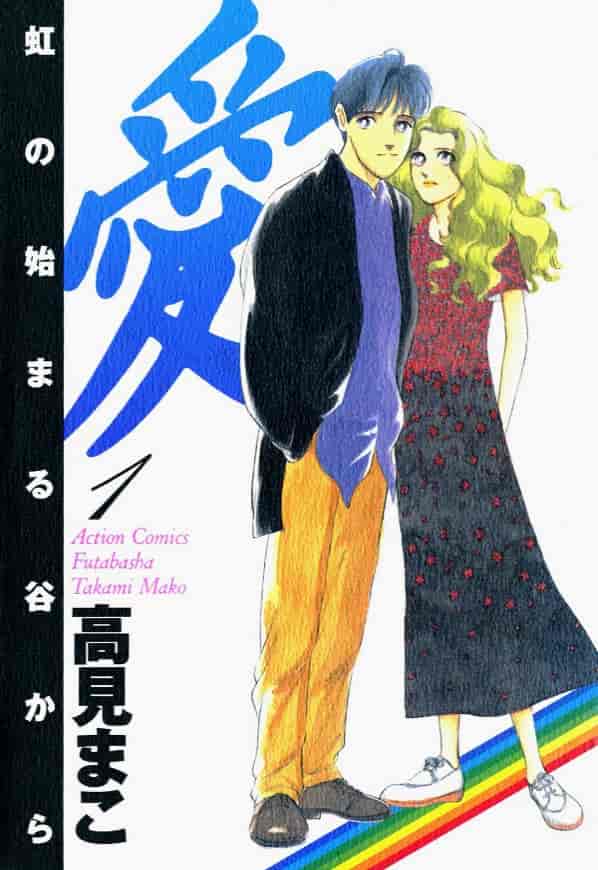
"Ai: Niji no Hajimaru Tani kara" is a manga series that explores themes of love, loss, and self-discovery through its intricate narrative and well-developed characters. The story centers around Ai, a young woman who returns to her rural hometown after the death of her estranged father. Upon her arrival, she is confronted with unresolved emotions and fragmented memories of her childhood, which she had long suppressed.
The narrative unfolds as Ai reconnects with her past, particularly through her interactions with childhood friend Kaito, who has remained in the town and now runs a small inn. Kaito serves as a grounding presence for Ai, helping her navigate the complexities of her grief and the lingering questions about her father’s life and their strained relationship. As Ai delves deeper into her father’s history, she uncovers secrets about his life, including a mysterious woman named Yuki, who played a significant role in his past.
The story is structured around Ai’s journey of reconciliation, both with her father’s memory and with herself. Flashbacks are used effectively to reveal key moments from her childhood, shedding light on the emotional distance that grew between her and her father. These memories are interwoven with present-day events, creating a layered narrative that highlights the impact of the past on the present.
Supporting characters, such as Ai’s mother and other townsfolk, add depth to the story, providing additional perspectives on her father’s life and the community’s dynamics. The rural setting plays a significant role, with its serene landscapes and close-knit atmosphere serving as a backdrop for Ai’s emotional journey. The town itself becomes a character of sorts, symbolizing both the comfort and the constraints of returning to one’s roots.
As the story progresses, Ai’s relationship with Kaito evolves, adding a romantic subplot that complements the central themes of healing and self-discovery. Their bond is portrayed with subtlety, reflecting the gradual process of rebuilding trust and understanding. The manga balances its emotional weight with moments of warmth and humor, creating a narrative that feels both poignant and grounded.
The climax of the story revolves around Ai’s confrontation with the truth about her father and Yuki, leading to a resolution that is both bittersweet and hopeful. By the end, Ai gains a deeper understanding of her father’s choices and her own place in the world, allowing her to move forward with a renewed sense of purpose. The manga concludes with a sense of closure, emphasizing the importance of confronting the past to embrace the future.
The narrative unfolds as Ai reconnects with her past, particularly through her interactions with childhood friend Kaito, who has remained in the town and now runs a small inn. Kaito serves as a grounding presence for Ai, helping her navigate the complexities of her grief and the lingering questions about her father’s life and their strained relationship. As Ai delves deeper into her father’s history, she uncovers secrets about his life, including a mysterious woman named Yuki, who played a significant role in his past.
The story is structured around Ai’s journey of reconciliation, both with her father’s memory and with herself. Flashbacks are used effectively to reveal key moments from her childhood, shedding light on the emotional distance that grew between her and her father. These memories are interwoven with present-day events, creating a layered narrative that highlights the impact of the past on the present.
Supporting characters, such as Ai’s mother and other townsfolk, add depth to the story, providing additional perspectives on her father’s life and the community’s dynamics. The rural setting plays a significant role, with its serene landscapes and close-knit atmosphere serving as a backdrop for Ai’s emotional journey. The town itself becomes a character of sorts, symbolizing both the comfort and the constraints of returning to one’s roots.
As the story progresses, Ai’s relationship with Kaito evolves, adding a romantic subplot that complements the central themes of healing and self-discovery. Their bond is portrayed with subtlety, reflecting the gradual process of rebuilding trust and understanding. The manga balances its emotional weight with moments of warmth and humor, creating a narrative that feels both poignant and grounded.
The climax of the story revolves around Ai’s confrontation with the truth about her father and Yuki, leading to a resolution that is both bittersweet and hopeful. By the end, Ai gains a deeper understanding of her father’s choices and her own place in the world, allowing her to move forward with a renewed sense of purpose. The manga concludes with a sense of closure, emphasizing the importance of confronting the past to embrace the future.
Comment(s)
Staff
- Story & ArtMako Takami
Recommendations
Empfehlungen auf Basis gemeinsamer Kategorien.