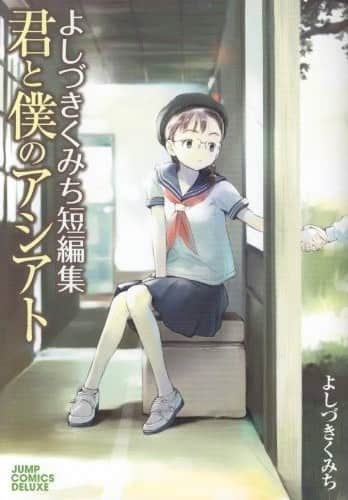
Manga
Description
"Kimi to Boku no Ashiato" is a manga series that explores themes of identity, memory, and human connection through a blend of mystery and psychological drama. The narrative centers on a high school student named Yuuki, who wakes up one day to find himself in an unfamiliar town with no recollection of his past. As he navigates this strange environment, Yuuki encounters a girl named Natsume, who claims to know him and insists they are childhood friends. However, Yuuki has no memory of her or their shared history.
The story unfolds as Yuuki attempts to piece together his fragmented memories while grappling with the unsettling realization that his sense of self may be constructed or manipulated. Natsume, who appears to hold the key to his past, becomes both a source of comfort and confusion for Yuuki. Her behavior is enigmatic, and her motivations remain unclear, adding layers of tension and intrigue to their interactions. As Yuuki delves deeper into his past, he uncovers unsettling truths about the town, its inhabitants, and the nature of his own existence.
The narrative is structured around a series of revelations that challenge the reader’s understanding of reality and perception. Supporting characters, such as Yuuki’s classmates and townspeople, play pivotal roles in unraveling the mystery, each contributing fragments of information that gradually form a larger picture. The town itself serves as a symbolic backdrop, with its eerie atmosphere and recurring motifs of footprints and shadows reinforcing the themes of memory and identity.
As the story progresses, the line between truth and illusion becomes increasingly blurred. Yuuki’s journey is marked by moments of introspection and confrontation, forcing him to question not only his memories but also his sense of agency and purpose. The relationship between Yuuki and Natsume evolves in tandem with these revelations, shifting from one of tentative trust to a more complex dynamic fraught with ambiguity and emotional weight.
The manga’s pacing is deliberate, with a focus on building suspense and exploring the psychological dimensions of its characters. The interplay between Yuuki’s internal struggles and the external mysteries of the town creates a narrative that is both introspective and plot-driven. By the conclusion, the series offers a resolution that ties together its central themes while leaving room for interpretation, inviting readers to reflect on the nature of identity and the impact of memory on human relationships.
The story unfolds as Yuuki attempts to piece together his fragmented memories while grappling with the unsettling realization that his sense of self may be constructed or manipulated. Natsume, who appears to hold the key to his past, becomes both a source of comfort and confusion for Yuuki. Her behavior is enigmatic, and her motivations remain unclear, adding layers of tension and intrigue to their interactions. As Yuuki delves deeper into his past, he uncovers unsettling truths about the town, its inhabitants, and the nature of his own existence.
The narrative is structured around a series of revelations that challenge the reader’s understanding of reality and perception. Supporting characters, such as Yuuki’s classmates and townspeople, play pivotal roles in unraveling the mystery, each contributing fragments of information that gradually form a larger picture. The town itself serves as a symbolic backdrop, with its eerie atmosphere and recurring motifs of footprints and shadows reinforcing the themes of memory and identity.
As the story progresses, the line between truth and illusion becomes increasingly blurred. Yuuki’s journey is marked by moments of introspection and confrontation, forcing him to question not only his memories but also his sense of agency and purpose. The relationship between Yuuki and Natsume evolves in tandem with these revelations, shifting from one of tentative trust to a more complex dynamic fraught with ambiguity and emotional weight.
The manga’s pacing is deliberate, with a focus on building suspense and exploring the psychological dimensions of its characters. The interplay between Yuuki’s internal struggles and the external mysteries of the town creates a narrative that is both introspective and plot-driven. By the conclusion, the series offers a resolution that ties together its central themes while leaving room for interpretation, inviting readers to reflect on the nature of identity and the impact of memory on human relationships.
Comment(s)
Staff
- Story & ArtKumichi Yoshizuki
Recommendations
Empfehlungen auf Basis gemeinsamer Kategorien.