Manga
Description
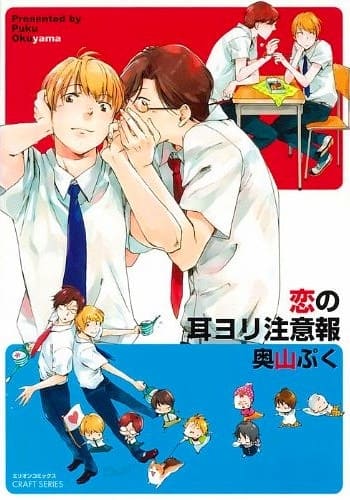
"Warning! Whispers of Love" is a romance manga that explores themes of unspoken feelings, misunderstandings, and the complexities of young love. The narrative centers on two main characters, Aoi and Haruto, who are classmates but struggle to communicate their true emotions. Aoi is a reserved and introverted girl who often keeps her thoughts to herself, while Haruto is outgoing and popular, though he hides his insecurities behind a confident facade. Their interactions are marked by a series of near-misses and misinterpretations, as both characters fail to recognize the subtle signs of affection they show each other.
The story begins with Aoi developing a quiet crush on Haruto after he helps her during a school event. However, she believes her feelings are one-sided and chooses to keep them hidden, fearing rejection. Haruto, on the other hand, begins to notice Aoi’s presence more but misinterprets her shyness as disinterest. This dynamic creates a tension-filled atmosphere as their mutual attraction grows, yet neither is willing to take the first step.
Secondary characters, such as Aoi’s best friend, Yuna, and Haruto’s childhood friend, Riku, play significant roles in the story. Yuna often encourages Aoi to be more assertive, while Riku provides Haruto with advice, though his own feelings for Aoi complicate matters. These relationships add layers to the narrative, introducing moments of jealousy, rivalry, and self-reflection.
As the story progresses, small gestures and fleeting moments of connection begin to bridge the gap between Aoi and Haruto. A pivotal turning point occurs during a school festival, where a series of misunderstandings nearly drives them apart. However, a heartfelt confession from Aoi, prompted by Yuna’s encouragement, finally brings their feelings to light. Haruto reciprocates, revealing that he had been struggling with his own insecurities about being worthy of her affection.
The manga concludes with Aoi and Haruto navigating their new relationship, learning to communicate more openly and support each other. The resolution emphasizes growth and the importance of vulnerability in love, leaving the characters in a hopeful yet realistic place. The story’s pacing and emotional depth make it a compelling exploration of young love and the challenges of expressing one’s true feelings.
The story begins with Aoi developing a quiet crush on Haruto after he helps her during a school event. However, she believes her feelings are one-sided and chooses to keep them hidden, fearing rejection. Haruto, on the other hand, begins to notice Aoi’s presence more but misinterprets her shyness as disinterest. This dynamic creates a tension-filled atmosphere as their mutual attraction grows, yet neither is willing to take the first step.
Secondary characters, such as Aoi’s best friend, Yuna, and Haruto’s childhood friend, Riku, play significant roles in the story. Yuna often encourages Aoi to be more assertive, while Riku provides Haruto with advice, though his own feelings for Aoi complicate matters. These relationships add layers to the narrative, introducing moments of jealousy, rivalry, and self-reflection.
As the story progresses, small gestures and fleeting moments of connection begin to bridge the gap between Aoi and Haruto. A pivotal turning point occurs during a school festival, where a series of misunderstandings nearly drives them apart. However, a heartfelt confession from Aoi, prompted by Yuna’s encouragement, finally brings their feelings to light. Haruto reciprocates, revealing that he had been struggling with his own insecurities about being worthy of her affection.
The manga concludes with Aoi and Haruto navigating their new relationship, learning to communicate more openly and support each other. The resolution emphasizes growth and the importance of vulnerability in love, leaving the characters in a hopeful yet realistic place. The story’s pacing and emotional depth make it a compelling exploration of young love and the challenges of expressing one’s true feelings.
Comment(s)
Staff
- Story & ArtPuku Okuyama
Recommendations
Empfehlungen auf Basis gemeinsamer Kategorien.