Manga
Description
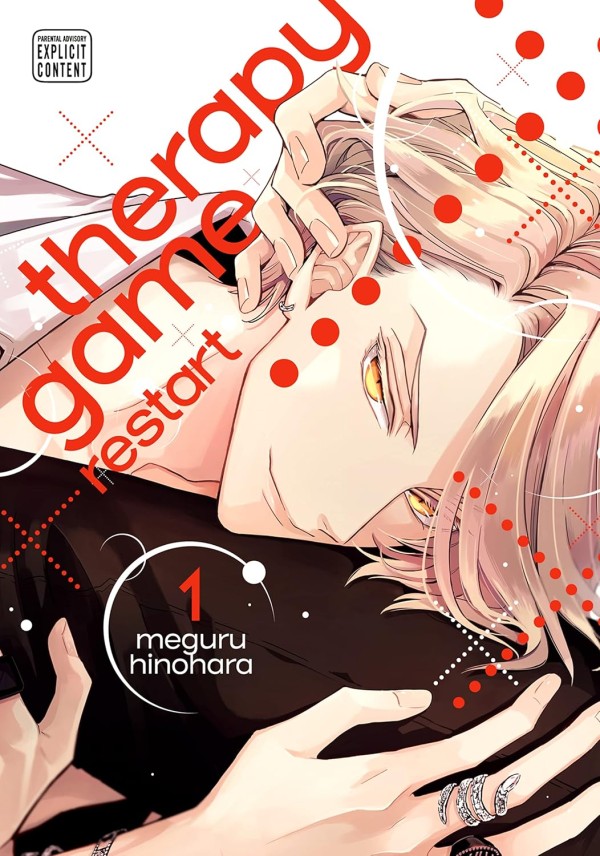
Shizuma Ikushima has graduated from veterinary school and is now beginning his career as a veterinarian, but his new job leaves him with far less time to spend with his boyfriend, Minato Mito. The couple, who became an official pair by the end of the Therapy Game story, decide to take the next logical step and agree to move in together. However, this transition to a more serious, domestic partnership is immediately tested by the pressures of Shizuma’s demanding new profession and the lingering effects of Minato’s past traumas.
The central characters remain Minato and Shizuma. Minato is a proud and openly gay photographer who also works at Trois Lapins, the rabbit-themed shop owned by his older brother, Itsuki. His childhood was marked by the collapse of his parents' relationship and their subsequent deaths, which left him with a deep-seated inability to trust in the permanence of romantic relationships. Shizuma, now a working veterinarian, is Shohei Ikushima’s older brother and identifies as bisexual. Having ended a previous relationship after being cheated on, he is earnest and devoted, but his focus on establishing his career threatens to unintentionally repeat patterns of neglect. The story is set primarily against the backdrop of their daily lives, navigating the spaces of Minato’s workplace, the rabbit shop, and Shizuma’s new veterinary clinic.
A major narrative arc in Therapy Game Restart revolves around the struggle to cohabit. While Shizuma is eager to move forward, Minato hesitates, needing time to process a level of commitment he never thought he would experience. This process forces Minato to confront his deep-seated fears of abandonment and broken promises, while Shizuma must learn to balance his professional ambitions with the needs of his partner, a lesson reinforced by his colleague Tatsumi. The harmony of their relationship is further threatened by external figures at Shizuma’s workplace. His boss, Yamamoto, develops an inappropriate personal interest in him, and later, the clinic’s director, Akira Onodera, proves to be a difficult and socially detached superior, creating a stressful and demanding work environment for the new veterinarian.
As these professional pressures cause Shizuma to miss important dates and apartment viewings, Minato struggles with feelings of loneliness, trying to be supportive without appearing too needy. The narrative focuses on how the couple uses direct communication and empathy to overcome these hurdles rather than relying on typical romance genre miscommunication. A poignant symbolic element appears when Minato takes home an unbloomed cherry blossom branch from his brother’s shop, caring for it as a quiet companion during his loneliness, with its eventual blooming mirroring the slow, careful growth of their shared life together. The sequel continues to follow these two as they learn to support each other’s individual growth while building a life as a committed couple.
The central characters remain Minato and Shizuma. Minato is a proud and openly gay photographer who also works at Trois Lapins, the rabbit-themed shop owned by his older brother, Itsuki. His childhood was marked by the collapse of his parents' relationship and their subsequent deaths, which left him with a deep-seated inability to trust in the permanence of romantic relationships. Shizuma, now a working veterinarian, is Shohei Ikushima’s older brother and identifies as bisexual. Having ended a previous relationship after being cheated on, he is earnest and devoted, but his focus on establishing his career threatens to unintentionally repeat patterns of neglect. The story is set primarily against the backdrop of their daily lives, navigating the spaces of Minato’s workplace, the rabbit shop, and Shizuma’s new veterinary clinic.
A major narrative arc in Therapy Game Restart revolves around the struggle to cohabit. While Shizuma is eager to move forward, Minato hesitates, needing time to process a level of commitment he never thought he would experience. This process forces Minato to confront his deep-seated fears of abandonment and broken promises, while Shizuma must learn to balance his professional ambitions with the needs of his partner, a lesson reinforced by his colleague Tatsumi. The harmony of their relationship is further threatened by external figures at Shizuma’s workplace. His boss, Yamamoto, develops an inappropriate personal interest in him, and later, the clinic’s director, Akira Onodera, proves to be a difficult and socially detached superior, creating a stressful and demanding work environment for the new veterinarian.
As these professional pressures cause Shizuma to miss important dates and apartment viewings, Minato struggles with feelings of loneliness, trying to be supportive without appearing too needy. The narrative focuses on how the couple uses direct communication and empathy to overcome these hurdles rather than relying on typical romance genre miscommunication. A poignant symbolic element appears when Minato takes home an unbloomed cherry blossom branch from his brother’s shop, caring for it as a quiet companion during his loneliness, with its eventual blooming mirroring the slow, careful growth of their shared life together. The sequel continues to follow these two as they learn to support each other’s individual growth while building a life as a committed couple.
Comment(s)
Staff
- Story & ArtMeguru Hinohara
Recommendations
Empfehlungen auf Basis gemeinsamer Kategorien.