Manga
Description
A tour bus veers off a mountain road, plunging a family into an unthinkable reality. Heisuke Sugita loses his wife, Naoko, in the accident, but his eleven-year-old daughter, Monami, survives. When Monami wakes from her coma, she speaks with her mother’s voice, possesses her mother’s memories, and exhibits her mother’s mannerisms. Naoko’s consciousness has somehow taken up residence in their daughter’s body, while Monami’s own mind has seemingly vanished. Fearing institutionalization or media sensationalism, Heisuke and the being who is both his wife and his daughter agree to keep the truth hidden from the world. They face the impossible task of rebuilding a family from the inside out: in public, he must mourn his wife while raising a daughter who is becoming a stranger, and in private, he shares a home and a secret with the woman he married, trapped in a child’s aging body.
The story follows Heisuke and Naoko’s struggle to navigate this bizarre new existence. As the years pass, Naoko, now living as Monami, finds herself presented with a second chance at youth. Freed from the responsibilities of being a wife and the expectations placed on an adult woman in Japanese society, she re-enters adolescence with an adult’s perspective. She becomes determined to pursue opportunities she previously missed, including gaining an education and building an independent career. This journey of rediscovery, however, comes at a steep cost. Heisuke is forced to watch his wife-turned-daughter grow up again, experiencing the normal milestones of a teenage girl—friends, crushes, flirtations—but through the agonizing lens of a husband witnessing his spouse drift away. His role blurs painfully between parent and partner, leading to jealousy, possessiveness, and a deep sense of loss that is impossible to articulate to anyone around him.
The primary conflict lies not with an external villain, but within the couple’s fractured relationship and their own psyches. Heisuke is the main point-of-view character, and his perspective grounds the supernatural premise in a raw, mundane reality. He is not a detective or a hero, but an ordinary factory worker trying to make sense of an extraordinary loss that no one else can see or understand. The narrative explores the question of identity: is Naoko still his wife? Is she now his daughter? Or is she a completely new person forged from two lives? For Naoko, the central conflict is between her enduring love for Heisuke and her exhilarating, painful liberation into a second youth, where she has the power to become someone entirely new. A deep, unspoken tension arises as they both realize that for her to truly live this new life, she may ultimately have to let go of the old one. The story concludes not with a return to normalcy, but with an acceptance of an impossible situation and the quiet, tragic decision to move forward, separately, into a future where their love takes a form they never expected.
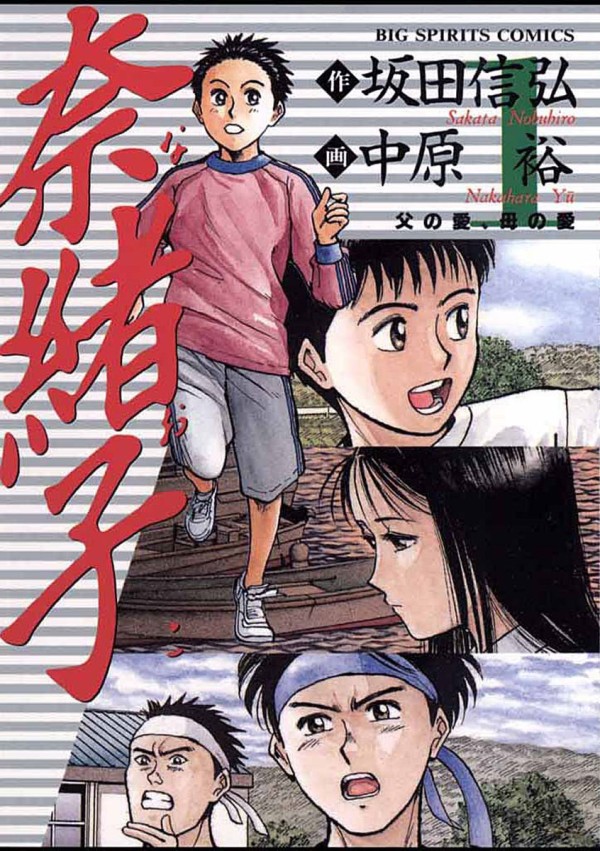
A separate work sharing the title Naoko is a long-running sports manga by Nobuhiro Sakata and Yu Nakahara. Serialized from 1994 to 2003, this series centers on Yusuke Iki, a fiercely talented and rebellious runner known as the "Gale of the Japan Sea." Set largely on the fictional island of Hamiri, the story follows Yusuke’s journey to become a top marathon runner, driven by a deep competitive fire and personal rivalries. Despite being named after her, the character of Naoko Shinomiya, the wealthy young daughter of a corporate scion, appears only sparingly, primarily as a figure of inspiration or as a spectator cheering Yusuke on from the sidelines. The narrative focuses more intensely on the world of competitive athletics, the physical and psychological demands of running, and Yusuke’s relationships with his family and fellow runners.
Another manga featuring the name is Shounen Princess: Putri Harimau Naoko by Seishiro Matsuri. This single-volume romance comedy centers on Naotora Kusunoki, a young man who is forced by his ambitious father to dress as a girl and take the name Nao to fulfill a marriage contract with the prince of the wealthy Southeast Asian nation of Urunei. Upon arrival, Nao discovers the prince is actually a woman in disguise, Princess Ahmad, who has been hiding her true identity to secure the throne. The plot follows their developing relationship, Nao’s discovery of his own identity as Putri Harimau, a legendary reincarnated tiger spirit, and the various political intrigues and assassination attempts that threaten the royal family.
The story follows Heisuke and Naoko’s struggle to navigate this bizarre new existence. As the years pass, Naoko, now living as Monami, finds herself presented with a second chance at youth. Freed from the responsibilities of being a wife and the expectations placed on an adult woman in Japanese society, she re-enters adolescence with an adult’s perspective. She becomes determined to pursue opportunities she previously missed, including gaining an education and building an independent career. This journey of rediscovery, however, comes at a steep cost. Heisuke is forced to watch his wife-turned-daughter grow up again, experiencing the normal milestones of a teenage girl—friends, crushes, flirtations—but through the agonizing lens of a husband witnessing his spouse drift away. His role blurs painfully between parent and partner, leading to jealousy, possessiveness, and a deep sense of loss that is impossible to articulate to anyone around him.
The primary conflict lies not with an external villain, but within the couple’s fractured relationship and their own psyches. Heisuke is the main point-of-view character, and his perspective grounds the supernatural premise in a raw, mundane reality. He is not a detective or a hero, but an ordinary factory worker trying to make sense of an extraordinary loss that no one else can see or understand. The narrative explores the question of identity: is Naoko still his wife? Is she now his daughter? Or is she a completely new person forged from two lives? For Naoko, the central conflict is between her enduring love for Heisuke and her exhilarating, painful liberation into a second youth, where she has the power to become someone entirely new. A deep, unspoken tension arises as they both realize that for her to truly live this new life, she may ultimately have to let go of the old one. The story concludes not with a return to normalcy, but with an acceptance of an impossible situation and the quiet, tragic decision to move forward, separately, into a future where their love takes a form they never expected.
A separate work sharing the title Naoko is a long-running sports manga by Nobuhiro Sakata and Yu Nakahara. Serialized from 1994 to 2003, this series centers on Yusuke Iki, a fiercely talented and rebellious runner known as the "Gale of the Japan Sea." Set largely on the fictional island of Hamiri, the story follows Yusuke’s journey to become a top marathon runner, driven by a deep competitive fire and personal rivalries. Despite being named after her, the character of Naoko Shinomiya, the wealthy young daughter of a corporate scion, appears only sparingly, primarily as a figure of inspiration or as a spectator cheering Yusuke on from the sidelines. The narrative focuses more intensely on the world of competitive athletics, the physical and psychological demands of running, and Yusuke’s relationships with his family and fellow runners.
Another manga featuring the name is Shounen Princess: Putri Harimau Naoko by Seishiro Matsuri. This single-volume romance comedy centers on Naotora Kusunoki, a young man who is forced by his ambitious father to dress as a girl and take the name Nao to fulfill a marriage contract with the prince of the wealthy Southeast Asian nation of Urunei. Upon arrival, Nao discovers the prince is actually a woman in disguise, Princess Ahmad, who has been hiding her true identity to secure the throne. The plot follows their developing relationship, Nao’s discovery of his own identity as Putri Harimau, a legendary reincarnated tiger spirit, and the various political intrigues and assassination attempts that threaten the royal family.
Comment(s)
Staff
- StoryNobuhiro Sakata
- Art
Recommendations
Empfehlungen auf Basis gemeinsamer Kategorien.