Manga
Description
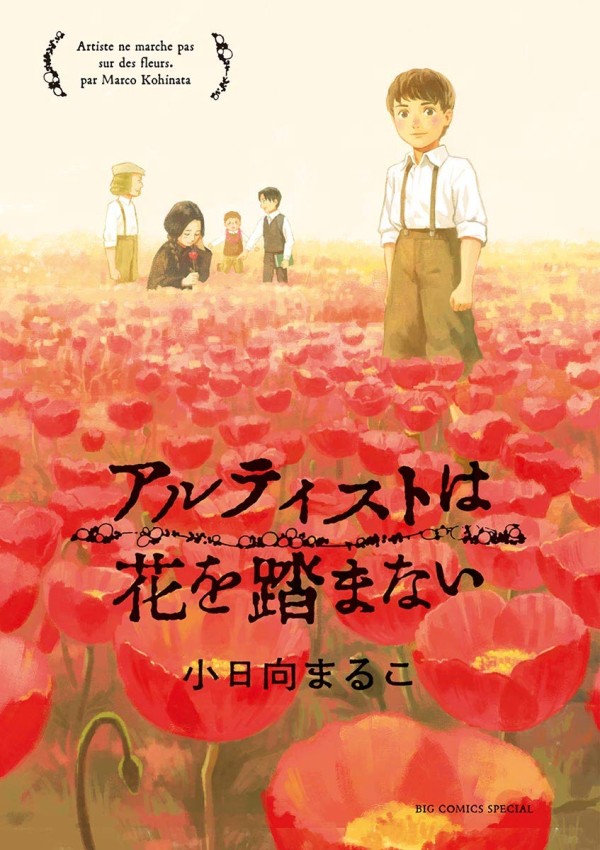
After World War I, the scars remain deep in a small French town near the German border. In the 1930s, as the shadow of another war slowly looms, a group of children and their families try to find moments of joy and cling to hope in a world still heavy with loss. The story revolves around a handful of young friends — Momo, Lille, Jean, Alain, and Marc — each navigating their own struggles in a community reshaped by grief and economic hardship.
Momo is a perpetually cheerful boy whose father once played music in a factory to entertain workers but lost that job with the arrival of radio. Momo himself takes up work at a bowling alley, but even that small refuge must close. Lille works as a postwoman, taking pride in delivering letters, yet many envelopes she carries have no surviving recipients. She cannot bring herself to throw them away, cherishing the smiles that each delivery once brought. Other chapters follow townspeople caught between ordinary life and the approaching dread of a second world war: a rivalry between two cafés that dress only in black or white, a woman painstakingly rebuilding a brick road, and muttered remarks about Jews that signal the rising tide of intolerance.
The narrative is built from interconnected vignettes, each focused on a different resident while weaving the others into the background. The tone is bittersweet — painful but warm, never sentimental. Through the eyes of its young protagonists, the manga captures a last gasp of community and shared humanity before the darkness of the 1940s descends. The children believe in a peaceful, happy future even as the adults around them carry the invisible wounds of the past war and the fragile hope that the worst is over.
Momo is a perpetually cheerful boy whose father once played music in a factory to entertain workers but lost that job with the arrival of radio. Momo himself takes up work at a bowling alley, but even that small refuge must close. Lille works as a postwoman, taking pride in delivering letters, yet many envelopes she carries have no surviving recipients. She cannot bring herself to throw them away, cherishing the smiles that each delivery once brought. Other chapters follow townspeople caught between ordinary life and the approaching dread of a second world war: a rivalry between two cafés that dress only in black or white, a woman painstakingly rebuilding a brick road, and muttered remarks about Jews that signal the rising tide of intolerance.
The narrative is built from interconnected vignettes, each focused on a different resident while weaving the others into the background. The tone is bittersweet — painful but warm, never sentimental. Through the eyes of its young protagonists, the manga captures a last gasp of community and shared humanity before the darkness of the 1940s descends. The children believe in a peaceful, happy future even as the adults around them carry the invisible wounds of the past war and the fragile hope that the worst is over.
Comment(s)
Staff
- Story & ArtMarco Kohinata
Recommendations
Empfehlungen auf Basis gemeinsamer Kategorien.