Manga
Description
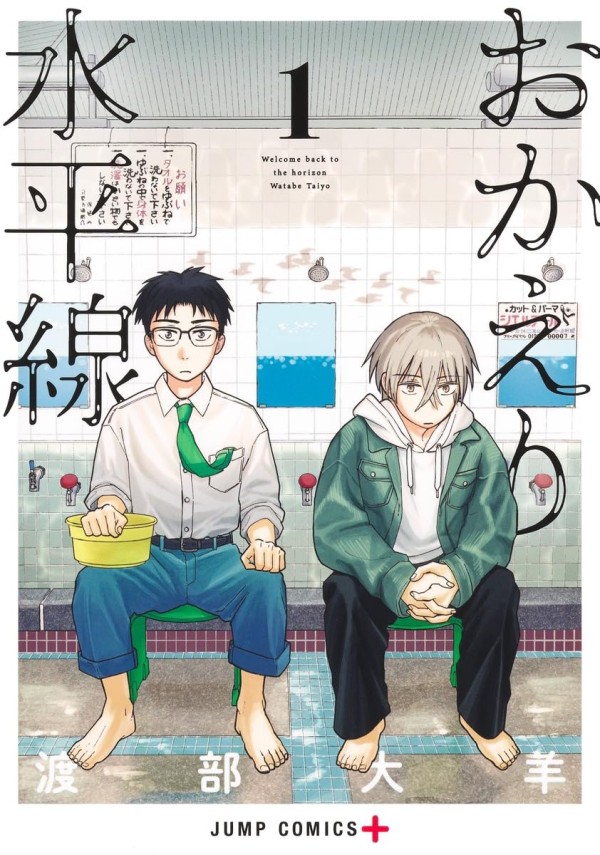
The story takes place in a quiet seaside town centered around an old public bathhouse called Kaki no Yu. High school student Ryoma Kakiuchi helps his grandfather Katsuomi run the bathhouse after school, living a steady, uneventful life. One day, while preparing to open for business, a boy named Reo Shibasaki appears holding a photograph of Ryoma's deceased father. Reo explains that he came to meet the man in the picture, claiming to be the father's illegitimate son. Ryoma's father had died some time ago, and Reo, whose mother had disappeared, has nowhere else to go. After a moment of shock, Ryoma decides that the children involved are not at fault and offers to let Reo stay. Katsuomi supports the decision, and Reo begins living at the bathhouse and helping with the work.
Reo transfers into Ryoma's class at school. The two half-brothers, both the same age, slowly learn to coexist. Reo is guarded and carries the weight of a lonely upbringing, while Ryoma is quiet and responsible but uncertain about how to handle this sudden family secret. Through shared chores at the bathhouse, meals together, and small daily routines, trust begins to form between them.
A female classmate named Akino becomes a regular visitor to the bathhouse after her home water heater breaks. She gradually becomes part of their circle, bringing a gentle, stabilizing presence. Another classmate, Arimon, discovers the bathhouse and pressures Ryoma into writing a script for the school cultural festival play. Akino volunteers for the costume committee, and the preparations draw the group closer together. Meanwhile, Reo becomes suspicious of Ryoma's actions and distances himself, leading to friction that forces both boys to confront their feelings about their shared father and their place in each other's lives.
The bathhouse itself functions as a gathering place for the local community, and the regular customers help reinforce a sense of belonging. Katsuomi, the grandfather, provides steady guidance without interfering too much, allowing the boys to work through their issues on their own terms. The story follows the gradual, unforced development of an unconventional family, anchored by the daily rhythm of the bathhouse and the small, meaningful interactions that build trust and understanding between its members.
Reo transfers into Ryoma's class at school. The two half-brothers, both the same age, slowly learn to coexist. Reo is guarded and carries the weight of a lonely upbringing, while Ryoma is quiet and responsible but uncertain about how to handle this sudden family secret. Through shared chores at the bathhouse, meals together, and small daily routines, trust begins to form between them.
A female classmate named Akino becomes a regular visitor to the bathhouse after her home water heater breaks. She gradually becomes part of their circle, bringing a gentle, stabilizing presence. Another classmate, Arimon, discovers the bathhouse and pressures Ryoma into writing a script for the school cultural festival play. Akino volunteers for the costume committee, and the preparations draw the group closer together. Meanwhile, Reo becomes suspicious of Ryoma's actions and distances himself, leading to friction that forces both boys to confront their feelings about their shared father and their place in each other's lives.
The bathhouse itself functions as a gathering place for the local community, and the regular customers help reinforce a sense of belonging. Katsuomi, the grandfather, provides steady guidance without interfering too much, allowing the boys to work through their issues on their own terms. The story follows the gradual, unforced development of an unconventional family, anchored by the daily rhythm of the bathhouse and the small, meaningful interactions that build trust and understanding between its members.
Comment(s)
Staff
- Story & ArtTaiyō Watabe
Recommendations
Empfehlungen auf Basis gemeinsamer Kategorien.