Manga
Description
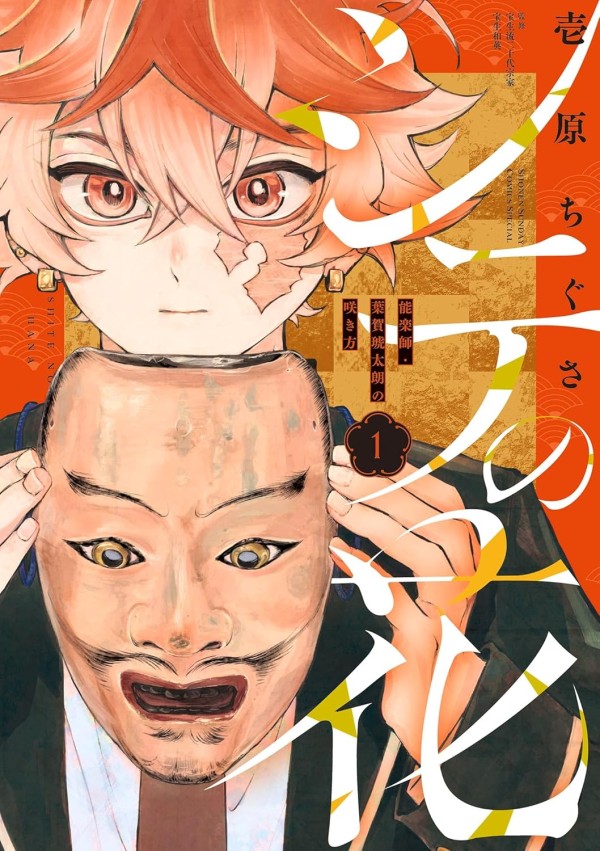
Kotaro Haga is a sixteen-year-old high school boy and the star dancer of a popular dance-vocal group, yet he feels a persistent dissatisfaction with his career. During a live performance, an accident leaves him with a burn scar on his face, forcing him to announce his retirement from the entertainment world. After losing his sense of purpose, he discovers a ticket left by his late grandmother and attends a Noh performance at the Hōshō Noh Theatre. There he is profoundly moved by the sight of the lead actor—the shite—who, masked and alone, shoulders the tragedy of the story. Inspired, Kotaro impulsively asks, "How does one become a Noh performer?" and begins walking a new path.
Kotaro is taken under the wing of the Hōshō school, a prominent Noh lineage supervised by the hereditary head of the Hōshō family. He becomes a disciple of the master Ushi Mitsuyama and trains alongside a diverse group of young Noh artists. Among them are the genius heir Hōshō Shiryū, a seventeen-year-old prodigy who quickly recognizes Kotaro’s latent talent; the gentle but obsessive female performer Ushihana Rino; and the hulking yet dedicated Ushi Hokuto. The setting shifts from the formal Hōshō Noh Theatre to practice halls and eventually to the historic Noh heartland of Kanazawa for specialized vocal training.
The early story follows Kotaro’s fundamental training in the two core elements of Noh: shimai (dance) and utai (chanting). His dance background gives him an uncanny ability to mimic and execute the slow, controlled movements of Noh, but he struggles with the emotional restraint required. Shiryū teaches him that negative emotions such as regret and pain can become a weapon in Noh performance, a lesson Kotaro must internalize. His first major milestone is the Hekika-kai, a recital where younger performers present their work before the school’s leading figures. For this debut, Kotaro invites his former bandmate chika—the friend he injured himself protecting—to watch, hoping to free both of them from guilt. His pure, unguarded performance astonishes the audience and even influences the seasoned Shiryū’s own stage presence.
After the Hekika-kai, Kotaro is sent with a group of peers to Kanazawa, the traditional center of utai training, to sharpen his chanting under the strict eye of the celebrated vocalist Minami Tsunemichi. There he is bluntly challenged with the question "Who are you?"—a moment that forces him to define his identity as an artist apart from his former idol persona. This arc culminates in the Hōshō Renseikai, a summer training event that pits Shiryū’s team against a team led by his sibling Seihō. Kotaro joins Seihō’s side as a challenger, carrying the weight of his own house crest in a series of matches that test each performer’s technique, storytelling, and inner resolve.
Throughout the series, Kotaro contends not only with rivals but with his own nature: he is self-sacrificing, empathetic, and sometimes too gentle for the brutally honest world of Noh. The narrative balances the fierce internal battles of the performers with the discipline of their craft, showing how each character’s personal flaws and strengths are refracted through their art. The manga portrays the tension between tradition and individual expression, the loneliness of the masked performer, and the slow blooming of a new generation of Noh artists as they push one another to greater heights.
Kotaro is taken under the wing of the Hōshō school, a prominent Noh lineage supervised by the hereditary head of the Hōshō family. He becomes a disciple of the master Ushi Mitsuyama and trains alongside a diverse group of young Noh artists. Among them are the genius heir Hōshō Shiryū, a seventeen-year-old prodigy who quickly recognizes Kotaro’s latent talent; the gentle but obsessive female performer Ushihana Rino; and the hulking yet dedicated Ushi Hokuto. The setting shifts from the formal Hōshō Noh Theatre to practice halls and eventually to the historic Noh heartland of Kanazawa for specialized vocal training.
The early story follows Kotaro’s fundamental training in the two core elements of Noh: shimai (dance) and utai (chanting). His dance background gives him an uncanny ability to mimic and execute the slow, controlled movements of Noh, but he struggles with the emotional restraint required. Shiryū teaches him that negative emotions such as regret and pain can become a weapon in Noh performance, a lesson Kotaro must internalize. His first major milestone is the Hekika-kai, a recital where younger performers present their work before the school’s leading figures. For this debut, Kotaro invites his former bandmate chika—the friend he injured himself protecting—to watch, hoping to free both of them from guilt. His pure, unguarded performance astonishes the audience and even influences the seasoned Shiryū’s own stage presence.
After the Hekika-kai, Kotaro is sent with a group of peers to Kanazawa, the traditional center of utai training, to sharpen his chanting under the strict eye of the celebrated vocalist Minami Tsunemichi. There he is bluntly challenged with the question "Who are you?"—a moment that forces him to define his identity as an artist apart from his former idol persona. This arc culminates in the Hōshō Renseikai, a summer training event that pits Shiryū’s team against a team led by his sibling Seihō. Kotaro joins Seihō’s side as a challenger, carrying the weight of his own house crest in a series of matches that test each performer’s technique, storytelling, and inner resolve.
Throughout the series, Kotaro contends not only with rivals but with his own nature: he is self-sacrificing, empathetic, and sometimes too gentle for the brutally honest world of Noh. The narrative balances the fierce internal battles of the performers with the discipline of their craft, showing how each character’s personal flaws and strengths are refracted through their art. The manga portrays the tension between tradition and individual expression, the loneliness of the masked performer, and the slow blooming of a new generation of Noh artists as they push one another to greater heights.
Comment(s)
Staff
- Story & ArtChigusa Ichihara
Recommendations
Empfehlungen auf Basis gemeinsamer Kategorien.