Manga
Description
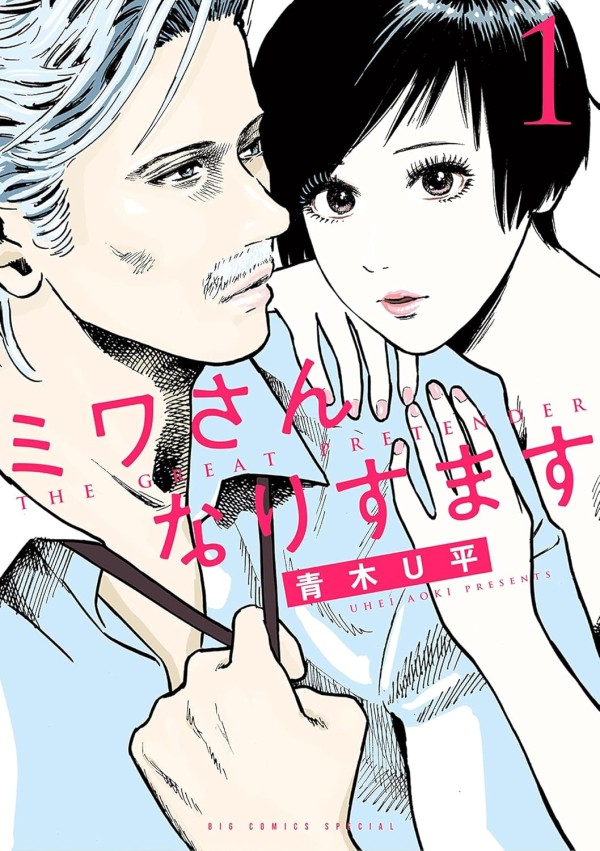
Miwa-san Narisumasu centers on Miwa, a plain, unassuming woman in her thirties who works as a cleaner at a municipal pool. Her life is quiet to the point of invisibility, until one day she happens to overhear a conversation that reveals a startling truth about a glamorous, successful acquaintance from her past. This acquaintance, a famous fashion stylist named Yuki, has built her entire career and public image on a fabricated life story. Instead of exposing her, Miwa feels a strange sense of liberation and begins a small, private experiment: she starts to adopt Yuki’s mannerisms, style, and even her lies, testing them out in her own mundane daily interactions.
The setting shifts between the sterile, routine environment of the pool where Miwa works and the vibrant, high-stakes world of Tokyo’s fashion and media circles, which she gradually infiltrates. The central conflict arises as Miwa’s charade deepens. She does not seek to destroy Yuki but rather to experience the confidence and agency that Yuki’s fabricated persona provides. However, the more Miwa immerses herself in this borrowed identity, the more entangled she becomes in Yuki’s professional and personal life, which is itself a web of secrets, debts, and unstable relationships.
A notable early arc follows Miwa as she successfully poses as Yuki at a minor industry event, only to discover that Yuki’s life is far more precarious than it appears from the outside. Another significant storyline involves Miwa forming an unexpected alliance with Yuki’s cynical, sharp-eyed assistant, who suspects the impersonation but chooses to play along for her own reasons. As Miwa navigates photoshoots, brand deals, and jealous rivals, she must constantly manage the risk of exposure while also confronting the question of who she truly is when she stops pretending. The narrative tension builds around whether Miwa will be unmasked, whether she will completely lose herself in the role, or whether she can somehow reconcile her original quiet life with the bold new identity she has crafted.
The setting shifts between the sterile, routine environment of the pool where Miwa works and the vibrant, high-stakes world of Tokyo’s fashion and media circles, which she gradually infiltrates. The central conflict arises as Miwa’s charade deepens. She does not seek to destroy Yuki but rather to experience the confidence and agency that Yuki’s fabricated persona provides. However, the more Miwa immerses herself in this borrowed identity, the more entangled she becomes in Yuki’s professional and personal life, which is itself a web of secrets, debts, and unstable relationships.
A notable early arc follows Miwa as she successfully poses as Yuki at a minor industry event, only to discover that Yuki’s life is far more precarious than it appears from the outside. Another significant storyline involves Miwa forming an unexpected alliance with Yuki’s cynical, sharp-eyed assistant, who suspects the impersonation but chooses to play along for her own reasons. As Miwa navigates photoshoots, brand deals, and jealous rivals, she must constantly manage the risk of exposure while also confronting the question of who she truly is when she stops pretending. The narrative tension builds around whether Miwa will be unmasked, whether she will completely lose herself in the role, or whether she can somehow reconcile her original quiet life with the bold new identity she has crafted.
Comment(s)
Staff
- Story & ArtUhei Aoki
Recommendations
Empfehlungen auf Basis gemeinsamer Kategorien.