Manga
Description
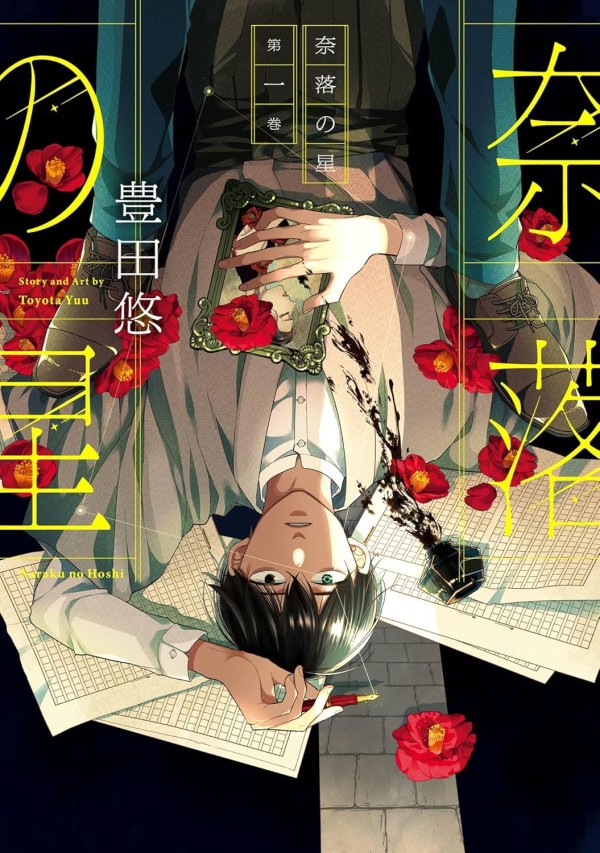
In early twentieth-century Japan, during the Taisho era, Subaru Karasuma is a failed novelist whose dreams of literary success have collapsed under the weight of crushing debt. Cornered by loan collectors and seeing no way out, he decides to end his life with charcoal briquettes and goes next door to borrow a fire pan. The neighbor's residence, however, is anything but quiet: it is the frantic headquarters of a literary circle racing to meet the deadline for a self-published anthology. The group is presided over by the dazzling and immensely popular novelist Geppo Yagira, a man whose handsome features and undeniable genius command total devotion from those around him. Geppo immediately sees through Subaru's suicidal intent and, instead of offering sympathy, issues a twisted challenge: write again, and try to kill me with your pen. That single confrontation forces Subaru back into the act of writing, but it also entwines him with Geppo in a relationship that feels less like salvation and more like a descent into an abyss. Subaru begins to understand that Geppo is not merely a charismatic star of the literary world but something far more predatory and wounded. The second major narrative arc shifts focus to Geppo's hidden past. Born in a working-class neighborhood, he lost his home and parents to a fire at the age of twelve, leaving him and his younger sister homeless. To survive, he was forced into the pleasure quarters of a flower town, selling his body to strangers and enduring a childhood steeped in exploitation and misery. It was in that mud of degradation that he discovered writing, a craft he seized as the only possible escape and as a weapon to rise above those who had used him. This origin story reframes his present-day cruelty and his obsessive interest in Subaru as something rooted in a desperate, hungry will to transcend suffering through words. The main characters are Subaru Karasuma, a man paralyzed by his own unused talent and financial ruin, and Geppo Yagira, a beautiful, ruthless literary prodigy whose brilliance is forged in childhood trauma. Their dynamic is a volatile push-and-pull: Geppo drags Subaru back to the page while simultaneously undermining every hope of peace he might have, and Subaru, despite knowing he is being manipulated, finds himself unable to stop pursuing the approval or destruction of this enigmatic tormentor. The setting is Taisho-era Japan, a period of cultural ferment and social change that frames the tension between traditional life and modern artistic ambition. The atmosphere oscillates between the cluttered, ink-stained rooms where literary circles toil through the night and the shadowy margins of the city where poverty and desperation fester. Notable narrative arcs so far include Subaru's forced return to writing under Geppo's supervision, the revelation of Geppo's brutal childhood in the flower town, and the escalating psychological warfare between the two men as each tries to use the other to shatter his own limitations. The title itself, A Starlit Darkness or Naraku no Hoshi, evokes a central contradiction: brilliance shining from within a pit of despair, and the idea that even in a hell of one's own making, there may still be a distant, cruel light worth reaching for.
Comment(s)
Staff
- Story & Art
Recommendations
Empfehlungen auf Basis gemeinsamer Kategorien.