Manga
Description
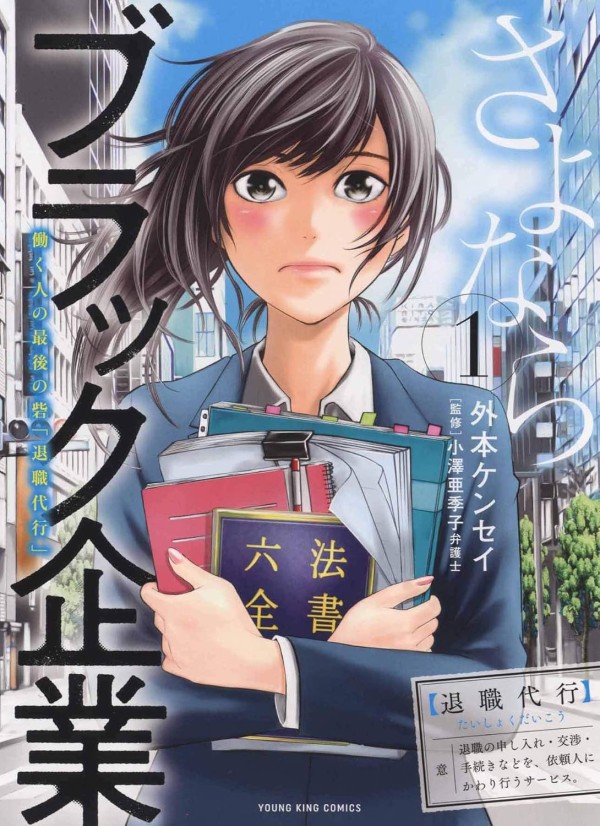
A large real estate telemarketing agency called Cold Dreamer subjects its employees to endless harangues, impossible quotas, and forced morale chants. Contract worker Mizuki Riko is worn down by the pressure and the sudden disappearance of her supervisor, until one day she breaks down on a train and is noticed by a woman who invites her for a meal. That woman is Shiranui, a lawyer who runs a specialized “resignation agency” at the Sakura Law Office. Shiranui tells Riko that the options in life are infinite and that quitting is not running away. Spurred by the encounter, Riko confronts her abusive manager Miyazaki and is fired. While returning a lost item to the law office, she witnesses Shiranui handle a case and becomes determined to work there. Riko joins Sakura Law Office as a clerk, learning the legal tools that help trapped workers escape black companies.
The core of the story follows Riko and Shiranui as they take on a series of clients trapped in toxic workplaces. These include a former co‑worker of Riko’s who is subjected to humiliating demands from the same manager; a clothing store employee used as a stress dump by the shop owner; and a university junior employed by a self‑improvement seminar company that borders on cult‑like brainwashing. Each case reveals the methods black companies use to break employees’ will – power harassment, excessive overtime, wage theft, and impossible sales targets – and the legal strategies Shiranui employs to sever the employment bond cleanly while exposing the employer’s wrongdoing.
Shiranui herself carries a past trauma: a mistake she once made cost someone important to her, fueling a near‑vengeful drive not only to rescue victims but to dismantle the oppressive workplaces themselves. Her colleague, the lawyer Agata, often clashes with her approach but respects her skill. Riko grows from a timid, quick‑tempered novice into a more composed advocate, though she occasionally still speaks before thinking. Over five volumes, the series moves from individual rescue cases to broader confrontations with systemic abuse, ending with the question of whether the resignation agency can sustain hope for both clients and its own staff.
Interspersed throughout the volumes are real‑world legal explanations, supervised by practicing attorneys, covering concepts such as disciplinary dismissal and harassment. The narrative consistently reinforces the message that deciding to quit is a legitimate act of self‑protection, not a failure.
The core of the story follows Riko and Shiranui as they take on a series of clients trapped in toxic workplaces. These include a former co‑worker of Riko’s who is subjected to humiliating demands from the same manager; a clothing store employee used as a stress dump by the shop owner; and a university junior employed by a self‑improvement seminar company that borders on cult‑like brainwashing. Each case reveals the methods black companies use to break employees’ will – power harassment, excessive overtime, wage theft, and impossible sales targets – and the legal strategies Shiranui employs to sever the employment bond cleanly while exposing the employer’s wrongdoing.
Shiranui herself carries a past trauma: a mistake she once made cost someone important to her, fueling a near‑vengeful drive not only to rescue victims but to dismantle the oppressive workplaces themselves. Her colleague, the lawyer Agata, often clashes with her approach but respects her skill. Riko grows from a timid, quick‑tempered novice into a more composed advocate, though she occasionally still speaks before thinking. Over five volumes, the series moves from individual rescue cases to broader confrontations with systemic abuse, ending with the question of whether the resignation agency can sustain hope for both clients and its own staff.
Interspersed throughout the volumes are real‑world legal explanations, supervised by practicing attorneys, covering concepts such as disciplinary dismissal and harassment. The narrative consistently reinforces the message that deciding to quit is a legitimate act of self‑protection, not a failure.
Comment(s)
Staff
- Story & ArtKensei Hokamoto
Recommendations
Empfehlungen auf Basis gemeinsamer Kategorien.