Manga
Description
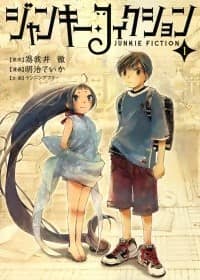
"Junkie Fiction" is a manga series that explores themes of addiction, identity, and the blurred lines between reality and illusion. The narrative centers on a young man named Tetsuo, a struggling writer who becomes entangled in a dangerous world of drugs and crime. Tetsuo’s life takes a drastic turn when he encounters a mysterious woman named Aya, who introduces him to a potent and enigmatic drug known as "Junk." This substance not only alters the user’s perception of reality but also unlocks hidden memories and suppressed emotions, creating a surreal and often disorienting experience.
As Tetsuo delves deeper into the effects of Junk, he begins to uncover fragments of his own past, including traumatic events and unresolved relationships. The drug’s influence blurs the boundaries between his memories and hallucinations, making it increasingly difficult for him to distinguish between what is real and what is imagined. Aya, who serves as both a guide and an antagonist, appears to have her own agenda, manipulating Tetsuo’s experiences with Junk for reasons that remain unclear. Her enigmatic nature and shifting motives add layers of complexity to the story.
The plot unfolds through a series of nonlinear sequences, reflecting the fragmented and chaotic nature of Tetsuo’s mind under the influence of Junk. Supporting characters, including Tetsuo’s estranged family members and former acquaintances, are introduced in fragmented flashbacks, each contributing to the unraveling of his psyche. The narrative frequently shifts between past and present, creating a sense of disorientation that mirrors Tetsuo’s own struggle to piece together his identity.
As the story progresses, Tetsuo’s dependence on Junk intensifies, leading to increasingly erratic behavior and a growing detachment from reality. The manga delves into the psychological and emotional toll of addiction, portraying Tetsuo’s descent into a self-destructive spiral. Themes of guilt, regret, and the search for redemption are woven throughout the narrative, as Tetsuo grapples with the consequences of his choices and the impact they have on those around him.
The climax of the series sees Tetsuo confronting the source of his trauma and the true nature of Junk, culminating in a resolution that is both ambiguous and thought-provoking. The manga leaves key questions unanswered, inviting readers to interpret the events and their significance. Through its exploration of addiction and the human psyche, "Junkie Fiction" presents a compelling and introspective narrative that challenges conventional storytelling structures.
As Tetsuo delves deeper into the effects of Junk, he begins to uncover fragments of his own past, including traumatic events and unresolved relationships. The drug’s influence blurs the boundaries between his memories and hallucinations, making it increasingly difficult for him to distinguish between what is real and what is imagined. Aya, who serves as both a guide and an antagonist, appears to have her own agenda, manipulating Tetsuo’s experiences with Junk for reasons that remain unclear. Her enigmatic nature and shifting motives add layers of complexity to the story.
The plot unfolds through a series of nonlinear sequences, reflecting the fragmented and chaotic nature of Tetsuo’s mind under the influence of Junk. Supporting characters, including Tetsuo’s estranged family members and former acquaintances, are introduced in fragmented flashbacks, each contributing to the unraveling of his psyche. The narrative frequently shifts between past and present, creating a sense of disorientation that mirrors Tetsuo’s own struggle to piece together his identity.
As the story progresses, Tetsuo’s dependence on Junk intensifies, leading to increasingly erratic behavior and a growing detachment from reality. The manga delves into the psychological and emotional toll of addiction, portraying Tetsuo’s descent into a self-destructive spiral. Themes of guilt, regret, and the search for redemption are woven throughout the narrative, as Tetsuo grapples with the consequences of his choices and the impact they have on those around him.
The climax of the series sees Tetsuo confronting the source of his trauma and the true nature of Junk, culminating in a resolution that is both ambiguous and thought-provoking. The manga leaves key questions unanswered, inviting readers to interpret the events and their significance. Through its exploration of addiction and the human psyche, "Junkie Fiction" presents a compelling and introspective narrative that challenges conventional storytelling structures.
Comment(s)
Staff
- StoryTohru Tamegai
- ArtTeika Meiji
Recommendations
Empfehlungen auf Basis gemeinsamer Kategorien.