TV-Series
Description
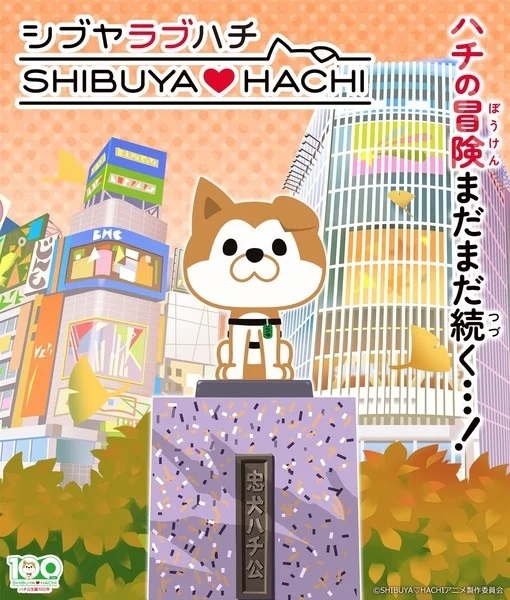
For generations, the statue of Hachiko in front of Shibuya Station has stood as a silent symbol of loyalty, watching over the bustling crowds of Tokyo. In this anime commemorating the 100th anniversary of the real Hachiko's birth, the statue comes to life. The spirit known as Hachi awakens in the present day, no longer a bronze figure but a small, adventurous canine ready to explore the famous ward he has only observed from his pedestal.
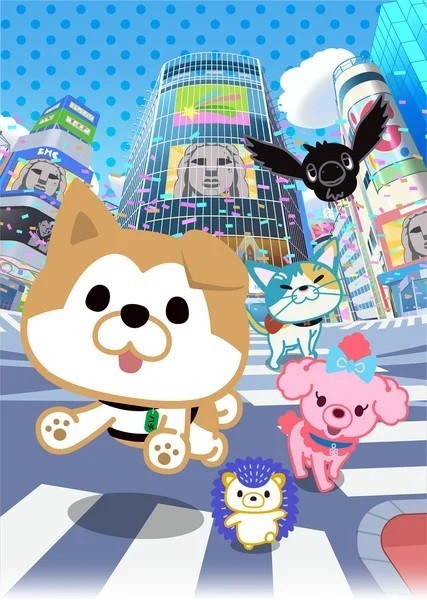
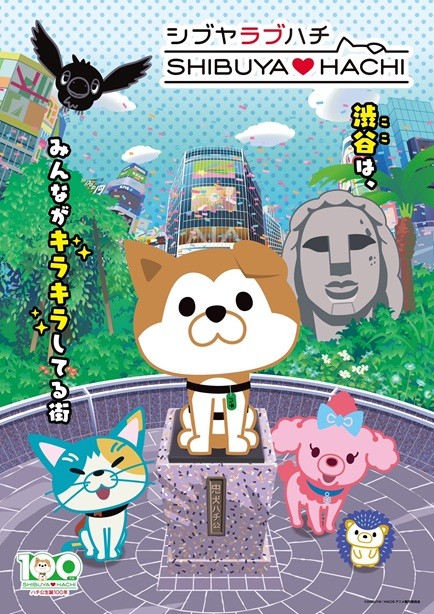
Hachi quickly finds that he is not alone in this vibrant urban landscape. He is joined by a group of companions who treat the iconic crossing and back alleys as their personal playground. There is Mike, a drowsy cat who speaks with a Kansai accent and is always looking for a financial opportunity; Nana, a proud and fashionable dog who initially resents Hachi's instant popularity; Harry, a spiky hedgehog who considers himself charmingly coy; Kuro, a worldly-wise crow who has seen it all; and Moyai, a massive statue in the area who serves as a wise mentor figure. Together, they form an unlikely family, embarking on small-scale adventures that reveal the hidden magic in everyday life.
The series is structured as a gentle, lighthearted comedy that celebrates the culture and community of Shibuya. Episodes follow the group as they interact with local shopkeepers, get lost in the rush of the crossing, and help lost visitors find their way. The tone is consistently warm and relaxed, focusing on the bonds of friendship and the joy of discovering the city from a low-to-the-ground perspective.
However, the narrative is not without its deeper emotional arcs. A significant storyline involves Nana, whose jealousy over Hachi being the center of attention leads to a dramatic outburst. A video of her lashing out at Harry goes viral on social media, causing her to become an internet sensation for all the wrong reasons. The online backlash forces Nana to disappear into hiding, ashamed and heartbroken. In a turn that mirrors Hachi's own famous legend, the friends must search for her, leading to a poignant reunion where Hachi helps Nana understand that loyalty and patience are more valuable than fame. She eventually reconciles with the group and reunites with her long-searching owner, bringing the arc to a tearful close.
As the seasons progress, the series also explores Hachi's own forgotten past. When a photograph from Akita Prefecture (the birthplace of the real Hachiko) triggers old memories, the group works to help Hachi piece together his history. He recalls the family he was born into and the professor he once waited for, allowing the spirit of the statue to finally understand the origins of his own unbreakable loyalty. Through these stories, SHIBUYA♡HACHI presents a portrait of Tokyo's most famous district as seen through the eyes of its unofficial mascots, where every vending machine, park bench, and intersection holds the potential for a new memory or a lasting friendship.
Hachi quickly finds that he is not alone in this vibrant urban landscape. He is joined by a group of companions who treat the iconic crossing and back alleys as their personal playground. There is Mike, a drowsy cat who speaks with a Kansai accent and is always looking for a financial opportunity; Nana, a proud and fashionable dog who initially resents Hachi's instant popularity; Harry, a spiky hedgehog who considers himself charmingly coy; Kuro, a worldly-wise crow who has seen it all; and Moyai, a massive statue in the area who serves as a wise mentor figure. Together, they form an unlikely family, embarking on small-scale adventures that reveal the hidden magic in everyday life.
The series is structured as a gentle, lighthearted comedy that celebrates the culture and community of Shibuya. Episodes follow the group as they interact with local shopkeepers, get lost in the rush of the crossing, and help lost visitors find their way. The tone is consistently warm and relaxed, focusing on the bonds of friendship and the joy of discovering the city from a low-to-the-ground perspective.
However, the narrative is not without its deeper emotional arcs. A significant storyline involves Nana, whose jealousy over Hachi being the center of attention leads to a dramatic outburst. A video of her lashing out at Harry goes viral on social media, causing her to become an internet sensation for all the wrong reasons. The online backlash forces Nana to disappear into hiding, ashamed and heartbroken. In a turn that mirrors Hachi's own famous legend, the friends must search for her, leading to a poignant reunion where Hachi helps Nana understand that loyalty and patience are more valuable than fame. She eventually reconciles with the group and reunites with her long-searching owner, bringing the arc to a tearful close.
As the seasons progress, the series also explores Hachi's own forgotten past. When a photograph from Akita Prefecture (the birthplace of the real Hachiko) triggers old memories, the group works to help Hachi piece together his history. He recalls the family he was born into and the professor he once waited for, allowing the spirit of the statue to finally understand the origins of his own unbreakable loyalty. Through these stories, SHIBUYA♡HACHI presents a portrait of Tokyo's most famous district as seen through the eyes of its unofficial mascots, where every vending machine, park bench, and intersection holds the potential for a new memory or a lasting friendship.
Comment(s)
Staff
- DirectorYūji Umoto
- MusicTomoki Hasegawa
- Animation DirectorRina Nakamura
- Sound DirectorHiroyuki Hayase
- Series CompositionRyōsuke Aoike
- Art DirectorShinichi Nakazono
- Animation Character DesignSachiko Umoto
Production
- Animation ProductionNippon Animation
Relations