
TV-Series
Description
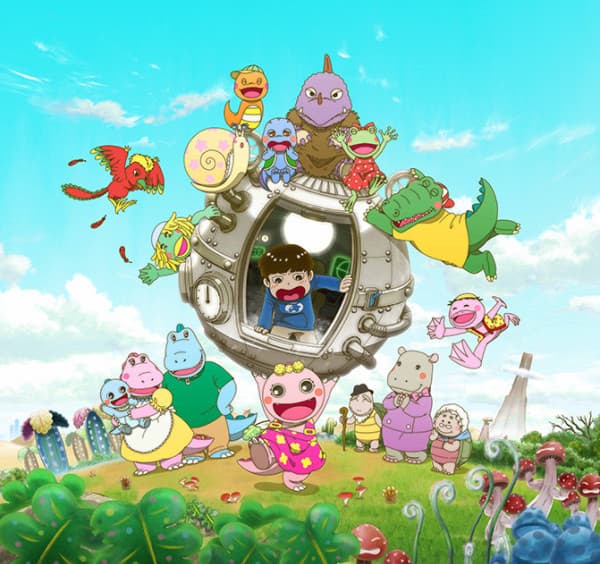
"Gan Gan Ganko-chan" is a comedic anime series that revolves around the daily life of Ganko, a young girl with a mischievous and hyperactive personality. Ganko lives with her parents and younger brother, and her antics often disrupt the household. Her boundless energy and unpredictable behavior create humorous situations, as she frequently clashes with her more reserved and rule-abiding family members. The series explores the dynamics of family life, with Ganko’s eccentricities serving as the primary source of comedy.
The narrative is episodic, with each episode focusing on a new scenario or challenge that Ganko faces. Whether it’s trying to outsmart her parents, causing chaos at school, or attempting to prove her independence, Ganko’s schemes often backfire, leading to exaggerated and absurd outcomes. Her interactions with her classmates, teachers, and neighbors further highlight her larger-than-life personality and her inability to conform to societal norms. Despite her flaws, Ganko’s enthusiasm and determination make her a lovable character, even as her actions frequently exasperate those around her.
The supporting characters play a significant role in the series, often reacting to Ganko’s antics in ways that amplify the humor. Her parents, who struggle to manage her behavior, provide a grounded contrast to Ganko’s wild nature. Her younger brother, though occasionally annoyed by her, occasionally joins in her schemes, adding another layer of chaos to the household. The series also features recurring characters from Ganko’s school and neighborhood, each contributing to the comedic tone through their unique personalities and interactions with Ganko.
The humor in "Gan Gan Ganko-chan" is largely situational, relying on exaggerated physical comedy and absurd scenarios. The series does not delve deeply into dramatic or emotional themes, instead maintaining a lighthearted and fast-paced tone throughout. Its focus on everyday situations, combined with Ganko’s over-the-top reactions and solutions, creates a relatable yet highly entertaining portrayal of family and community life. The episodic structure ensures that each installment offers a self-contained story, making it accessible for casual viewing while maintaining a consistent comedic rhythm.
The narrative is episodic, with each episode focusing on a new scenario or challenge that Ganko faces. Whether it’s trying to outsmart her parents, causing chaos at school, or attempting to prove her independence, Ganko’s schemes often backfire, leading to exaggerated and absurd outcomes. Her interactions with her classmates, teachers, and neighbors further highlight her larger-than-life personality and her inability to conform to societal norms. Despite her flaws, Ganko’s enthusiasm and determination make her a lovable character, even as her actions frequently exasperate those around her.
The supporting characters play a significant role in the series, often reacting to Ganko’s antics in ways that amplify the humor. Her parents, who struggle to manage her behavior, provide a grounded contrast to Ganko’s wild nature. Her younger brother, though occasionally annoyed by her, occasionally joins in her schemes, adding another layer of chaos to the household. The series also features recurring characters from Ganko’s school and neighborhood, each contributing to the comedic tone through their unique personalities and interactions with Ganko.
The humor in "Gan Gan Ganko-chan" is largely situational, relying on exaggerated physical comedy and absurd scenarios. The series does not delve deeply into dramatic or emotional themes, instead maintaining a lighthearted and fast-paced tone throughout. Its focus on everyday situations, combined with Ganko’s over-the-top reactions and solutions, creates a relatable yet highly entertaining portrayal of family and community life. The episodic structure ensures that each installment offers a self-contained story, making it accessible for casual viewing while maintaining a consistent comedic rhythm.
Cast
- Ganpē
- Tsumu
- Swamp Kappa
- Game-san
- Gyao
- Senchan-sensei
- Banban
- Piro
- Kōichi Hiro
- Hipo-sensei
- Ganko-chan's father
- Kero
- Hajime Dori
- Ganko-chan's mother
- Chobi
- Rapper
Comment(s)
Staff
- DirectorNobutaka Yoda
- ScreenplayDeko Akao
- Original Concept
- Character DesignMutsumi Takeda
- Sound DirectorTakumi Itō
- Series CompositionDeko Akao
- MusicNobutaka YodaShūji Kakoi
- Original Character DesignMiho Takeda
- Art DirectorDaisuke Matsuki
- Director of PhotographyDaisuke Matsuki
Production
- ProductionNHK Enterprises
- Animation Production10GAUGE
Relations
Anime overview