OVA
Description
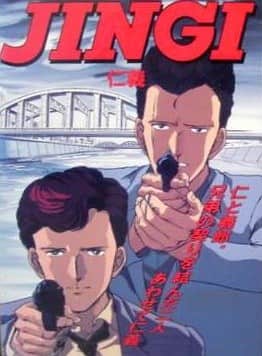
"Jingi" is a crime drama anime set in the gritty underworld of Japan, focusing on the lives of yakuza members and the moral complexities of their world. The narrative centers on two childhood friends, Ryu and Tatsu, who grow up in the same neighborhood but take divergent paths within the yakuza hierarchy. Ryu rises through the ranks of a powerful syndicate, embracing the ruthless codes of loyalty and honor that define the organization. Tatsu, on the other hand, becomes a low-ranking enforcer, struggling to reconcile his personal values with the violent demands of his role.
The story unfolds as Ryu and Tatsu find themselves on opposite sides of a brewing conflict between rival factions. Ryu’s ambition and unwavering adherence to yakuza traditions lead him to make increasingly brutal decisions, while Tatsu’s growing disillusionment with the system pushes him to question his loyalty. Their friendship becomes strained as they navigate betrayals, power struggles, and the consequences of their choices. The narrative delves into themes of loyalty, honor, and the cost of ambition, portraying the yakuza not as a monolithic entity but as a complex network of individuals with conflicting motivations.
Key supporting characters include Ryu’s mentor, a seasoned yakuza boss who embodies the old guard’s rigid principles, and a female informant who becomes entangled in the power dynamics between the factions. The series also explores the impact of the yakuza lifestyle on their families and communities, highlighting the collateral damage of their actions. As tensions escalate, the story builds toward a climactic confrontation that forces both Ryu and Tatsu to confront the true meaning of "jingi," the code of honor that binds them to their world. The anime balances intense action sequences with quieter, introspective moments, offering a nuanced portrayal of its characters and their moral dilemmas.
The story unfolds as Ryu and Tatsu find themselves on opposite sides of a brewing conflict between rival factions. Ryu’s ambition and unwavering adherence to yakuza traditions lead him to make increasingly brutal decisions, while Tatsu’s growing disillusionment with the system pushes him to question his loyalty. Their friendship becomes strained as they navigate betrayals, power struggles, and the consequences of their choices. The narrative delves into themes of loyalty, honor, and the cost of ambition, portraying the yakuza not as a monolithic entity but as a complex network of individuals with conflicting motivations.
Key supporting characters include Ryu’s mentor, a seasoned yakuza boss who embodies the old guard’s rigid principles, and a female informant who becomes entangled in the power dynamics between the factions. The series also explores the impact of the yakuza lifestyle on their families and communities, highlighting the collateral damage of their actions. As tensions escalate, the story builds toward a climactic confrontation that forces both Ryu and Tatsu to confront the true meaning of "jingi," the code of honor that binds them to their world. The anime balances intense action sequences with quieter, introspective moments, offering a nuanced portrayal of its characters and their moral dilemmas.
Comment(s)
Staff
- DirectorKenjirō YoshidaKiyoshi Murayama
- Original creator
- Art DirectorToshikazu Ishiwata
- Sound Director
- ScreenplayHideo Nanbu
- Character DesignToshie Kawamura
- Animation DirectorKatsuji Matsumoto
Production
- ProductionNihon Eizō
Relations
Recommendations based on shared tags.